Turbine fan: Redefining portable cooling.
Apr 08, 2026
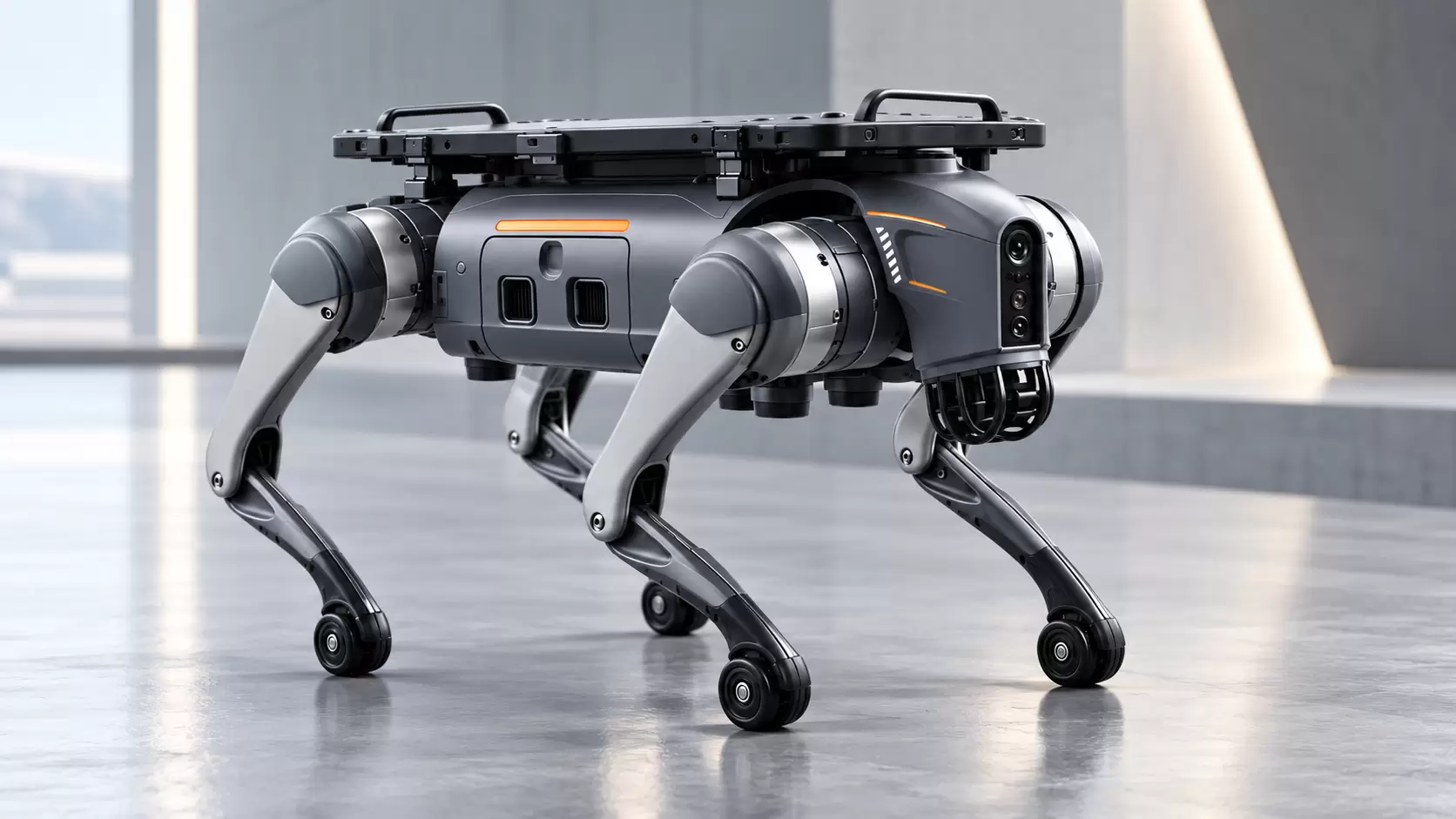
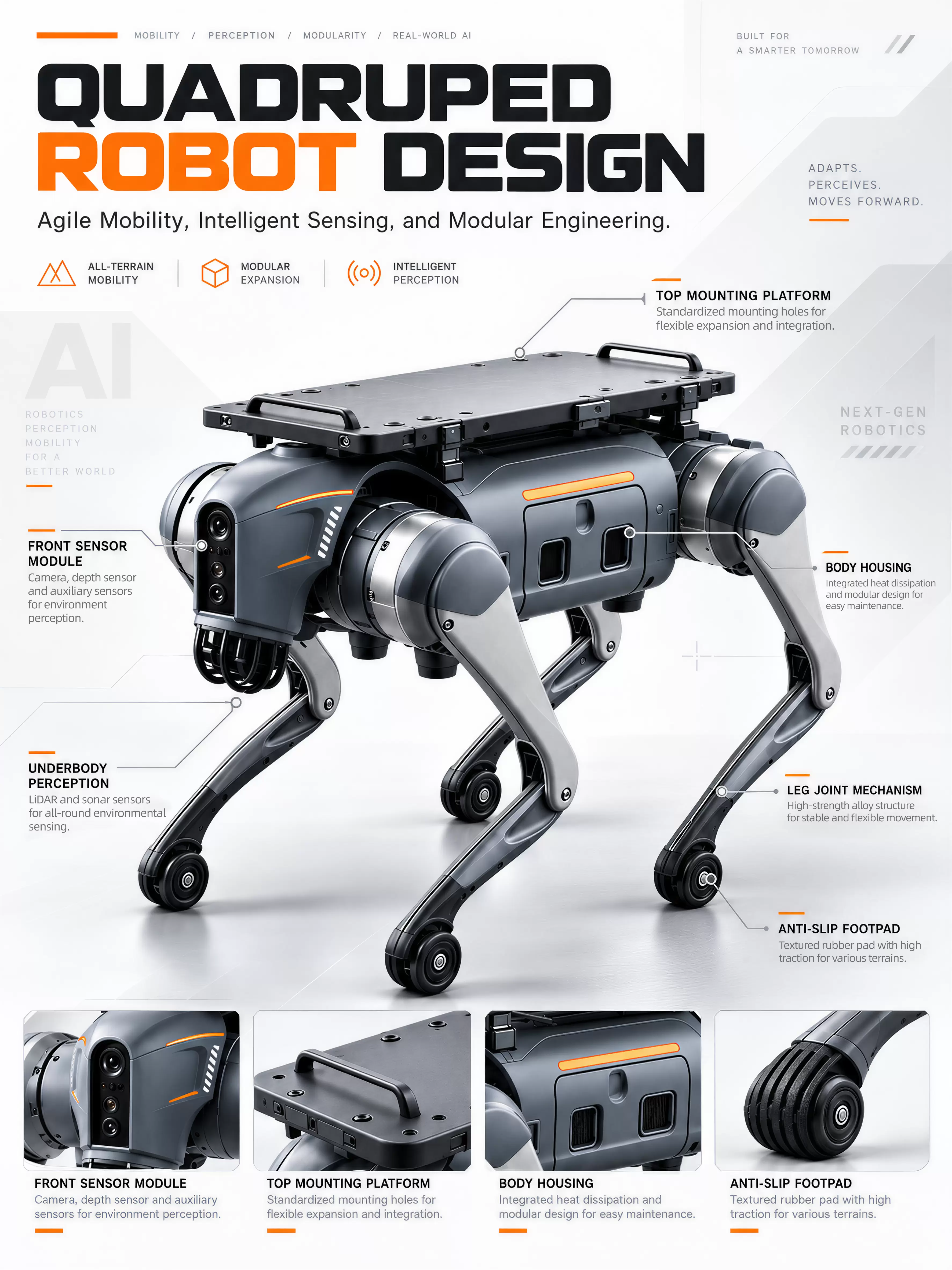
As robotics applications expand, product design increasingly encompasses visual identity, functional integration, and user experience. The robot shown combines a compact body, exposed articulated legs, and a top mounting platform, creating an impression of strength and precision. From a product designer’s perspective, its appeal lies in the relationship between its visual language and mechanical architecture. The following analysis draws on the rendering and its annotations; actual performance would require prototype testing.
Industrial Design: Creating a Distinctive Identity Through Color and Form
The overall composition pairs an elongated torso with downward-reaching limbs, creating a visually grounded stance. A dark gray body contrasts with silver leg components, using differences in tone and finish to distinguish the enclosure from the moving assemblies. Orange accents across the front and sides add energy to the restrained palette and make the product more recognizable.
Rounded surfaces meet defined edges across the enclosure, balancing a protective appearance with mechanical character. At the front, vertically arranged sensing components sit within a dark panel that integrates with the surrounding shell. Side access panels, openings, and fasteners follow the body’s geometry, making functional details part of its appearance. Consistent panel gaps, corner radii, and surface textures could further refine the design.
Material selection should account for weight, wear resistance, and manufacturing methods. Engineering plastics or metals could be evaluated for the enclosure, while leg materials should be selected according to structural loads. Matte finishes could reduce strong reflections, while metallic details could emphasize the joints and links, establishing a clear visual relationship between components.
Structural Design: Addressing Movement, Loads, and Assembly
The illustrated concept uses segmented legs, with circular joint housings contrasting against slender links to make the articulation easy to understand. Engineering development should assess joint torque, link stiffness, and connection fatigue life against the intended payload and gait requirements. Adequate clearances would also be necessary throughout each joint’s range of motion.
Cable routing and fastening are important considerations within the leg assemblies. Wiring should avoid repeated compression and abrasion, with protection and strain relief suited to the movement involved. Enclosure sections should also accommodate assembly sequences, tool access, and component replacement, bringing visual consistency together with practical manufacturing needs.
The flat top platform is a defining feature. Visible mounting holes, handles, and attachment hardware suggest provisions for accessories and handling. Development should establish how loads transfer from the platform into the main frame and assess how accessory weight affects the center of gravity. Sufficient clearance around the handles would help make lifting and carrying more convenient.
Detail Integration: Supporting Everyday Use
Removable side panels suggest an approach that considers maintenance access. Thoughtful fastener placement and removal directions could make servicing more efficient. Ventilation openings and enclosure seams should be developed together, accounting for internal heat sources, operating conditions, and sealing requirements.
The rounded feet feature grooved surfaces and are identified in the image as anti-slip footpads. Their material hardness, contact area, and replacement methods should be evaluated for the intended ground surfaces. By bringing sensing components, a mounting platform, and articulated joints into a coherent form, the concept establishes a clear foundation for prototype development and further refinement.