What Makes a High-Quality Neck Massager Manufacturer Stand Out
Apr 20, 2026
Moving a product from an initial concept to full-scale manufacturing requires more than producing an accurate prototype. Engineers must ensure that every component meets dimensional requirements, materials perform as expected, assembly processes remain consistent, and production can scale without introducing unnecessary complexity. CNC precision machining plays a key role in this process by connecting product development with reliable, repeatable manufacturing.
For industries such as electronics, telecommunications, automotive, medical equipment, and artificial intelligence hardware, machined components often need to meet demanding requirements for fit, strength, surface finish, and thermal performance. Understanding how CNC machining supports each stage of production helps businesses reduce development risks and bring products to market more efficiently.
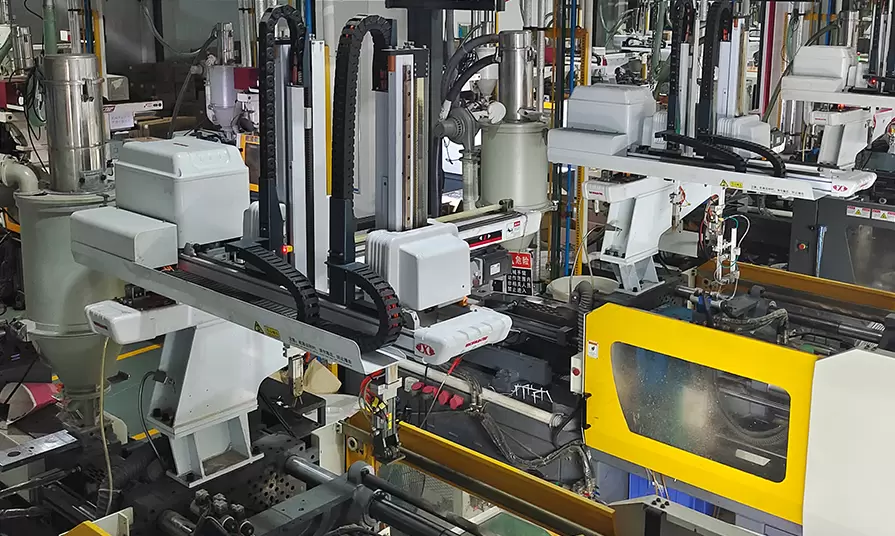
Computer Numerical Control (CNC) machining uses programmed instructions to control cutting tools and remove material from a workpiece. Depending on the component, manufacturers may use CNC milling, turning, drilling, tapping, and other operations to achieve the required geometry.
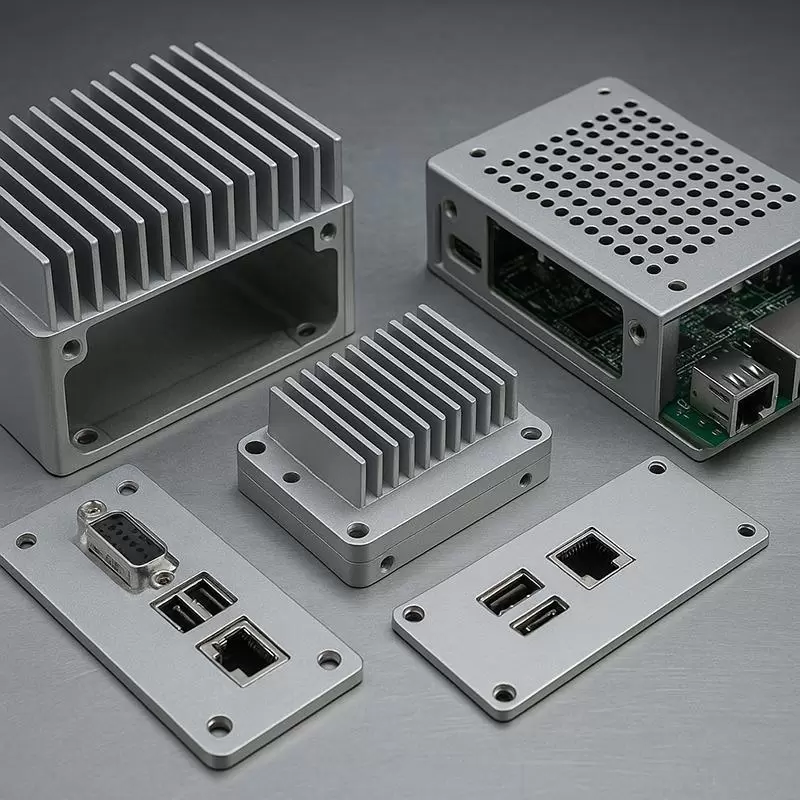
One of the main advantages of CNC machining is its ability to produce complex components with consistent dimensions. This is particularly important for precision housings, mounting brackets, structural parts, connectors, and heat sinks, where even small dimensional deviations can affect assembly or performance.
During early development, CNC machining allows engineers to evaluate real materials and functional geometries rather than relying exclusively on theoretical designs or simplified models. A machined prototype can reveal issues involving wall thickness, tool accessibility, fastening positions, sealing surfaces, and component alignment before production tooling is finalized.
For example, an aluminum enclosure for an electronic device may look correct in a CAD model but prove difficult to assemble because of an interference between internal ribs and a circuit board. Producing a CNC prototype allows the engineering team to identify and correct the problem before committing to larger production volumes.
The transition from digital design to a physical part begins with engineering review. Before machining starts, manufacturers examine the CAD model, technical drawings, material specifications, tolerances, and intended operating conditions.
A practical design review should address several questions:
Are the specified tolerances necessary for the component's function?
Can the selected cutting tools reach all required features?
Are the wall thicknesses suitable for machining without excessive deformation?
Can the component be securely clamped during processing?
Do the design and material meet strength, weight, and thermal requirements?
These questions matter because a design that is easy to model may still be difficult or inefficient to manufacture.
Design for Manufacturability (DFM) helps resolve these issues early. Engineers may recommend adjusting internal corner radii, simplifying deep cavities, modifying thread depths, or changing the positioning of mounting features. Such adjustments can improve machining stability while preserving the product's functional requirements.
Once the design is reviewed, the manufacturer creates machining programs and selects suitable tools, fixtures, and cutting parameters. The first prototype is then inspected against the drawing and tested in its intended application.
This stage should produce more than a sample part. It should generate useful manufacturing knowledge that can guide subsequent design revisions and establish a foundation for repeatable production.
Material selection influences machining performance, component durability, weight, corrosion resistance, and heat dissipation. Aluminum alloys are widely used for electronic housings and heat sinks because they offer a useful combination of low weight, thermal conductivity, and machinability.
Stainless steel may be preferred when corrosion resistance or mechanical strength is a priority. Copper can be suitable for applications requiring high thermal conductivity, although its machining characteristics and material cost require careful consideration. Other metals may be selected according to electrical, structural, environmental, or regulatory requirements.
For electronic equipment and AI computing hardware, thermal management is often a central design consideration. Heat sinks and thermally functional housings must transfer heat effectively while maintaining suitable interfaces with heat-generating components.
CNC machining can produce precise contact surfaces, mounting holes, cooling channels, and fin structures. However, successful thermal design depends on more than machining accuracy. Engineers must also consider heat load, airflow, contact resistance, available installation space, and the operating environment.
Thermal simulation can help identify potential hotspots and evaluate design alternatives before manufacturing. When simulation results are combined with prototype testing, the engineering team can refine the geometry and verify whether the finished component meets the required thermal performance.
SOGOOD provides integrated manufacturing services covering product design, thermal simulation design, precision hardware, and heat dissipation solutions. Its capabilities in CNC precision machining and metal nanomolding can support projects in which mechanical design, material selection, and thermal performance need to be considered together.
A successful prototype does not automatically translate into an efficient production process. When preparing for larger quantities, manufacturers must evaluate cycle time, tooling requirements, workholding methods, inspection procedures, and process repeatability.
Several practical improvements can make a significant difference.
Optimize part geometry. Deep pockets, thin walls, narrow grooves, and complex internal features may require specialized tools or multiple machining operations. Reviewing these features before production can reduce unnecessary tool changes and machining time.
Standardize setups. Whenever possible, manufacturers should reduce the number of times a component must be repositioned. Fewer setups can improve positional accuracy and reduce handling-related variation.
Select appropriate cutting tools. Tool material, geometry, coating, and cutting parameters should match the workpiece material and required surface finish. Tool wear must also be monitored because it can gradually affect dimensions and surface quality.
Design suitable fixtures. Stable workholding prevents movement and vibration during cutting. For thin-walled housings, fixtures may need to distribute clamping forces carefully to avoid deformation.
Establish inspection checkpoints. Critical dimensions should be checked at appropriate stages rather than waiting until the entire batch is complete. In-process inspection can identify deviations early and limit the number of affected parts.
These improvements should be evaluated using actual production data. A process that performs well for five prototypes may require different tooling, fixture arrangements, or inspection frequencies when producing hundreds or thousands of components.
Consistent quality is essential when CNC-machined components move into regular production. Customers need confidence that parts manufactured on different days, machines, or production batches will fit together and perform as intended.
A structured quality management process begins with clearly defined acceptance criteria. Technical drawings should specify critical dimensions, geometric tolerances, material requirements, surface finishes, and any applicable functional tests.
Inspection methods must match the characteristics being measured. Calipers and micrometers may be suitable for routine dimensional checks, while coordinate measuring machines can help verify complex geometries and positional relationships. Surface roughness instruments and specialized gauges may be necessary for particular functional surfaces.
First-article inspection is especially useful when introducing a new part or changing a manufacturing process. It verifies that the initial production component meets the drawing requirements before manufacturing proceeds at a larger scale.
During ongoing production, manufacturers should monitor recurring defects, tool wear, dimensional trends, and material consistency. Documented inspection results help engineers identify whether a problem comes from the machining program, workholding, tooling, incoming material, or another process variable.
SOGOOD reports that its products are manufactured under an ISO 9001-certified quality management system. For customers evaluating a manufacturing partner, the practical value of such a system lies in controlled procedures, documented inspections, and consistent handling of quality issues. Project-specific inspection requirements should still be confirmed before production begins.
CNC machining is not the only option for producing precision metal components. Depending on the product geometry, required quantities, material, and functional requirements, metal nanomolding may also be worth considering.
CNC machining is particularly useful for prototypes, customized components, low-volume production, and parts requiring precise machined surfaces. It offers considerable design flexibility because geometry can often be changed through CAD updates and revised machining programs without developing an entirely new molding tool.
Metal nanomolding can be suitable for components that integrate metal structures with selected engineering plastics. The process can support compact designs that combine structural strength, electrical insulation in designated areas, and functional integration. Its suitability depends on the material system, component geometry, bonding requirements, and production conditions.
The two processes should not be treated as interchangeable. CNC machining removes material from a workpiece, whereas nanomolding involves forming a metal-polymer interface through a specialized process. Each has different tooling requirements, design constraints, and quality considerations.
For some products, the most effective strategy is to use CNC machining during development and evaluate nanomolding or another manufacturing process for later production. In other cases, CNC machining may remain the preferred method throughout the product lifecycle.
The decision should be based on engineering feasibility, repeatability, required performance, and the total manufacturing workflow rather than on production volume alone.
A well-managed production transition begins before the prototype is approved. Engineering, purchasing, quality, and manufacturing teams should agree on the requirements for the final component and the conditions under which production will be released.
A practical transition plan includes:
Design validation: Confirm dimensions, material properties, assembly fit, and functional performance.
Manufacturing review: Assess tool access, fixture design, machining sequence, and process stability.
Pilot production: Produce a representative batch to evaluate cycle time, consistency, and inspection results.
Process documentation: Finalize machining programs, work instructions, inspection plans, and material specifications.
Production release: Confirm that the process meets agreed acceptance criteria and that capacity is sufficient for the required schedule.
Continuous improvement: Review quality data and customer feedback to identify opportunities for further optimization.
Communication is particularly important when a project includes several connected components. Changes to a housing can affect a heat sink, mounting bracket, connector position, or final assembly. Coordinating these dependencies helps prevent late-stage modifications and unnecessary production delays.
Selecting a manufacturing partner involves more than comparing machining equipment. Companies should assess engineering support, material knowledge, quality management, communication, and the ability to coordinate different manufacturing processes.
SOGOOD is a China-based manufacturing service provider headquartered in Shenzhen, with capabilities in product design, thermal simulation, CNC precision machining, metal nanomolding, and mold flow analysis. Its services address the needs of customers developing housings, accessories, precision hardware, and heat dissipation components for electronics, telecommunications, automotive, medical, and AI-related applications.
The company was established in October 2009, and its manufacturing activities also include a business established in September 2016 with a focus on nanomolding technology, CNC precision machining, and mold flow analysis. Its engineering team includes professionals with industrial design, structural engineering, and mold engineering experience.
For OEM and ODM projects, this combination of design and manufacturing capabilities can help customers evaluate product feasibility, refine component geometry, and coordinate the transition from development samples to repeatable production.
If you are planning a new component or reviewing an existing design, you can explore SOGOOD's CNC precision machining and manufacturing services to discuss technical requirements, customization options, and potential production approaches.
Moving from prototype to mass production requires a coordinated approach to design, machining, material selection, inspection, and process planning. CNC precision machining provides the flexibility to validate product concepts, correct engineering issues, and manufacture accurate components. With suitable DFM reviews, stable workholding, controlled machining parameters, and documented quality checks, manufacturers can improve the consistency of the transition to larger production volumes.
The most effective strategy is to involve manufacturing engineers early, validate the actual component under realistic conditions, and establish a repeatable process before scaling up. By combining engineering support with appropriate manufacturing technologies, businesses can reduce avoidable rework and build a more reliable path from product concept to market-ready production.