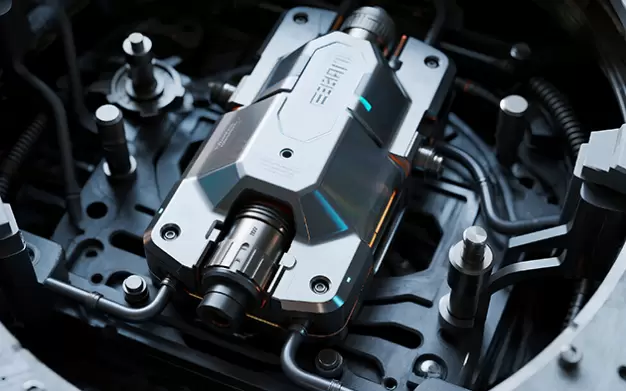
Turbine fan: Redefining portable cooling.
Apr 08, 2026
In modern audio products, speaker performance is no longer judged only by sound quality. Reliability, thermal stability, and long-term durability have become equally important, especially in compact consumer electronics, automotive infotainment systems, medical devices, and smart communication products. One of the most common causes of speaker failure is voice coil overheating. As devices become thinner and more powerful, thermal management inside speaker systems has become a critical engineering challenge.
Speaker thermal simulation services help manufacturers predict and prevent overheating problems before products enter mass production. Through detailed thermal analysis, engineers can identify hot spots, optimize heat dissipation structures, improve material selection, and reduce the risk of performance degradation or permanent damage.
SOGOOD has built extensive capabilities in this area by combining industrial design expertise, thermal simulation technology, CNC precision manufacturing, and metal nano-forming solutions. Since its establishment in Shenzhen, SOGOOD has provided integrated engineering and manufacturing services for industries including electronics, communication, automotive, medical equipment, and AI hardware. With experienced industrial designers, structural engineers, and thermal specialists, the company supports customers from concept validation to production-ready solutions.
<a href="https://www.sogoodprecision.com/service/">Speaker Thermal Simulation Service</a>
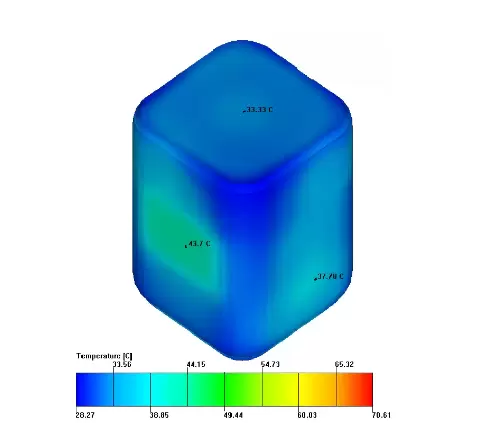
The voice coil is one of the most thermally stressed components inside a speaker. During operation, electrical energy passes through the coil and converts into mechanical motion that drives the diaphragm. However, part of this electrical energy is inevitably converted into heat.
Several factors contribute to overheating:
As temperature rises, the resistance of the voice coil increases. This can lead to thermal compression, reduced sound pressure levels, distorted audio output, adhesive degradation, and eventual component failure.
In applications such as automotive audio systems, conferencing devices, portable speakers, and smart terminals, overheating can severely impact product reliability and customer experience.
Traditional speaker development often relied heavily on physical prototyping and repeated testing cycles. While effective, this process is time-consuming and expensive. Thermal simulation significantly improves development efficiency by allowing engineers to analyze thermal behavior digitally before hardware production begins.
Thermal simulation services typically include:
By using advanced simulation software and engineering methodologies, manufacturers can visualize how heat moves through the speaker structure under different operating conditions.
This approach helps engineering teams make informed design decisions early in the development process.
Modern electronic products demand increasingly smaller speaker modules while maintaining high acoustic output. This creates several engineering conflicts.
Compact devices leave little room for natural airflow. Heat accumulates quickly around the voice coil and magnetic circuit, making temperature management more difficult.
Consumers expect louder sound and deeper bass from smaller products. This increases power density and thermal load inside miniature speaker assemblies.
Plastic housings commonly used in consumer electronics have lower thermal conductivity compared to metal structures. Without proper heat management, thermal buildup becomes unavoidable.
Automotive systems, outdoor communication devices, and industrial electronics may operate in high-temperature environments. External heat sources can compound internal thermal stress.
Thermal simulation enables engineers to address these problems proactively instead of reacting after product failures occur.
Simulation models reveal localized temperature concentrations inside the speaker assembly. Engineers can then redesign specific regions before tooling investment begins.
Thermal analysis helps improve the efficiency of heat transfer from the voice coil to surrounding structures. This may involve redesigning metal frames, improving contact surfaces, or integrating thermal interface materials.
Different metals, adhesives, and polymers behave differently under thermal stress. Simulation helps determine which materials provide the best balance between performance, durability, and manufacturability.
Lower operating temperatures reduce material fatigue and improve long-term reliability. This is especially important for products expected to operate continuously over many years.
Simulation-driven engineering minimizes repeated physical testing cycles, shortening product development timelines and lowering engineering costs.
SOGOOD provides integrated manufacturing and engineering solutions that combine industrial design, structural optimization, and thermal simulation analysis.
The company’s engineering background is deeply connected to advanced consumer electronics development. Core team members originated from the Motorola A1200 and A1600 design teams, bringing extensive experience in compact product architecture and thermal management.
SOGOOD’s technical strengths include:
Its engineering team includes professionals with more than 20 years of experience in metal nano-forming and CNC processing, many of whom previously worked at BYD. This practical manufacturing knowledge allows simulation models to align closely with real-world production conditions.
Unlike purely software-focused engineering providers, SOGOOD combines simulation analysis with manufacturing execution capabilities. This integration helps customers move more efficiently from simulation validation to scalable production.
Speaker thermal simulation is relevant in many industries beyond consumer audio products.
Smartphones, tablets, Bluetooth speakers, and wearable devices all face strict space constraints and thermal limitations.
In-vehicle entertainment systems operate in enclosed environments with fluctuating ambient temperatures. Thermal simulation helps maintain stable audio performance under challenging conditions.
Conference terminals, intercom systems, and industrial communication devices often require long-duration operation with reliable acoustic output.
Medical audio systems demand stable performance and strict reliability standards. Overheating prevention is critical in sensitive healthcare environments.
AI-driven terminals and smart assistants increasingly integrate powerful audio systems into compact form factors. Thermal optimization helps maintain system stability.
Simulation alone cannot guarantee successful thermal management. The effectiveness of thermal solutions also depends heavily on manufacturing precision.
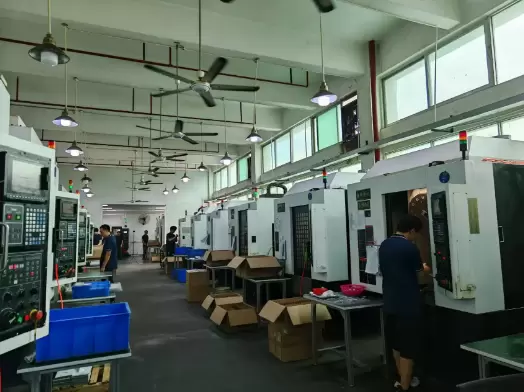
SOGOOD’s CNC machining and nano-forming technologies help ensure that thermal design concepts are accurately translated into production components.
Precision manufacturing contributes to:
This integration between engineering simulation and manufacturing execution is especially important in high-density electronic products where even small structural deviations can affect thermal behavior.
Metal nano-forming technology has become increasingly important in advanced heat dissipation solutions.
Compared with conventional manufacturing methods, nano-forming can produce highly precise structures with improved surface characteristics and thermal efficiency.
For speaker-related applications, this technology can support:
SOGOOD has focused heavily on this area since 2016, combining nano-forming expertise with thermal engineering services to support complex electronic product development.
Effective speaker thermal management should begin during the earliest product design stages rather than after hardware validation.
A typical simulation-driven development workflow may include:
Integrating thermal simulation early helps prevent costly redesigns later in the project lifecycle.
For global OEM and ODM projects, quality consistency is essential. SOGOOD operates under a modern quality management system aligned with ISO9001 standards.
This structured quality approach supports:
The company’s experience serving international brands including Qualcomm, ZTE, Lenovo, NEC, Philips, Panasonic, Haier, ASUS, TCL, and Midea has further strengthened its ability to support demanding product development programs.
As electronic products continue evolving, thermal management requirements will become even more demanding.
Several trends are shaping the future of speaker thermal simulation:
Manufacturers that invest early in thermal simulation capabilities will be better positioned to improve product reliability while accelerating development timelines.
Voice coil overheating remains one of the most significant reliability risks in modern speaker systems. As devices become more compact and power-dense, thermal simulation has become an essential part of speaker engineering and product development.
By combining thermal analysis, structural optimization, precision manufacturing, and advanced nano-forming technologies, SOGOOD helps customers reduce overheating risks and improve long-term product stability across a wide range of industries.
Its integrated engineering approach allows customers to streamline development cycles, enhance thermal performance, and bring more reliable products to market with greater confidence.