Thermal Simulation Design Services for Automotive and Aerospace Applications
Jul 01, 2026
Printed Circuit Board (PCB) design has evolved far beyond simple electrical connectivity. As electronic devices become more compact, powerful, and multifunctional, thermal management has emerged as one of the most critical challenges in modern electronics engineering. Excess heat can degrade performance, shorten component lifespan, and even lead to system failure. To address these issues, heat dissipation simulation has become an essential step in optimizing PCB design before physical prototyping.
This article explores how thermal simulation improves PCB performance, reduces development risk, and enhances product reliability. It also highlights how SOGOOD integrates advanced thermal engineering with precision manufacturing to deliver high-performance electronic enclosures and cooling solutions for global industries.
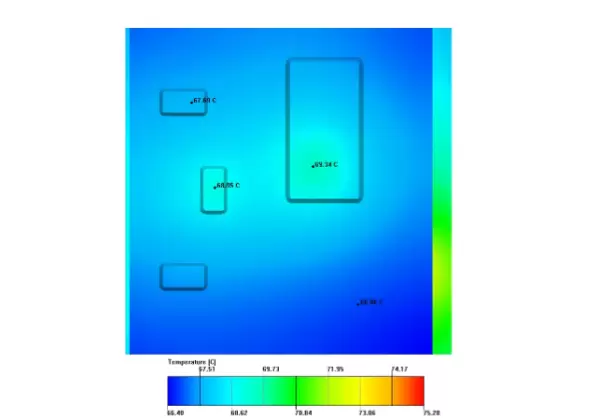
Modern PCBs are densely populated with high-performance chips, power modules, and RF components. These components generate significant heat during operation, especially in applications such as:
Without proper thermal management, localized hotspots can form on the PCB, leading to:
Traditional trial-and-error methods are no longer sufficient. Engineers now rely on simulation-driven design to predict heat behavior and optimize layouts early in development.
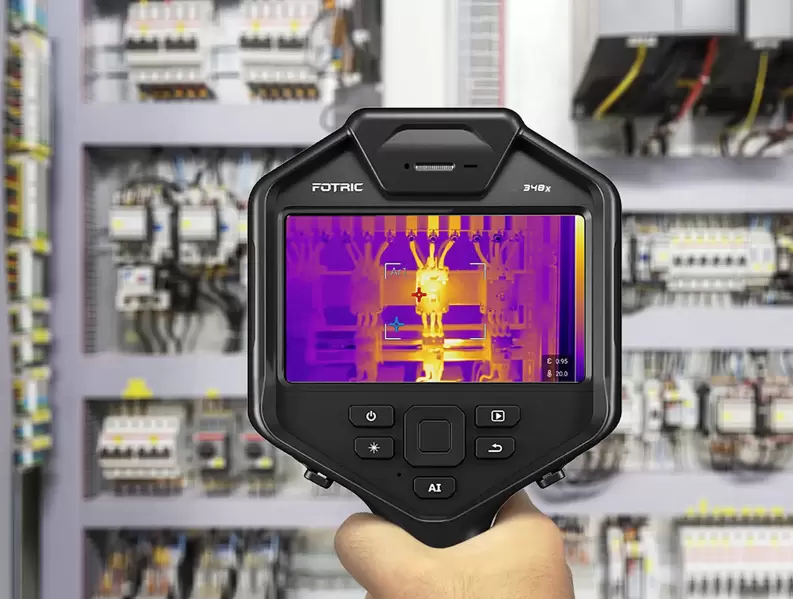
Heat dissipation simulation is a computational process that predicts how heat flows across a PCB under different operating conditions. It uses numerical modeling techniques such as finite element analysis (FEA) and computational fluid dynamics (CFD) to simulate:
By visualizing thermal performance before manufacturing, engineers can make informed design decisions that improve efficiency and reliability.
Simulation allows engineers to identify overheating components during the design stage, long before physical prototyping. This significantly reduces costly design revisions later in the development cycle.
Heat simulation helps optimize component layout by ensuring that high-power components are strategically positioned to avoid thermal clustering.
By controlling temperature distribution, simulation reduces the risk of thermal stress and extends the lifespan of electronic devices.
Minimizing prototype iterations leads to lower material waste and faster time-to-market.
Thermal analysis also supports enclosure design, ensuring that PCB and housing structures work together efficiently to dissipate heat.
To fully leverage heat dissipation simulation, engineers typically apply several optimization strategies:
Copper traces play a major role in heat conduction. Simulation helps adjust copper thickness and layout to improve heat spreading.
Thermal vias transfer heat from one layer of the PCB to another. Simulation identifies optimal via placement for maximum efficiency.
High-heat components must be spaced properly to avoid heat concentration. Simulation provides precise thermal mapping to guide spacing decisions.
Thermal simulation helps determine the best heat sink size, shape, and placement for effective cooling performance.
PCB performance is closely tied to enclosure design. Poor airflow or material selection can trap heat inside the system.
This is where SOGOOD’s integrated engineering capability plays a key role.
SOGOOD is a one-stop manufacturing service provider specializing in product design, thermal simulation, precision hardware, and heat dissipation solutions. With deep expertise in electronics, telecommunications, automotive, medical, and artificial intelligence industries, the company delivers complete engineering solutions from concept to production.
Founded in 2009 and headquartered in Shenzhen, China—known as the “City of Design”—SOGOOD has built a strong reputation in industrial innovation. The team consists of experienced industrial designers, structural engineers, and mold specialists, many of whom were involved in the original Motorola A1200 and A1600 design teams. Several of the company’s industrial designers have also received Red Dot Design Awards.
SOGOOD has worked with globally recognized brands such as Qualcomm, ZTE, Lenovo, NEC, Hans Laser, Philips, Panasonic, Haier, Midea, ASUS, and TCL. This experience demonstrates its ability to meet strict international engineering and manufacturing standards.
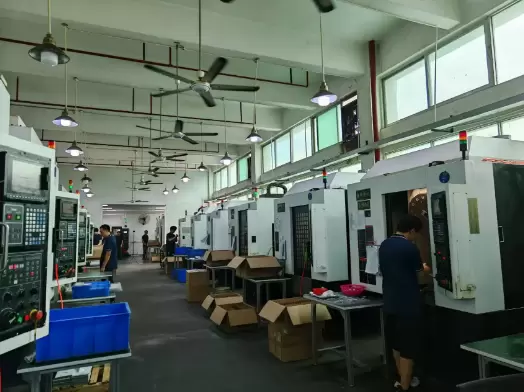
A key strength of SOGOOD lies in combining thermal simulation with precision manufacturing technologies such as CNC machining and metal nano-molding. This integrated approach ensures that simulation results translate accurately into real-world products.
Their engineering service platform can be accessed here:
<a href="https://www.sogoodprecision.com/service/">SOGOOD Precision Services</a>
Thermal simulation is only effective when supported by high-precision manufacturing. Even the most accurate simulation models must be translated into physically reliable structures.
SOGOOD specializes in:
The company’s engineering team includes senior experts with over 20 years of experience in CNC machining and metal nano-molding, derived from their work at BYD. This expertise ensures that thermal design concepts are executed with high accuracy and consistency.
To ensure consistent performance, SOGOOD implements a modern quality management system aligned with international standards. The company is ISO9001 certified, ensuring that every stage—from simulation to production—meets strict quality requirements.
This structured approach allows engineers to confidently move from thermal simulation to mass production without compromising performance or reliability.
SOGOOD’s thermal optimization solutions are widely applied across industries where heat management is critical:
Compact devices require efficient heat dissipation to maintain performance in limited space.
Electric vehicles and control modules depend on stable thermal conditions for safety and reliability.
Precision medical devices require stable thermal environments for accurate operation.
Data-heavy applications generate significant heat loads that must be efficiently managed.
Continuous operation systems require durable thermal designs to avoid downtime.
One of the biggest challenges in PCB thermal engineering is ensuring that simulation results match real-world performance. Differences often arise due to material variations, assembly conditions, or environmental factors.
SOGOOD addresses this gap by integrating:
This closed-loop engineering approach ensures that PCB designs are not only optimized in theory but also reliable in actual applications.
Heat dissipation simulation has become a fundamental tool in modern PCB design. It enables engineers to predict thermal behavior, optimize component placement, and enhance product reliability before production begins. As electronic systems continue to increase in complexity and power density, thermal optimization is no longer optional—it is essential.
Companies like SOGOOD play a critical role in bridging the gap between simulation and manufacturing. Through advanced engineering capabilities, precision CNC machining, metal nano-molding technology, and integrated thermal design expertise, SOGOOD helps global clients transform innovative concepts into high-performance, market-ready products.
By combining simulation-driven design with real-world manufacturing precision, PCB development becomes more efficient, more reliable, and more scalable—supporting the next generation of electronics innovation.