Key Manufacturing Capabilities to Expect from an Optical Medical Device Enclosure CNC Supplier
Mar 18, 2026
With the development of artificial intelligence, robotics technology, and intelligent manufacturing industry, robot products are gradually evolving from traditional automation equipment to intelligent terminals with perception, interaction, and learning capabilities. In application scenarios such as education, scientific research, and industrial training, robot platforms with highly biomimetic structures and open development capabilities are becoming important carriers for future intelligent technology talent cultivation. This multi degree of freedom educational robot is designed with the concept of "biomimetic humanoid structure+modular mechanical system+intelligent interaction". Through the deep integration of industrial design and structural design, it has created a new generation of robot product that combines technological aesthetics, engineering performance, and teaching value.
Industrial Design: Shaping the Image of Intelligent Robots with the Language of Future Technology
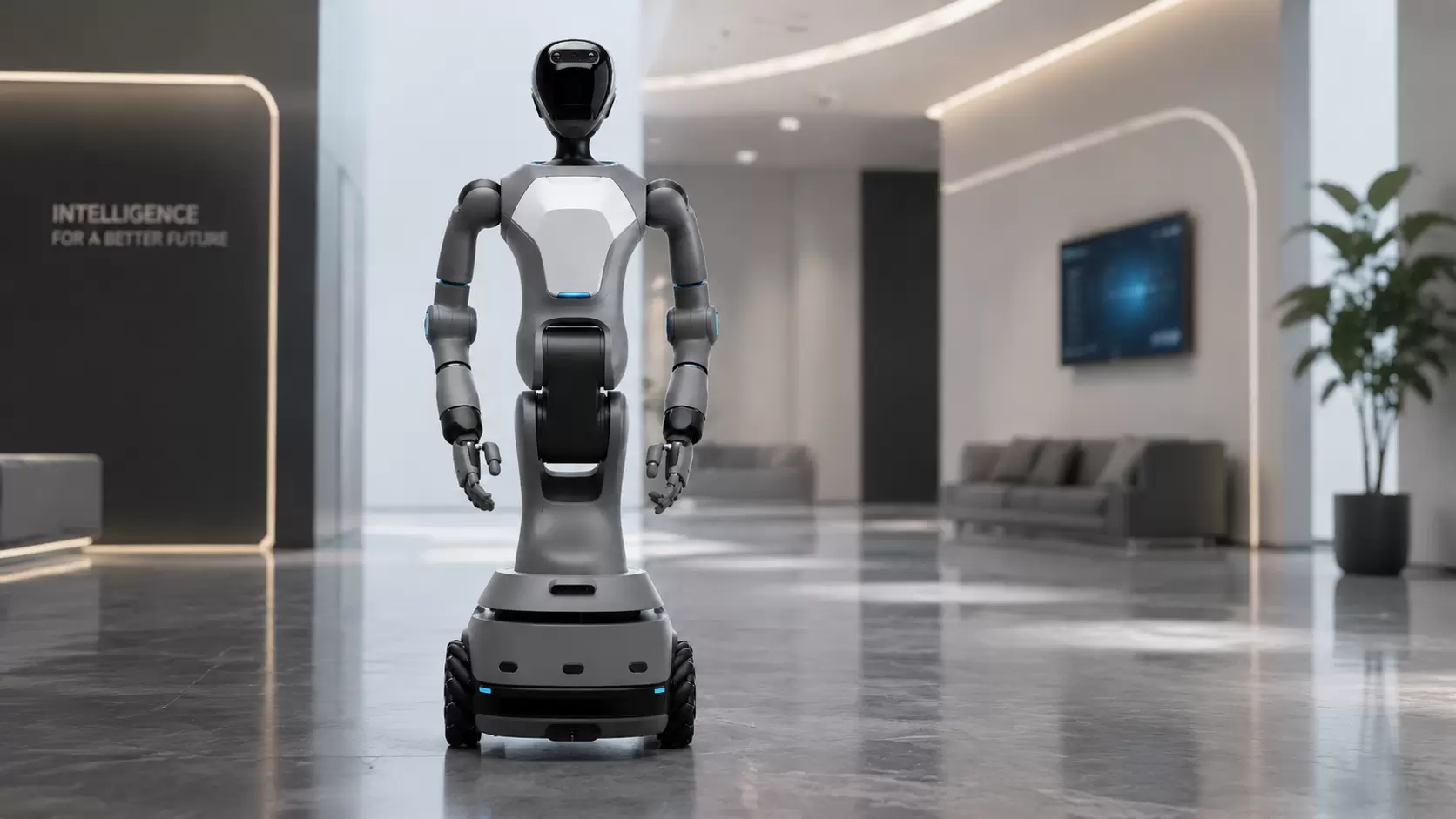
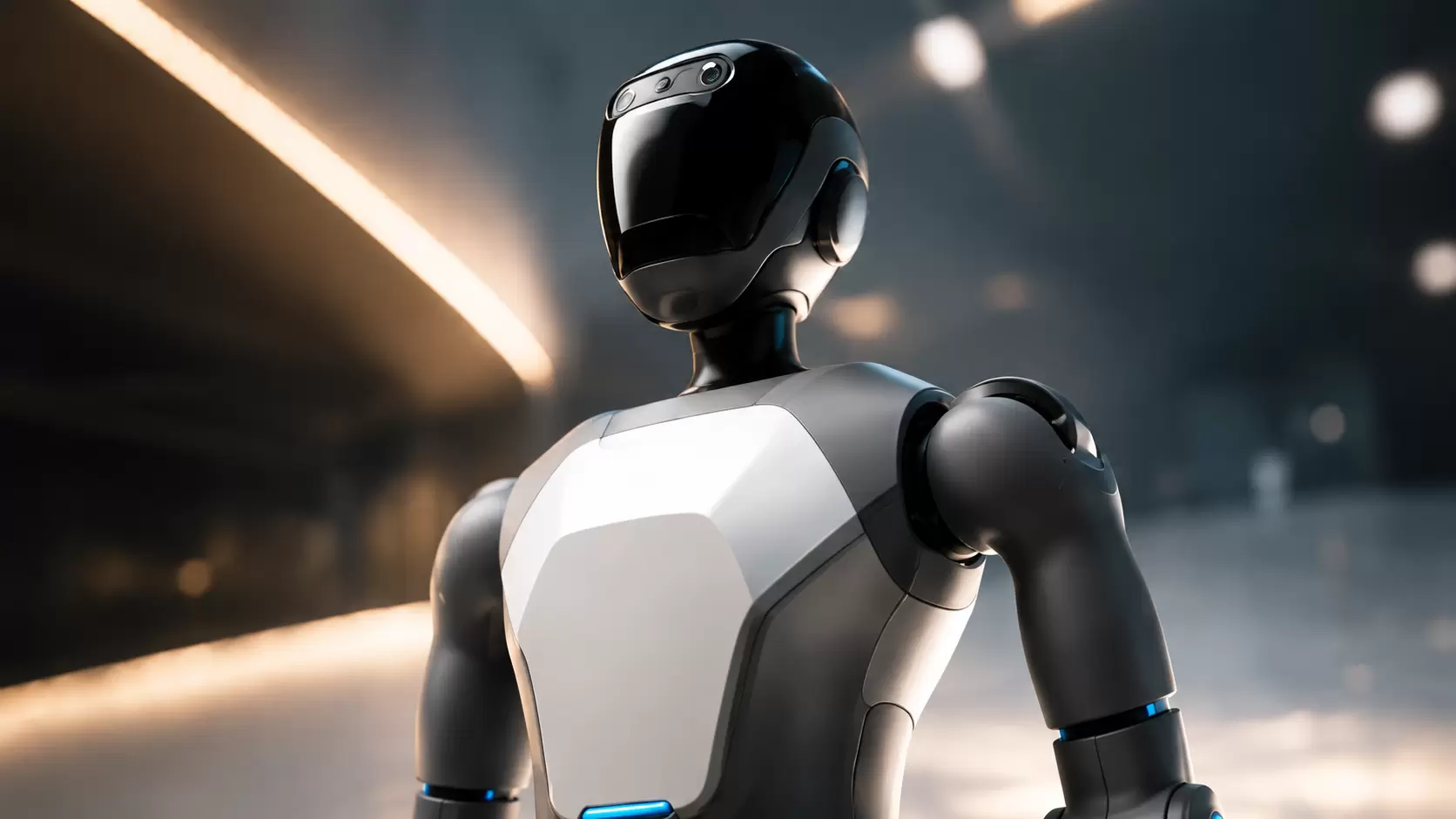
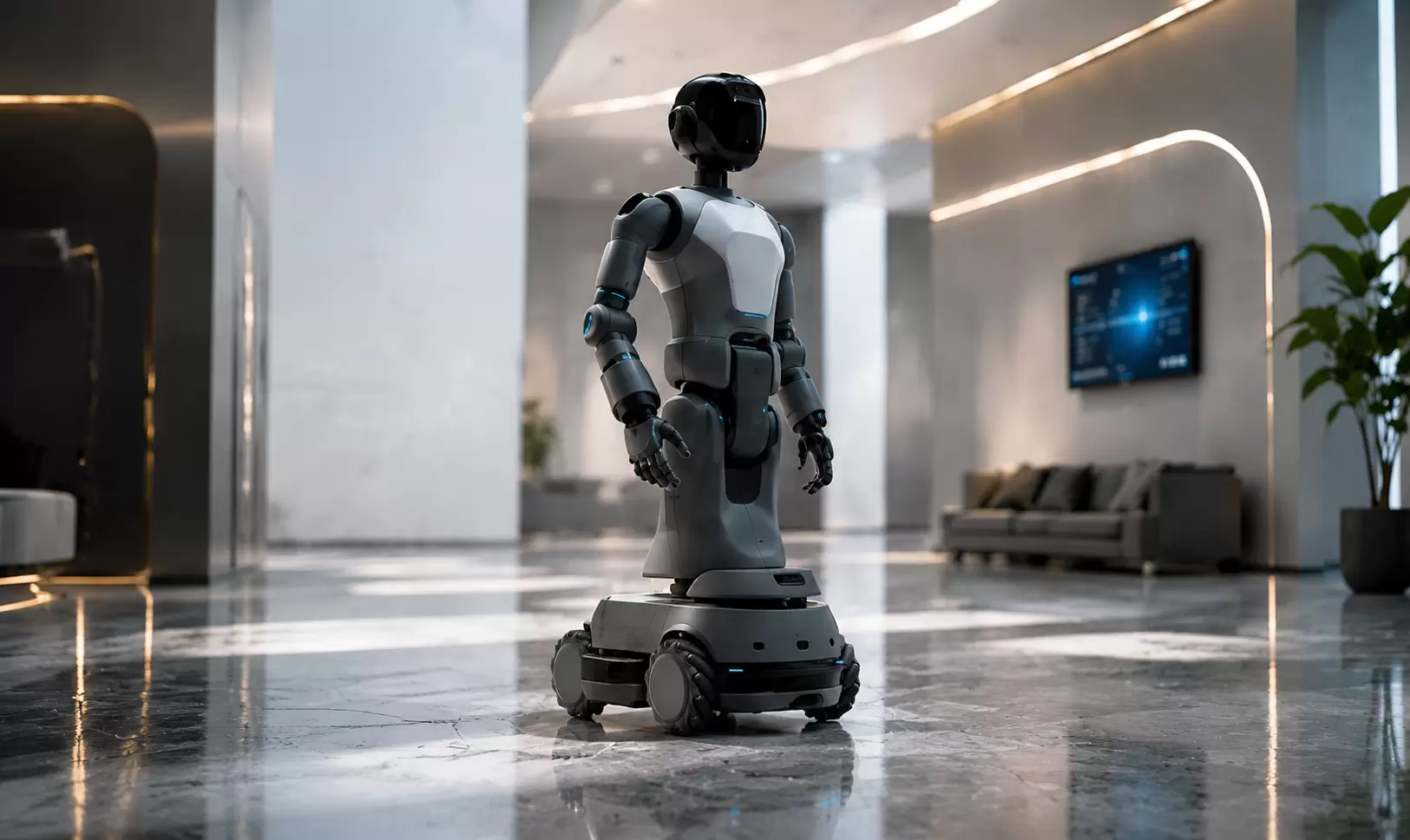
From the overall appearance, the robot adopts a typical humanoid biomimetic design language, forming a complete human-machine interaction form through five modules: head, torso, robotic arm, dexterous hand, and mobile chassis. The overall color scheme of the product is dominated by dark gray, black, and metallic gray, with local blue light effects embellished to create a strong sense of technology and futurism, making the device both suitable for scientific research and visually appealing like a consumer electronics product.
The robot head adopts a simple and smooth curved design, and creates a visual recognition area similar to an intelligent terminal through a hidden sensor layout. The horizontally arranged visual perception module at the top enhances the intelligent attributes of the robot while reducing the mechanical feel caused by the complex exposed structure of traditional industrial robots, making the overall image more approachable.
In terms of torso design, designers use large-area curved surface coverings and layered structural language to weaken the complexity of the internal mechanical structure, allowing the robot to present a more complete and unified product image. The chest area adopts a design that integrates brand recognition and functional status, dividing different functional areas with simple lines to ensure visual balance and facilitate users' understanding of device status.
The robotic arm adopts a modular joint exposed design, with black joint components and a silver gray shell forming a visual contrast to enhance the robot's motion properties. Adding a blue decorative ring to the joint position as a visual recognition element further reflects the technological sense of high-precision motion mechanism.
Biomimetic robotic arm design: achieving high-precision interactive experience
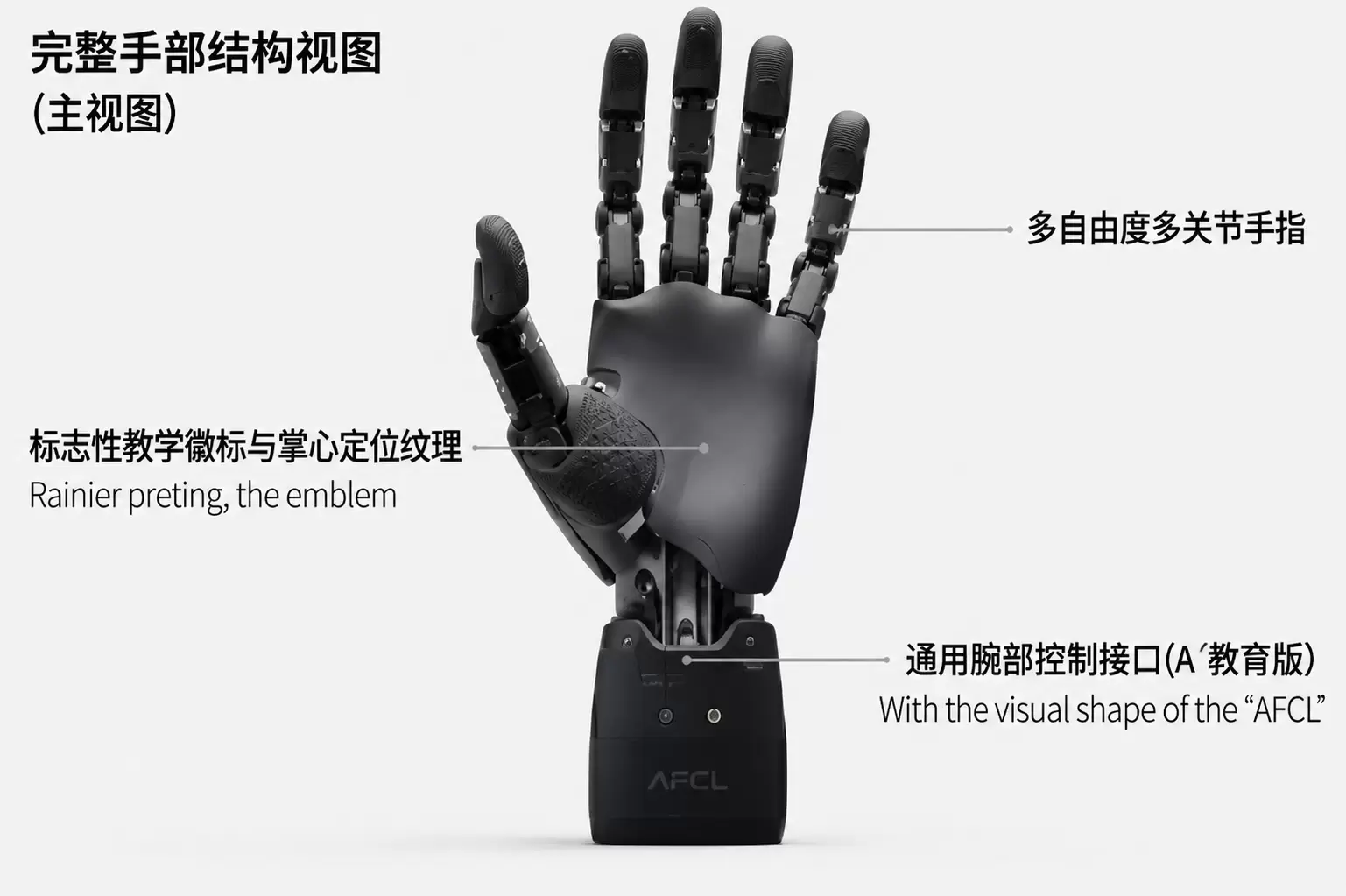
One of the design highlights of this robot is its multi degree of freedom biomimetic robotic arm system. Compared to traditional mechanical grippers that can only perform simple grasping actions, this robot adopts a five finger design that is close to the structure of the human hand, and achieves richer motion capabilities through multiple joint drives.
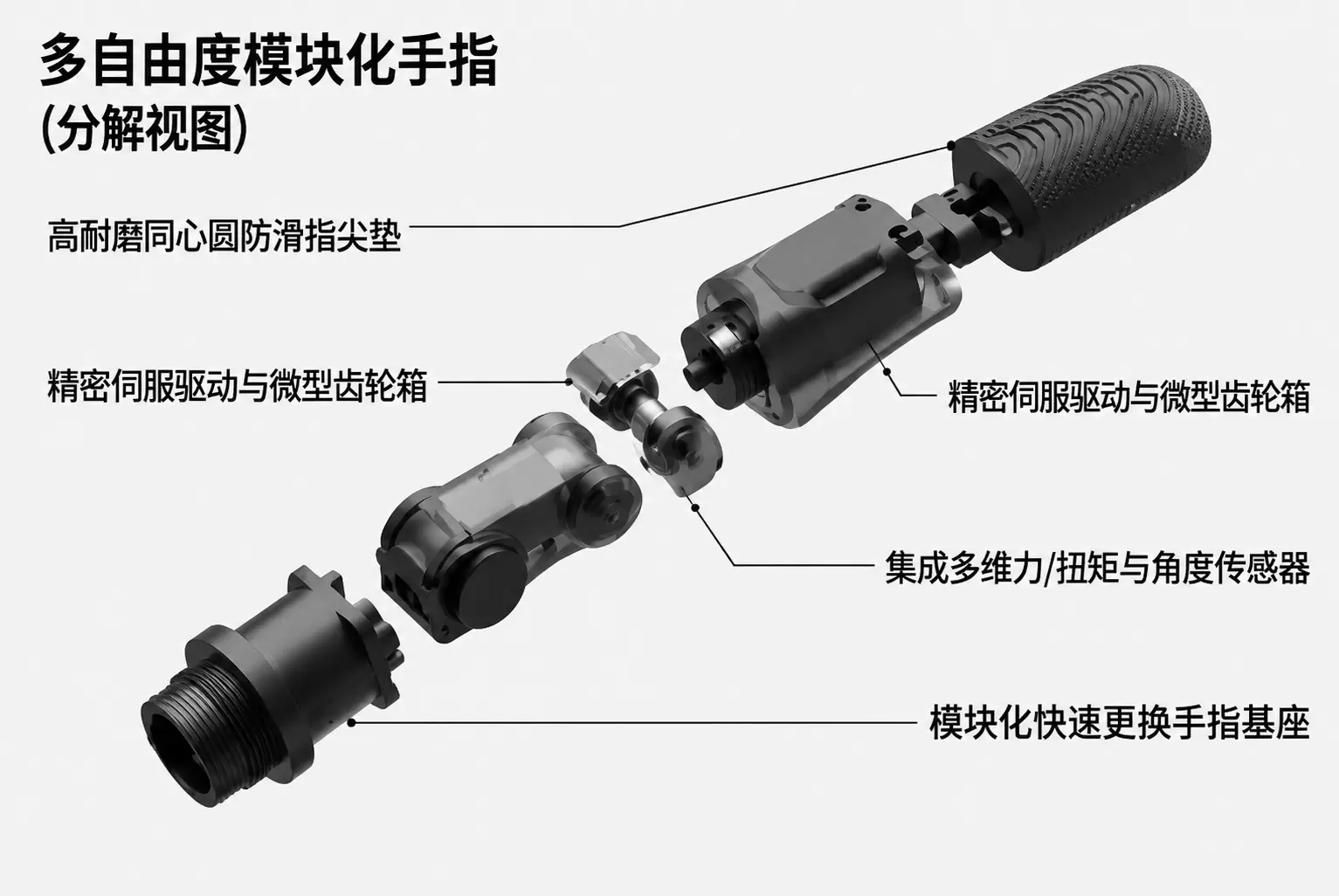
The robotic arm adopts a modular finger structure, with each finger consisting of a driving unit, a micro reduction mechanism, a torque sensor, and an angle detection module, which can achieve various actions such as bending, stretching, and force. The fingertip part is designed with high friction and anti slip materials to improve grasping stability, enabling the robot to complete more object operations.
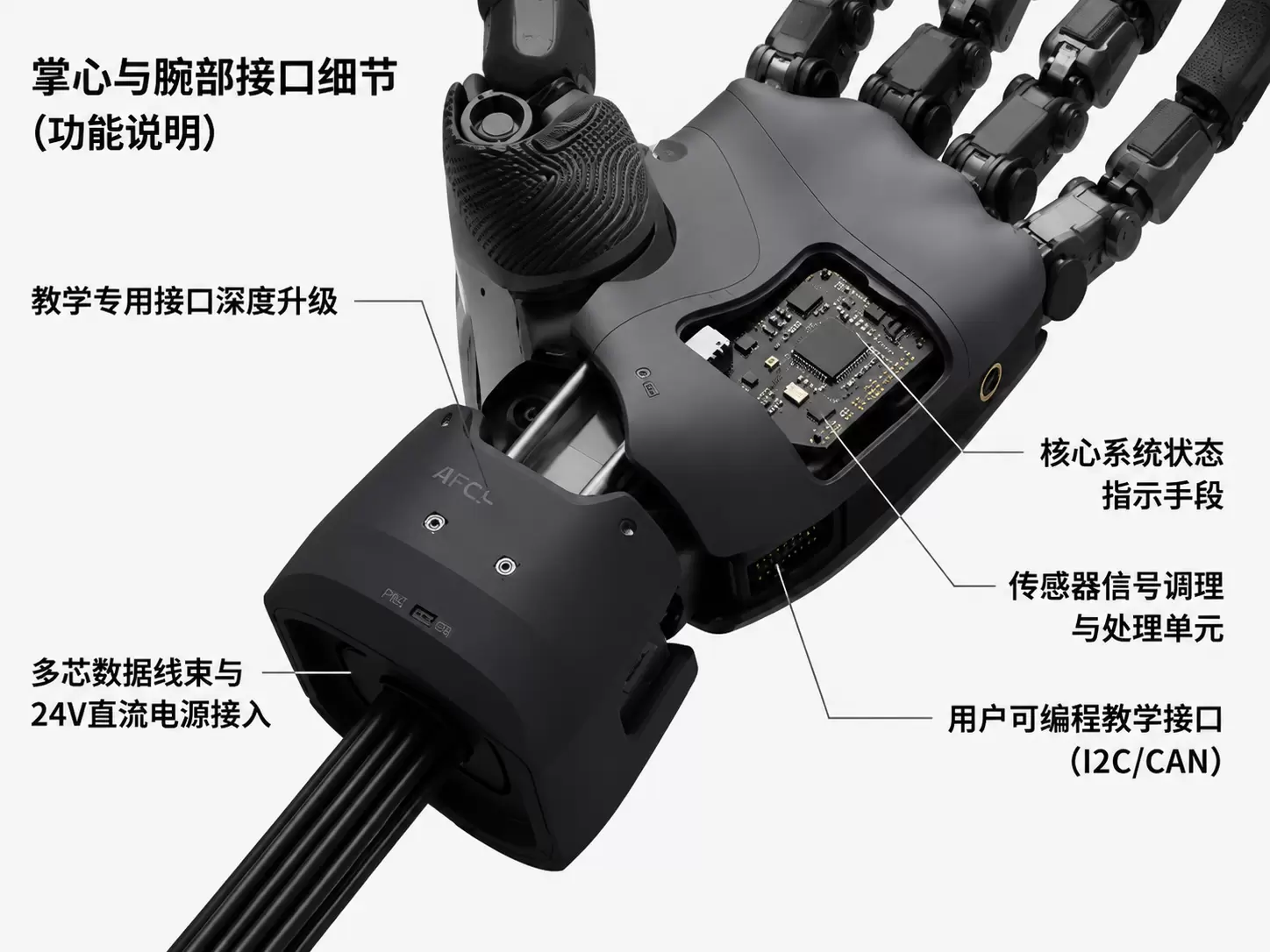
At the level of industrial design, robotic arms do not simply replicate the proportions of human hands, but rather perform engineering optimization while ensuring biomimetic features. The palm area adopts a streamlined curved surface design, making the overall visual more concise, while reserving internal electronic component installation space to achieve the unity of appearance and function.
Structural design: Modular architecture enhances maintenance and scalability capabilities
From the perspective of structural design, the robot adopts a highly modular design concept, dividing the robot system into a head perception module, a main module, a robotic arm motion module, a dexterous hand module, and a mobile chassis module.
This modular structure is convenient for later maintenance and also meets the needs of secondary development in the field of education and research. For example, the robotic arm module can be replaced according to teaching needs, and end effectors with different functions can be installed through standard interfaces to improve the scalability of the robot platform.
The robotic arm adopts a multi joint series structure, which achieves large-scale movement through multiple rotating joints. Each joint is equipped with an integrated servo drive system, reduction mechanism, and position feedback sensor, ensuring motion stability through precise algorithms. The external design adopts a split type shell, allowing maintenance personnel to disassemble the corresponding structure and improve equipment maintenance efficiency.
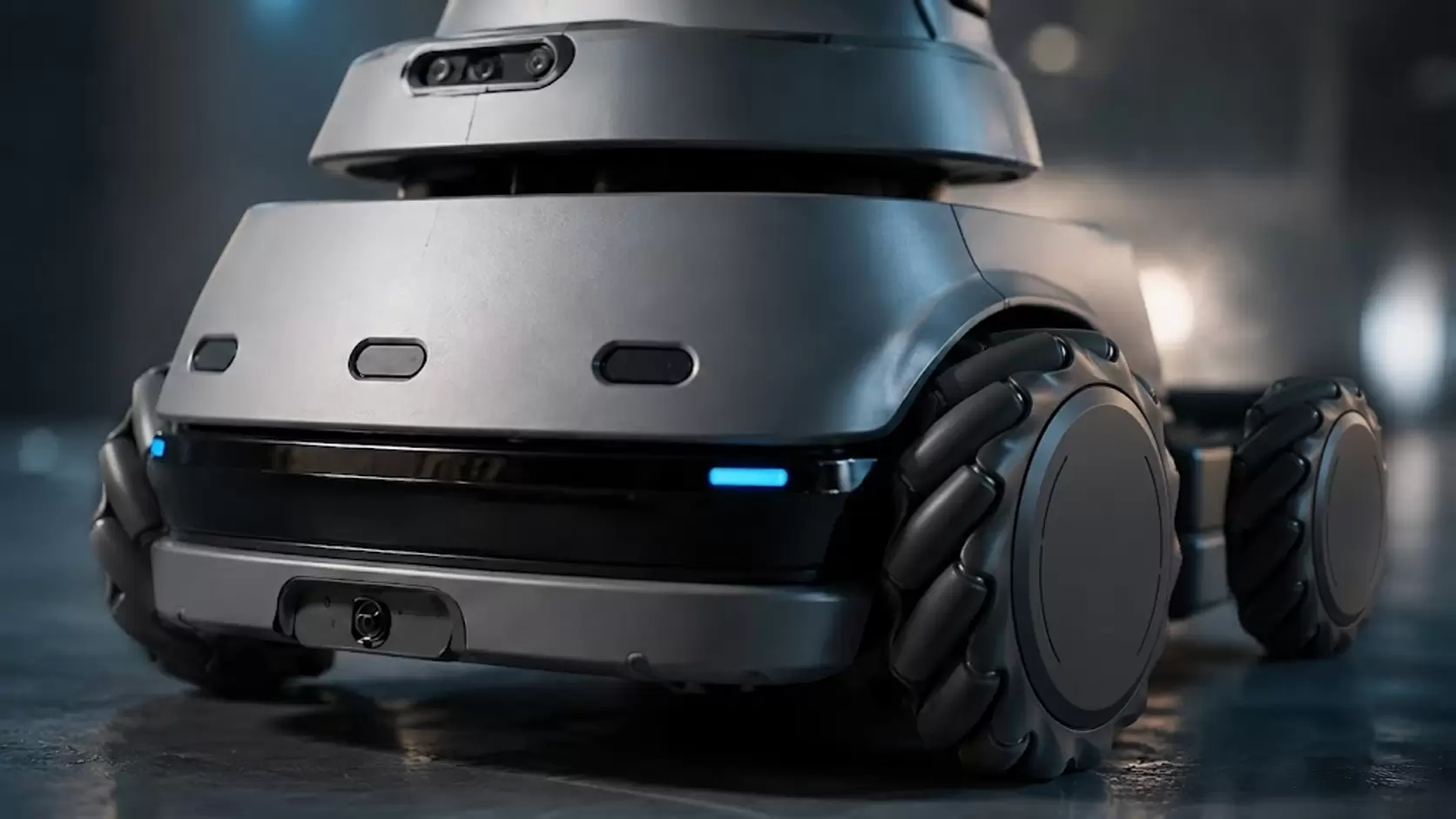
The bottom mobile platform of the robot adopts an omnidirectional movement design, which achieves the ability to move forward, backward, left, right, and diagonally through the Mecanum wheel system. Compared to traditional wheeled structures, omnidirectional chassis can adapt to more complex teaching environments and improve the spatial motion freedom of robots. At the same time, obstacle avoidance sensors are integrated inside the chassis, enabling the robot to achieve environmental perception and autonomous movement.
Human Computer Interaction Design: Creating an Intelligent Teaching Experience
As an educational robot, this product focuses on mechanical performance and also emphasizes the communication experience between humans and machines.
The robot head vision system can achieve environment recognition and target recognition, collect external information through sensors, and provide data support for intelligent interaction. At the same time, the robotic arm area is designed with a dedicated teaching interactive interface, which can be used for action demonstration, program writing, and experimental teaching.
At the software development level, the robot supports open interfaces and can connect to different programming environments, allowing students and developers to gain a deeper understanding of artificial intelligence algorithms, robot motion, and intelligent perception technology. The design concept of combining software and hardware makes robots not just devices, but also an important platform for intelligent manufacturing education.
Integration of Engineering Aesthetics: Future Trends in Robot Product Design
From the overall design perspective, an important direction for the future development of intelligent devices for this robot - industrial design is no longer just about exterior beautification, but requires deep integration with mechanical structure, electronic systems, and user experience.
By mimicking the appearance design, the robot reduces the distance between humans and machines; Through modular structural design, the product lifecycle and application value have been improved; Through a multi degree of freedom motion system, an intelligent interactive experience that is closer to human operational capabilities has been achieved.
In the future, with the continuous upgrading of artificial intelligence models, sensor technology, and robot algorithms, robot products will further develop towards greater intelligence, higher degrees of freedom, and stronger interaction capabilities. And this type of robot platform that integrates industrial design innovation and structural engineering technology,
It will become an important bridge connecting intelligent technology with practical applications, providing new possibilities for education, scientific research, and the future development of intelligent industries.