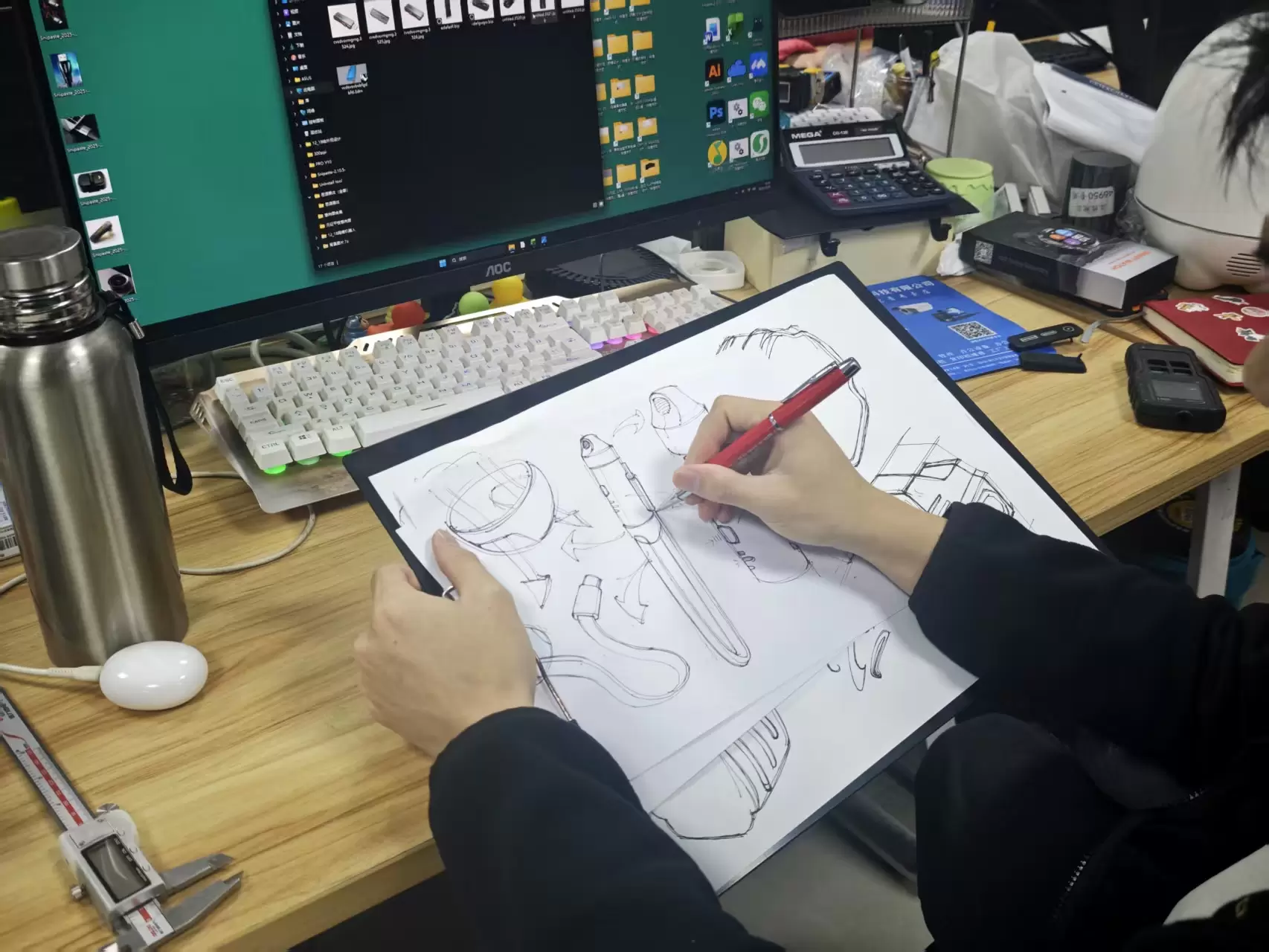
(Adapted for Industrial/Product/Packaging Design Scenarios)
Integrated Design and Manufacturing (IDM) is a model that integrates the entire workflow of creative design, process planning, production execution, and quality control & acceptance. Particularly suited for commercial brand (e.g., CATL, Lexar) product/packaging design needs, its core advantages revolve around four key dimensions—efficiency, cost-effectiveness, quality, and brand consistency—effectively addressing the industry pain point of "disconnect between design and manufacturing" in traditional models.
In traditional models, designers often lack understanding of manufacturing processes (e.g., material properties, mold constraints, printing precision), leading to repeated revisions of design drafts to adapt to production or even abandonment of core creative concepts.
Under the IDM model:
- Integrate manufacturing logic from the initial design stage: Process engineers and production supervisors participate in design reviews synchronously, directly advising on "feasible structures" and "cost-effective materials for the brand" (e.g., packaging for Lexar storage products, which needs to balance shock resistance and lightness, can lock in eco-friendly ABS material + in-mold labeling technology in advance).
- Seamless data connection: AI design files (e.g., CAD, 3D models) can be directly connected to production equipment (e.g., digital printers, mold processing centers) without secondary conversion, reducing human errors (e.g., brand logo color and size accuracy on packaging can be 1:1 restored from the design draft).
- Adapt to complex scenarios: For special structures of festival-themed packaging (e.g., Year of the Horse Spring Festival gift boxes, such as foldable openings and 3D embossed logos), feasibility can be verified in advance through simulated manufacturing, avoiding process rework during sampling.
Commercial design (e.g., festival packaging, new product launch packaging) has strict cycle requirements (e.g., Spring Festival gift boxes need to be finalized 3 months in advance). The IDM model doubles efficiency through "workflow compression":
- Eliminate cross-departmental communication costs: No need for repeated coordination between designers and manufacturers (e.g., confirming packaging CMYK values or product shell injection molding processes); production scheduling begins immediately after design approval.
- Seamless connection between sampling and production: Supports "small-batch rapid sampling" (e.g., 3D printing, digital printing). Designers can adjust details directly on sampled products (e.g., adjusting the depth of gift box textures or the curvature of product shells), and mass production starts immediately after sample approval—shortening cycles by 30%-50% compared to traditional models.
- Adapt to iterative workflows: Aligns with the "generate-feedback-revise" design habit. If the brand needs to adjust festival-themed elements (e.g., the presentation of the Year of the Horse logo), changes can be directly synced to the production end without reconfiguring process parameters, enabling rapid implementation of optimized solutions.
In traditional models, the disconnect between design and manufacturing often leads to "three types of waste": sampling waste (material loss from repeated revisions), process waste (overuse of materials due to unoptimized designs, e.g., excessive packaging), and communication waste (time costs of cross-departmental coordination).
Label: