The Role of Metal Nano Molding in Miniaturized Industrial Components
Aug 21, 2026
In modern manufacturing, accuracy is no longer a competitive advantage—it is a basic requirement. Industries such as electronics, automotive, medical devices, communications, and artificial intelligence all demand parts with tight tolerances, stable performance, and consistent quality. As products become smaller, more integrated, and structurally complex, traditional manufacturing methods often struggle to meet these expectations. This is where CNC precision machining plays a decisive role.
CNC (Computer Numerical Control) precision machining has become one of the most reliable ways to manufacture complex parts with high accuracy, repeatability, and efficiency. By combining advanced equipment, digital design, and experienced engineering, CNC machining enables manufacturers to turn intricate designs into functional, production-ready components.
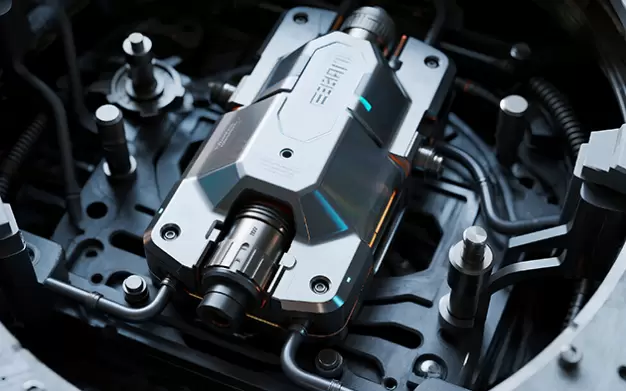
CNC precision machining refers to the use of computer-controlled machine tools—such as milling machines, lathes, and multi-axis machining centers—to remove material from metal or plastic workpieces. The machining process is guided directly by digital design data, ensuring that every movement, cut, and tolerance follows predefined parameters.
Compared with manual machining, CNC systems eliminate human variability during processing. Once a program is validated, it can produce thousands of identical parts with the same dimensional accuracy. This is especially important for complex components that include thin walls, deep cavities, micro features, or multi-surface alignment requirements.
Complex parts are defined not only by their geometry but also by their functional demands. A minor deviation in size, flatness, or alignment can cause assembly failure, thermal inefficiency, signal interference, or premature wear.
For example:
Electronic enclosures must maintain precise dimensions to ensure proper PCB placement and heat dissipation.
Automotive components must meet strict tolerance standards for safety and durability.
Medical device parts require consistent accuracy to meet regulatory and functional requirements.
AI and communication equipment often rely on precision housings and heat sinks to maintain stable performance.
CNC precision machining directly addresses these challenges by providing controlled, repeatable accuracy across every production stage.
CNC machining begins with CAD and CAM data. Engineers convert product designs into machining programs that control tool paths, speeds, and cutting depths. This digital workflow minimizes interpretation errors and ensures that the final part matches the original design intent.
At SOGOOD, product design, structural engineering, and manufacturing are closely integrated. This approach allows engineers to optimize designs for both performance and manufacturability before production begins, reducing errors and improving final accuracy.
Complex parts often require machining on multiple surfaces and angles. Advanced CNC machines with 3-axis, 4-axis, or 5-axis configurations can complete these operations in a single setup. Reducing repositioning significantly improves dimensional consistency and surface alignment.
This capability is particularly important for precision housings, connectors, and heat sinks used in electronics, communication, and AI hardware.
Modern CNC machines can achieve tolerances within microns when properly programmed and maintained. High-quality cutting tools, stable fixtures, and real-time process monitoring help maintain consistent accuracy throughout production runs.
SOGOOD’s senior engineers, many with over 20 years of experience in CNC machining and metal nano molding, apply strict process control standards developed from their work in high-volume industrial environments.
Different materials behave differently under machining stress. CNC machining allows precise control over cutting parameters to reduce deformation, vibration, and thermal distortion. This is essential when working with aluminum alloys, stainless steel, copper, or specialized materials used in thermal management applications.
By combining CNC machining with metal nano forming technology, SOGOOD ensures material stability while achieving fine surface finishes and structural precision.
Accuracy in machining is not only about dimensions—it also directly impacts thermal performance. In industries such as electronics, automotive, and AI computing, heat dissipation is a critical design consideration.
Precision-machined heat sinks, enclosures, and thermal components rely on accurate fin spacing, flat contact surfaces, and optimized airflow channels. Even small deviations can reduce heat transfer efficiency.
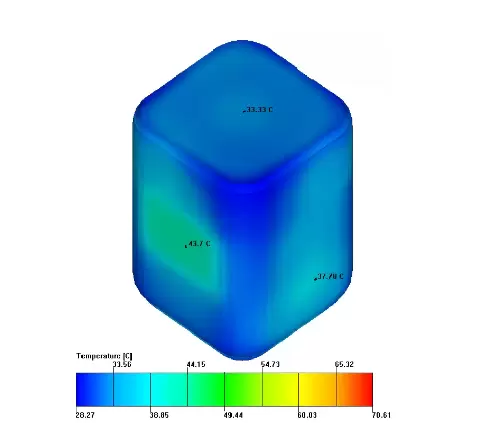
SOGOOD integrates heat simulation design with CNC precision machining to ensure that thermal solutions perform as intended in real-world conditions. This combination allows clients to validate designs early and reduce costly revisions later in development.
High accuracy must be repeatable, not occasional. CNC machining supports large-scale production while maintaining consistent quality across batches.
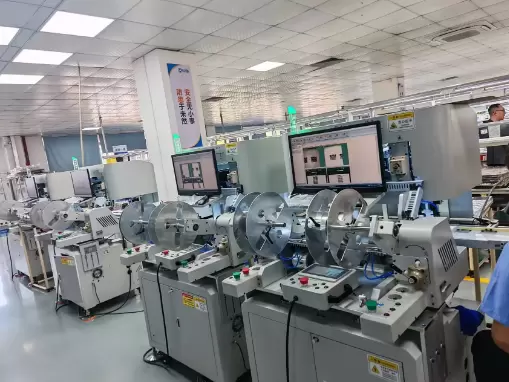
SOGOOD operates under a modern quality management system aligned with international standards and certified to ISO9001. Each production stage includes inspection and verification processes to ensure that parts meet design and tolerance requirements before delivery.
This level of control is essential for OEM and ODM customers who depend on reliable manufacturing partners to support long-term product lifecycles.
One of the key advantages of CNC precision machining is its flexibility. The same process can support rapid prototyping, low-volume production, and scaled manufacturing without compromising accuracy.
SOGOOD’s one-stop manufacturing services cover:
Product and industrial design
Structural and mold engineering
Heat simulation design
CNC precision machining
Metal nano forming
Assembly and auxiliary components
This integrated approach allows customers to move seamlessly from R&D to market-ready products while maintaining design consistency and manufacturing precision.
To learn more about these capabilities, visit the service overview page:<a href="https://www.sogoodprecision.com/service/">CNC Precision Machining Services</a>
Technology alone does not guarantee accuracy. Skilled engineers and designers play a crucial role in translating complex ideas into manufacturable parts.
SOGOOD’s team includes experienced industrial designers, structural engineers, and mold engineers, many of whom were part of the Motorola A1200 and A1600 design teams. Their background in global product development and award-winning design, including Red Dot Design recognition, ensures that both form and function are carefully considered.
Serving global clients such as Qualcomm, ZTE, Lenovo, NEC, Han’s Laser, Philips, Panasonic, Haier, Midea, ASUS, TCL, and others has strengthened SOGOOD’s ability to meet diverse industry standards and technical requirements.
Accurate manufacturing reduces waste, shortens development cycles, and improves product reliability. For customers, this translates into faster time-to-market and lower long-term risk.
By combining innovation, reliable processes, and attentive service, SOGOOD helps clients bridge the gap between engineering concepts and commercial success. The company’s focus on CNC precision machining and nano forming technology continues to support high-value applications across multiple industries.
CNC precision machining is a cornerstone of modern complex part manufacturing. Its ability to deliver high accuracy, repeatability, and scalability makes it indispensable for industries that demand precision and performance.
With strong technical expertise, advanced manufacturing capabilities, and a commitment to quality, SOGOOD provides dependable solutions for complex components, from design to production. As products continue to evolve in complexity, CNC precision machining will remain a critical enabler of innovation and manufacturing excellence.