Seize the Momentum to Embark on a New Journey, Unite as One to Forge a New Chapter——2026 Development Outlook of Shuoguo Precision Technology Co., Ltd.
Jan 09, 2026
CNC precision machining of aluminum alloys is widely used across electronics, industrial equipment, automotive systems, medical devices, and AI hardware. While aluminum is known for its machinability, achieving consistent precision and stable quality in real production depends on far more than material selection alone.
Behind every high-quality aluminum CNC part is a series of tightly controlled process decisions. From material preparation to tool selection and process stability, each factor plays a role in determining dimensional accuracy, surface quality, and long-term performance.
Understanding these key process factors is essential for manufacturers seeking reliable, scalable CNC aluminum machining.
Not all aluminum alloys behave the same under CNC machining. Alloy composition, temper, and internal structure directly influence cutting behavior, surface finish, and dimensional stability.
Some alloys prioritize strength, others focus on machinability or thermal conductivity. Selecting the appropriate alloy requires balancing mechanical requirements with processing efficiency. Equally important is ensuring consistent material quality from batch to batch, as variation can lead to unpredictable machining results.
Before machining begins, experienced manufacturers verify material specifications and condition to minimize downstream risk.
Tooling choices are central to CNC precision machining. For aluminum alloys, cutting tools must balance sharpness, wear resistance, and chip evacuation capability.
Incorrect tool geometry can lead to poor surface finish, excessive burr formation, or dimensional drift. Proper tooling strategy considers:
Cutting edge design optimized for aluminum
Tool coatings suitable for non-ferrous metals
Tool rigidity to maintain stability at high speeds
Tool life management is also critical. Worn tools may not immediately fail but can gradually reduce accuracy, making monitoring and replacement schedules essential for consistent results.
Spindle speed, feed rate, and depth of cut all influence machining quality. Aluminum alloys allow relatively high cutting speeds, but aggressive parameters without proper control can cause vibration, thermal deformation, or surface defects.
Optimizing cutting parameters is not a one-time task. It requires adjustment based on part geometry, tool selection, and machine capability. CNC machining centers equipped with stable control systems allow fine-tuning of these parameters to achieve the desired balance between efficiency and precision.
Experienced manufacturers rely on process validation and historical data to establish stable machining windows for aluminum parts.
Although aluminum conducts heat efficiently, heat generated during machining can still affect accuracy. Localized temperature increases may cause temporary expansion, influencing tight tolerances.
Coolant strategy plays a critical role in managing thermal effects. Proper coolant application helps control cutting temperature, improve surface finish, and extend tool life. At the same time, excessive or poorly directed coolant can introduce instability.
Thermal awareness during machining is especially important for parts requiring high flatness or close-fit assembly.
Precision machining depends on stable and repeatable workholding. Aluminum components, particularly thin-walled or complex parts, are sensitive to deformation if clamped improperly.
Effective fixturing ensures:
Secure positioning without inducing stress
Repeatable alignment across production runs
Minimal vibration during machining
Custom fixtures are often designed specifically for aluminum CNC parts to maintain dimensional integrity throughout the machining process.
The order in which features are machined affects part accuracy. Removing material in the wrong sequence can introduce internal stress release, leading to distortion.
Process planning typically considers rough machining first, followed by finishing passes that bring parts to final tolerance. Intermediate stress relief steps may be applied for complex or high-precision components.
Thoughtful sequencing reduces the risk of dimensional shift and improves overall consistency.
Surface finish is not only an aesthetic concern. It influences functional performance, assembly behavior, and compatibility with surface treatments.
In CNC aluminum machining, surface finish is affected by tool condition, cutting parameters, vibration, and coolant usage. Achieving consistent surface quality requires controlling all these variables simultaneously.
When parts are destined for anodizing or coating, surface preparation becomes even more critical. CNC machining must deliver a uniform baseline to ensure predictable finishing results.
Precision machining is only meaningful if results are verified. Dimensional inspection ensures that CNC-machined aluminum parts meet design requirements before moving to assembly or shipment.
Modern quality systems integrate in-process inspection and final verification, using calibrated measuring tools and standardized procedures. This approach reduces the risk of undetected deviation and supports continuous improvement.
Quality feedback loops also help refine machining parameters over time.
CNC precision machining achieves its best results when aligned with upstream design and simulation. Product geometry, tolerance allocation, and thermal behavior should be evaluated before machining begins.
Simulation tools help predict machining challenges, such as thin-wall deformation or heat concentration. CNC engineers then adjust tooling and process plans accordingly.
This integration shortens development cycles and reduces costly redesigns.
Many CNC aluminum machining projects begin with prototypes but quickly move toward mass production. Maintaining consistency across this transition requires disciplined process control.
Standardized work instructions, tooling setups, and inspection criteria ensure that prototype performance can be replicated at scale. Without this structure, quality variation often increases as volume grows.
CNC machining is most effective when treated as a controlled manufacturing system rather than a standalone operation.
Process factors do not exist in isolation. Design decisions, material selection, machining strategy, and quality control are interconnected.
A one-stop manufacturing approach simplifies coordination across these stages. By aligning design engineering, CNC machining, thermal analysis, and quality systems under one framework, manufacturers reduce miscommunication and improve process efficiency.
SOGOOD applies this integrated approach by combining CNC machining of aluminum alloys with product design, simulation, Nano Molding Technology, and standardized quality management. This ensures process factors are addressed holistically rather than reactively.
To explore how these process controls are applied in real production environments, visit
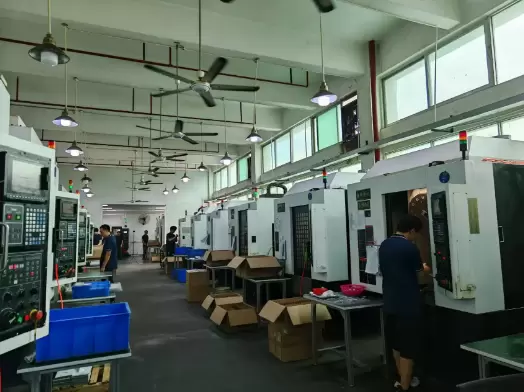
CNC precision machining of aluminum alloy.