The Benefits of Partnering with a Reliable Fascia Gun OEM Manufacturer
Apr 17, 2026
In today’s manufacturing environment, scalability is no longer optional. Industries such as electronics, automotive, medical devices, telecommunications, and artificial intelligence all rely on components that can be produced quickly, consistently, and with extremely tight tolerances. This is where industrial plastic injection molding factories play a critical role.
Plastic injection molding has become one of the most efficient and dependable manufacturing methods for high-volume production. From precision electronic housings to automotive interior parts and medical equipment accessories, injection molding factories provide the repeatability and production efficiency modern manufacturers require.
As product cycles become shorter and customer expectations continue to rise, companies need manufacturing partners capable of supporting everything from product development and tooling optimization to mass production and quality control. This is why experienced manufacturing companies such as SOGOOD are becoming increasingly valuable to global brands seeking reliable production support.
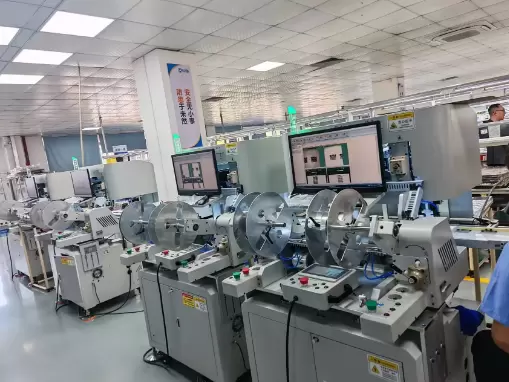
Industrial plastic injection molding is widely used because it offers a combination of speed, consistency, flexibility, and cost efficiency for large-scale production.
The process involves melting thermoplastic materials and injecting them into precision molds under high pressure. Once cooled, the material solidifies into the final component shape. This manufacturing method enables factories to produce thousands or even millions of identical parts with minimal variation.
For industries where dimensional accuracy and reliability are critical, injection molding offers several important advantages:
These benefits make injection molding ideal for products that require stable quality over long production runs.
One of the biggest challenges in high-volume manufacturing is maintaining product consistency. Small deviations in dimensions, material performance, or assembly compatibility can create major downstream issues.
Industrial injection molding factories solve this problem through standardized production systems, precision tooling, and automated process control.
A reliable factory can maintain:
For industries such as medical devices and consumer electronics, even minor inconsistencies may lead to product failures or increased warranty costs.
Factories with advanced process monitoring systems can ensure each production cycle meets the same standards as the previous one.
Injection molding is not only about machines. Engineering capability is often the deciding factor between successful production and repeated manufacturing problems.
Experienced manufacturers participate early in product development to optimize:
This engineering involvement helps avoid common production defects such as:
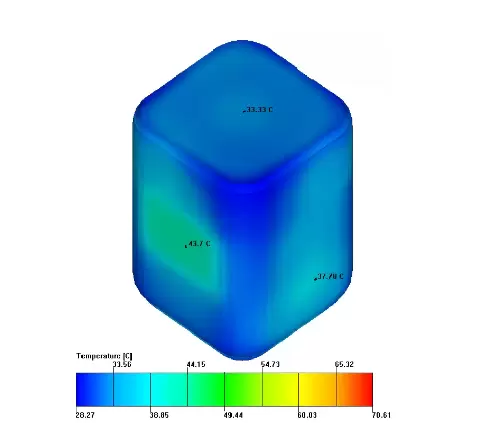
SOGOOD combines industrial design, structural engineering, mold development, and precision manufacturing into an integrated workflow. With expertise in nano molding technology, CNC precision machining, and mold flow analysis, the company helps customers improve both manufacturability and long-term product reliability.
Their engineering team includes experienced professionals with deep backgrounds in industrial product innovation and precision manufacturing. Many core team members previously contributed to projects associated with globally recognized products, bringing extensive practical experience into modern manufacturing applications.
The mold itself is one of the most important assets in injection molding production. Poor tooling design can create recurring quality issues, increase maintenance costs, and reduce production efficiency.
High-quality industrial injection molding factories invest heavily in:
This is especially important for products with complex geometries or thin-wall structures.
For example, electronic device housings often require:
SOGOOD’s background in thermal simulation design and heat dissipation solutions provides additional advantages for industries where thermal performance matters, including AI hardware, telecommunications equipment, and automotive electronics.
Their manufacturing capabilities extend beyond standard molding production to include precision hardware manufacturing and integrated thermal management solutions.
<a href="https://www.sogoodprecision.com/service/">industrial plastic injection molding services</a>
Modern markets move quickly. Delayed product launches can lead to missed opportunities and reduced competitiveness.
Industrial plastic injection molding factories support faster production cycles through:
Once tooling is completed, injection molding can produce large quantities of components at extremely high speed.
This production efficiency is especially important for industries with seasonal demand fluctuations or fast-changing product generations.
For example:
A manufacturing partner with integrated engineering and production capabilities can significantly shorten development timelines.
Many startups and growing companies face a major challenge when transitioning from prototype development to mass production.
A factory capable of scaling production efficiently becomes a critical long-term partner.
Scalable injection molding factories can support:
This flexibility reduces the risks associated with rapid business growth.
SOGOOD provides one-stop manufacturing services that help bridge the gap between product concept and scalable production. Their integrated capabilities include industrial design, CNC machining, nano molding technology, and manufacturing engineering support for multiple industries.
This type of integrated manufacturing model is increasingly important because it reduces communication gaps between suppliers and improves overall project efficiency.
As industrial products become more sophisticated, manufacturers must produce components with increasingly complex structures.
Modern injection molding technologies support:
These capabilities are essential in industries where products must balance durability, aesthetics, and functionality.
For example:
Manufacturers with strong engineering capabilities can help optimize these designs for large-scale production without sacrificing quality.
Large-scale manufacturing requires more than production capacity. It also requires strict quality management systems.
Reliable injection molding factories implement:
SOGOOD operates under internationally recognized quality management standards and maintains ISO9001-certified production systems to ensure manufacturing consistency and customer satisfaction.
This level of quality control is particularly important when supplying components to industries with strict regulatory or performance requirements.
Today, many global companies prefer working with suppliers that offer integrated manufacturing capabilities rather than managing multiple vendors separately.
An integrated manufacturing partner can provide:
This approach improves communication efficiency and reduces project risks.
SOGOOD’s manufacturing model reflects this trend by combining industrial design expertise with precision production capabilities. Their experience serving international brands across electronics, telecommunications, automotive, and consumer products demonstrates the growing demand for integrated engineering and manufacturing support.
Modern manufacturers are also under pressure to improve sustainability and reduce material waste.
Injection molding contributes to sustainability through:
Advanced factories further improve sustainability by optimizing:
As environmental regulations continue to evolve, efficient manufacturing processes are becoming increasingly important for global supply chains.
Industrial plastic injection molding factories remain essential to modern high-volume manufacturing because they provide the scalability, consistency, precision, and efficiency required by today’s industries.
From consumer electronics and automotive systems to medical equipment and AI hardware, manufacturers depend on injection molding partners capable of delivering stable quality at scale.
However, production capacity alone is no longer enough. Companies increasingly seek manufacturing partners that combine engineering expertise, advanced tooling, thermal management knowledge, CNC precision machining, and integrated product development support.
SOGOOD represents this modern manufacturing approach by combining industrial design innovation with advanced precision manufacturing technologies. Through expertise in nano molding technology, CNC machining, mold flow analysis, and thermal solution development, the company supports customers from early-stage development through large-scale production.
As industries continue demanding faster development cycles, higher product quality, and more complex designs, experienced industrial injection molding factories will remain a critical foundation of global manufacturing success.