Comprehensive Analysis of In-Mold Injection Molding Technology: Principles, Advantages and Application Fields
Jan 03, 2026
Industrial printers are no longer limited to basic labeling or packaging tasks. Today, they are deeply integrated into manufacturing workflows across electronics, automotive, medical equipment, logistics, and consumer products. From structural components to heat dissipation parts and precision housings, industrial printing technologies are helping manufacturers shorten development cycles, improve consistency, and support product customization.
However, selecting the right manufacturing partner is not simply about purchasing equipment. The real difference lies in the manufacturer’s engineering capabilities, process control, material expertise, and ability to support long-term production needs. Businesses that overlook these factors often face delays, inconsistent quality, and scalability problems later in the project.
This article explores the key capabilities companies should evaluate when choosing an industrial printer manufacturer and why a full-service manufacturing partner can create stronger long-term value.
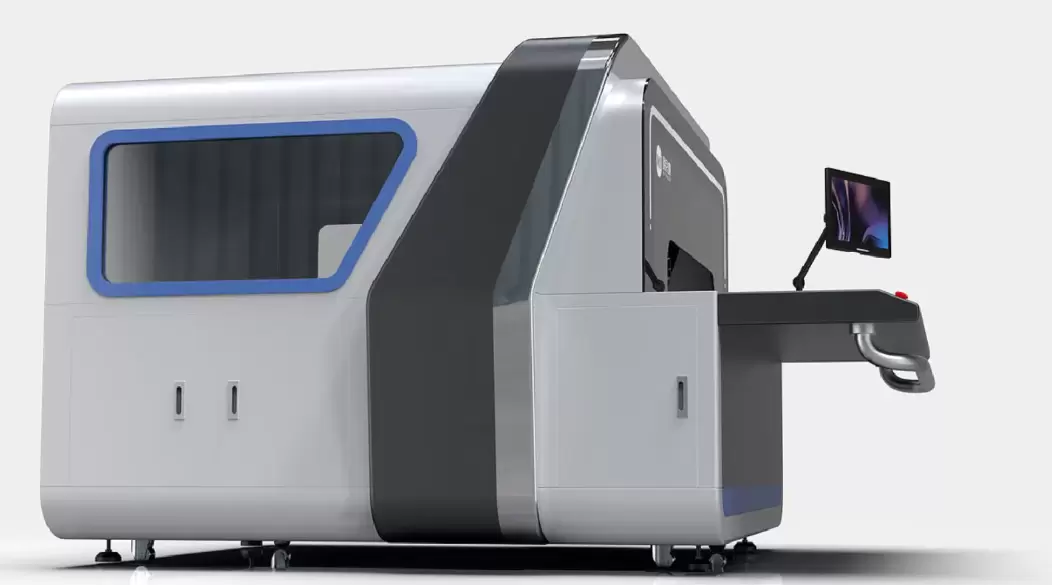
One of the most important capabilities is engineering integration. Many manufacturers can produce parts, but fewer can optimize designs for manufacturability from the beginning.
A reliable industrial printer manufacturer should provide support during:
This becomes especially important for industries such as communications equipment, automotive electronics, medical devices, and AI hardware, where dimensional precision and thermal performance directly affect product reliability.
For example, companies developing advanced industrial printer components often require complex housings, internal support structures, and heat management systems. Working with a manufacturer that combines design expertise with CNC precision machining and nano molding technology can significantly reduce redesign cycles and production risks.
Manufacturers with experienced industrial design teams are usually better equipped to identify potential structural weaknesses early and recommend practical improvements before mass production begins.
The manufacturing technologies behind industrial printing solutions directly affect product consistency, precision, and scalability.
When evaluating a manufacturer, pay close attention to whether they offer:
These technologies are particularly valuable for high-performance industrial printer components that require strict dimensional tolerances and stable thermal behavior.
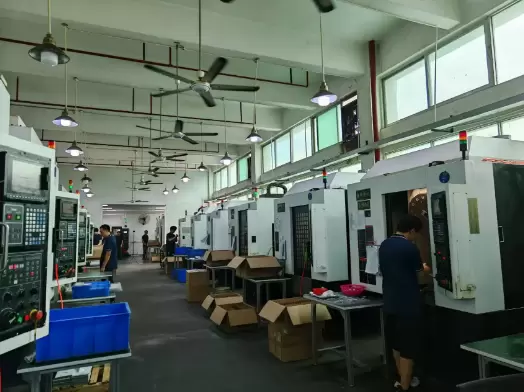
For example, metal nano molding technology allows manufacturers to create lightweight yet durable structures with highly detailed surface finishes. CNC machining ensures accurate tolerances for critical parts used in industrial-grade printers and supporting equipment.
Companies with advanced machining and simulation capabilities can also improve production efficiency while reducing waste and defect rates.
A good example is <a href="https://www.sogoodprecision.com/industrial-products/printer.html">industrial printer manufacturing solutions</a> that combine precision machining with structural optimization for demanding industrial applications.
Manufacturers serving multiple industries often develop stronger engineering flexibility and broader technical knowledge.
Industrial printing applications vary significantly depending on the sector:
A manufacturer experienced across these sectors is more likely to understand industry-specific compliance requirements and production challenges.
SOGOOD, headquartered in Shenzhen, China’s well-known “City of Design,” has built its manufacturing capabilities around serving industries such as electronics, communications, automotive, medical, and artificial intelligence. Its team includes experienced industrial designers, structural engineers, and mold engineers with extensive backgrounds in precision product development.
This type of cross-industry experience helps manufacturers adapt quickly to new projects while maintaining reliable production quality.
Quality management is one of the clearest indicators of a manufacturer’s reliability.
Industrial printer components often involve tight tolerances, precision assemblies, and demanding operational conditions. Without strong quality control systems, even small dimensional inconsistencies can create performance issues during assembly or long-term operation.
Manufacturers should have:
An ISO9001-certified system demonstrates that the manufacturer follows internationally recognized quality standards throughout the production process.
More importantly, quality control should not only focus on final inspection. The best manufacturers implement process-level monitoring that detects issues early during machining, molding, or assembly stages.
This proactive approach helps reduce waste, improve consistency, and ensure stable production at scale.
Many suppliers can create prototypes, but scaling those prototypes into efficient mass production is often where problems emerge.
An ideal industrial printer manufacturer should support the entire development lifecycle:
This end-to-end capability helps reduce communication gaps between development stages and shortens time-to-market.
Manufacturers with integrated tooling, CNC machining, and engineering resources can typically move faster from prototype approval to volume production while maintaining design consistency.
For businesses launching new industrial printer products, this flexibility is critical because product requirements frequently evolve during early development stages.
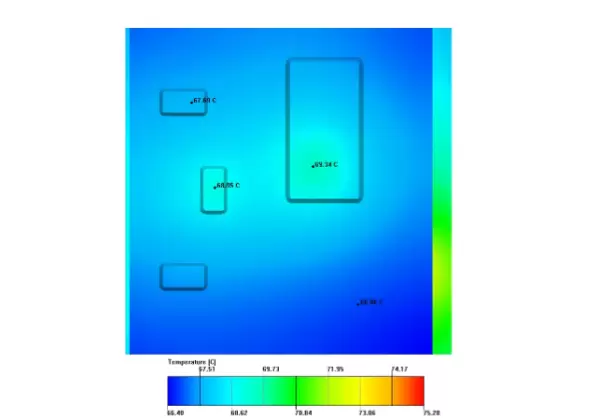
Thermal performance is becoming increasingly important in industrial equipment manufacturing.
Industrial printers often operate continuously for extended periods, generating substantial heat within compact structures. Poor heat dissipation can reduce component lifespan, lower operational stability, and increase maintenance requirements.
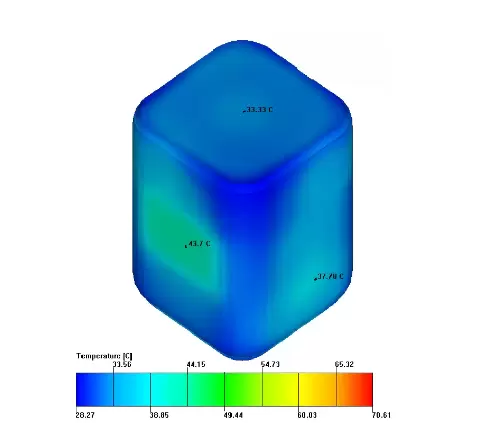
Manufacturers with thermal simulation and heat sink design expertise provide a major advantage in these situations.
SOGOOD specializes in thermal simulation design and heat dissipation solutions, helping clients improve the operational reliability of electronic and industrial products. This capability is especially useful for modern industrial printers that integrate advanced electronics, control systems, and high-speed processing hardware.
Thermal optimization during the design phase can prevent expensive redesigns later and improve long-term product stability.
Industrial markets rarely operate with one-size-fits-all solutions.
Many companies require customized:
That is why OEM and ODM capabilities are important when choosing a manufacturing partner.
A capable manufacturer should be able to:
Flexibility is particularly valuable for startups, emerging technology companies, and businesses entering specialized industrial sectors.
Manufacturers that offer both standard production and custom engineering services can help businesses remain competitive while reducing development complexity.
Equipment alone does not guarantee manufacturing quality. Skilled engineers and technical specialists remain one of the most valuable assets in precision manufacturing.
Manufacturers with experienced engineering teams can:
SOGOOD’s engineering team includes professionals with more than 20 years of experience in metal nano molding and CNC precision machining. Several core members previously worked at BYD and participated in advanced industrial product development projects.
Additionally, members of the company’s industrial design team contributed to the design of iconic Motorola A1200 and A1600 products, while some designers have received Red Dot Design Awards.
This combination of industrial design expertise and manufacturing experience allows for better coordination between aesthetics, functionality, and production feasibility.
A good industrial printer manufacturer should function as a long-term production partner rather than simply a parts supplier.
Reliable partners provide:
This becomes increasingly important as businesses scale production volumes or introduce new product generations.
Manufacturers with mature operational systems and strong supplier networks are generally better prepared to handle fluctuating demand while maintaining quality consistency.
Long-term partnerships also create opportunities for continuous optimization, cost efficiency improvements, and faster product iteration cycles.
Choosing the right industrial printer manufacturer requires more than comparing equipment lists or production capacity. The most reliable partners combine engineering expertise, advanced manufacturing technologies, quality management systems, and industry experience to support products from concept to mass production.
Businesses should prioritize manufacturers that can provide:
SOGOOD represents this integrated manufacturing approach through its focus on product design, thermal simulation, precision hardware manufacturing, and heat dissipation solutions for industries including electronics, automotive, medical, communications, and AI.
As industrial products continue to demand higher precision, faster development cycles, and better performance, choosing the right manufacturing partner will remain a critical factor in long-term business success.