The Role of Advanced Equipment in CNC Precision Machining Manufacturing
Jun 22, 2026
The global wellness and personal healthcare market has experienced remarkable growth over the past decade, and neck massagers have become one of the fastest-growing product categories. As consumers spend more time working at desks, using mobile devices, and traveling, demand for portable, ergonomic, and intelligent neck massage devices continues to increase.
For businesses planning to enter this market, one of the first decisions is whether to choose OEM (Original Equipment Manufacturing) or ODM (Original Design Manufacturing). While both manufacturing models help companies bring products to market, each offers different levels of customization, investment, development time, and branding opportunities.
Choosing the right manufacturing partner is equally important. A professional manufacturer does much more than assemble products—it contributes engineering expertise, product optimization, quality assurance, and scalable production that ultimately determines your product's market success.
This article explores the differences between OEM and ODM manufacturing, explains how to select the right model, and highlights why partnering with an experienced manufacturer can significantly improve your competitive advantage.
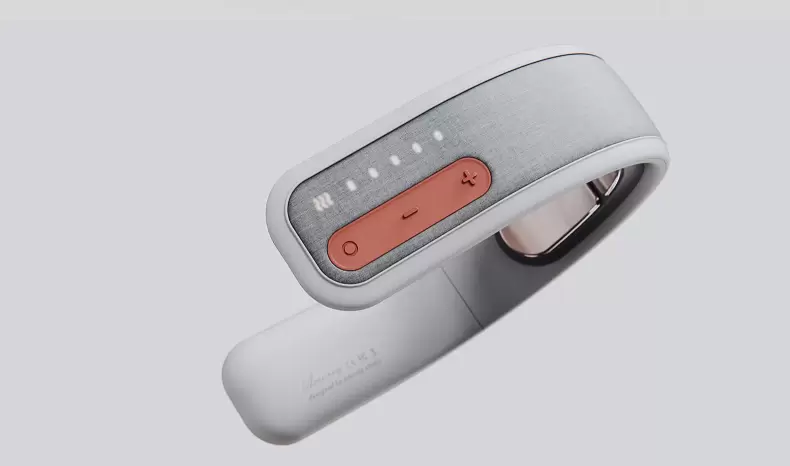
OEM manufacturing means the customer owns or develops the product concept while the manufacturer produces it according to the customer's specifications.
In a typical OEM project, the customer provides:
The manufacturer then handles engineering validation, tooling, sourcing, production, testing, and quality control.
OEM manufacturing is ideal for companies that already have product development capabilities or want to create highly differentiated products.
Complete Product Ownership
Your business controls every aspect of the product, from appearance to internal components.
Brand Differentiation
Unique designs reduce direct competition with identical products sold under multiple brands.
Intellectual Property Protection
Custom engineering creates long-term brand value.
Flexible Feature Development
OEM projects allow businesses to integrate features such as:
ODM manufacturing is a faster approach where the manufacturer already has mature product platforms available.
Customers select an existing design and customize elements such as:
Instead of designing a product from scratch, businesses leverage proven engineering.
Since tooling and engineering are already complete, production can begin much sooner.
ODM avoids large investments in:
The products have already undergone testing and validation.
Businesses launching new product categories often use ODM to validate demand before investing in full OEM development.
| Feature | OEM | ODM |
|---|---|---|
| Product Design | Customer | Manufacturer |
| Development Time | Longer | Shorter |
| Engineering Investment | Higher | Lower |
| Product Uniqueness | High | Moderate |
| Intellectual Property | Customer-owned | Shared platform |
| Branding Flexibility | Very High | High |
| Time to Market | Moderate | Fast |
Neither approach is universally better. The right choice depends on business goals.
OEM is recommended if your business wants to:
Companies targeting high-end retail markets often prefer OEM because product uniqueness becomes a major selling point.
ODM is often the better option when businesses need to:
Many distributors, e-commerce sellers, and wellness brands begin with ODM before transitioning to OEM as their businesses grow.
Whether choosing OEM or ODM, the manufacturer's engineering capabilities ultimately determine product quality.
An experienced manufacturing partner contributes throughout the product lifecycle, including:
Professional manufacturers optimize:
These improvements often reduce failure rates while improving user comfort.
Neck massagers contain numerous precision components, including:
High-precision CNC machining and advanced manufacturing technologies help ensure consistent product quality across large production volumes.
Consumers evaluate neck massagers on more than massage intensity.
Comfort depends heavily on structural engineering.
Important considerations include:
Even minor structural improvements can significantly enhance the user experience.
Material selection influences:
Professional manufacturers recommend appropriate combinations of:
The right materials also improve appearance while extending product lifespan.
Today's premium neck massagers require manufacturing technologies that go beyond traditional injection molding.
Advanced processes include:
High-precision machining ensures:
Nano molding technology enables seamless integration between metal and plastic components.
Benefits include:
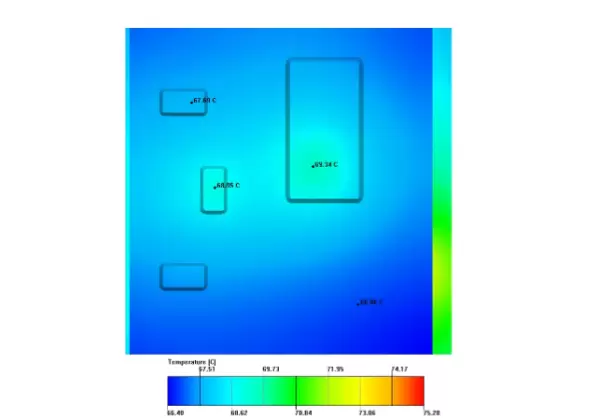
Although neck massagers consume relatively little power, heating functions, charging circuits, and motors still generate heat.
Proper thermal management improves:
Professional manufacturers implement quality systems throughout production.
Typical quality procedures include:
Consistent quality management reduces warranty claims while protecting brand reputation.
Many product launches encounter problems during production scaling.
An experienced manufacturing partner helps bridge the gap between prototypes and full-scale manufacturing through:
This reduces delays while maintaining consistent quality.
Manufacturers serving multiple industries often possess broader engineering expertise.
For example, companies experienced in electronics, automotive, medical devices, AI equipment, and communication products often apply higher engineering standards to consumer wellness devices.
This cross-industry knowledge contributes to:
For businesses seeking a reliable manufacturing partner, SOGOOD offers comprehensive one-stop manufacturing services covering the complete product development process.
Established in Shenzhen—China's renowned design and innovation hub—SOGOOD combines industrial design, structural engineering, thermal simulation, precision hardware manufacturing, CNC machining, and Nano Molding Technology (NMT) to support customers from concept to mass production.
The company's engineering team includes experienced industrial designers, structural engineers, and mold specialists, with core members bringing extensive expertise from Motorola's A1200 and A1600 product development projects. Their capabilities are further strengthened by award-winning industrial design experience and collaboration with globally recognized companies including Qualcomm, ZTE, Lenovo, NEC, Han's Laser, Philips, Panasonic, Haier, Midea, ASUS, and TCL.
In addition, SOGOOD's precision manufacturing division specializes in Nano Molding Technology, CNC precision machining, and mold flow analysis. Senior engineers possess more than two decades of experience in precision metal processing and advanced manufacturing. Supported by an ISO 9001-certified quality management system, the company welcomes both OEM and ODM collaborations, helping customers efficiently transform product ideas into reliable commercial solutions.
Businesses interested in customized neck massage products can explore SOGOOD's <a href="https://www.sogoodprecision.com/medical-products/neck-massager.html">Neck Massager Manufacturing Solutions</a> to learn more about available OEM and ODM services.
Before choosing a manufacturing partner, consider asking:
These questions help identify manufacturers capable of becoming long-term strategic partners rather than simply production suppliers.
OEM and ODM manufacturing each offer distinct advantages for businesses entering the neck massager market. OEM provides maximum customization, intellectual property ownership, and long-term differentiation, while ODM enables faster product launches with lower development risk.
Regardless of the model you choose, the success of your product depends heavily on your manufacturing partner's engineering capabilities, production technologies, and quality management systems. Companies with expertise in industrial design, CNC precision machining, Nano Molding Technology, thermal engineering, and integrated manufacturing services are better equipped to deliver reliable, competitive products that stand out in today's wellness market.
By selecting a manufacturer with strong technical capabilities and a collaborative development approach, businesses can shorten development cycles, improve product quality, and build a stronger foundation for long-term growth.