7 AI imaging hardware tracks worth exploring in the next three years
Jul 07, 2026
As industries continue to push the limits of computing power, automation, connectivity, and miniaturization, heat has become one of the biggest challenges in modern product design. From AI servers and telecom equipment to electric vehicles and medical electronics, high-performance systems generate significant thermal loads during operation. Without proper thermal management, excessive heat can reduce efficiency, shorten product lifespan, trigger system failures, and increase maintenance costs.
Industrial thermal management solutions are no longer optional additions to advanced equipment. They are now an essential part of product engineering and manufacturing. Companies that fail to address heat dissipation early in the design process often face reliability issues, unstable performance, and delayed product launches.
This article explores why thermal management is critical for high-performance systems, the challenges industries face, and how integrated manufacturing partners like SOGOOD help businesses build reliable and efficient thermal solutions.
High-performance systems today are expected to deliver more computing power in smaller and lighter structures. At the same time, industries demand lower energy consumption, longer operational cycles, and higher reliability.
This creates a direct engineering conflict:
As a result, thermal management has become a core engineering discipline across industries such as:
In many cases, thermal performance directly determines whether a product succeeds in real-world applications.
Excessive heat is one of the primary causes of electronic failure. When internal temperatures exceed safe operating limits, components degrade faster and may experience:
Industrial environments are especially demanding because systems often operate continuously for long periods under fluctuating environmental conditions. Effective thermal management stabilizes internal temperatures and helps equipment maintain long-term reliability.
For industries such as medical devices or automotive electronics, reliability is not just about performance—it is directly tied to operational safety.
Many modern processors and power modules automatically reduce operating speed when temperatures rise beyond certain thresholds. This behavior, known as thermal throttling, limits system performance to prevent damage.
Poor heat dissipation can therefore prevent hardware from reaching its full capability.
Efficient thermal management solutions help systems maintain stable performance by:
For AI computing systems, telecom servers, and industrial controllers, stable thermal performance allows continuous high-load operation without interruptions.
Temperature directly affects component longevity. Even small increases in operating temperature can significantly reduce the lifespan of electronic components.
A well-designed thermal solution helps:
This is especially important for industrial systems that must operate reliably for many years with minimal downtime.
Modern products continue to become smaller, thinner, and more integrated. However, compact designs create serious thermal challenges because heat becomes trapped inside tightly packed structures.
Traditional cooling methods are often insufficient for compact high-density systems.
Advanced thermal management solutions now involve:
Thermal engineering must now work together with industrial design and structural engineering from the earliest development stages.
In the past, cooling systems were often added after product development was nearly complete. Today, this approach creates major risks.
Thermal management must be integrated into the entire product development cycle, including:
This is why many manufacturers now prefer one-stop engineering and manufacturing partners that can handle both product development and thermal solution integration.
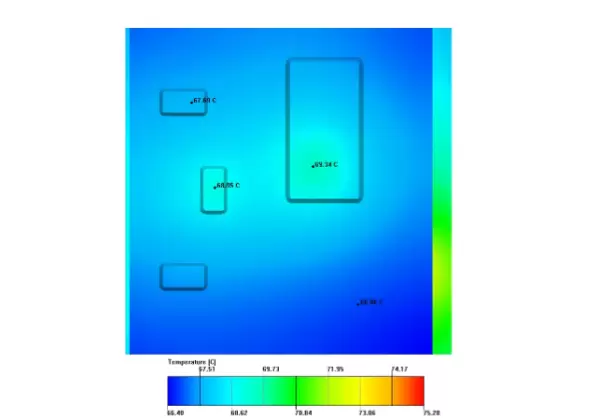
Thermal simulation has become one of the most valuable tools in modern engineering.
By using thermal analysis during development, engineers can predict:
This allows teams to optimize designs before physical prototyping begins, reducing both development costs and project timelines.
SOGOOD integrates thermal simulation design into its manufacturing workflow to help customers identify thermal risks early and improve product reliability before mass production.
Thermal management performance depends heavily on manufacturing precision.
Small inconsistencies in machining, surface treatment, or material quality can negatively affect heat transfer efficiency.
SOGOOD specializes in advanced manufacturing technologies that support high-performance thermal solutions, including:
These technologies help create components with improved thermal conductivity, tighter tolerances, and optimized structural performance.
With extensive experience serving industries such as electronics, automotive, communication, medical, and AI systems, SOGOOD supports customers from concept development to mass production.
For example, companies developing custom thermal components and precision enclosures can explore SOGOOD’s engineering capabilities through the following resource:
<a href="https://www.sogoodprecision.com/project/" target="_blank">Custom Thermal Management & Precision Manufacturing Solutions</a>
Material selection is another major factor in thermal management performance.
Different applications require different thermal conductivity, weight, corrosion resistance, and manufacturing characteristics.
Common materials include:
The correct combination depends on:
Experienced engineering teams evaluate all these factors together rather than focusing on cooling performance alone.
Artificial intelligence systems are creating unprecedented thermal demands.
AI servers and high-performance computing systems generate extremely high heat densities due to:
Without efficient cooling, AI infrastructure faces:
This is driving demand for advanced cooling architectures and precision thermal components.
Companies with strong capabilities in thermal simulation, structural design, and precision manufacturing are becoming increasingly important in the AI supply chain.
Even the best thermal design can fail if manufacturing quality is inconsistent.
Reliable thermal management requires:
SOGOOD combines industrial design expertise with advanced manufacturing capabilities to deliver integrated thermal management solutions for demanding industries.
The company’s engineering team includes experienced industrial designers, structural engineers, and mold experts with backgrounds in globally recognized product development projects. Core team members previously participated in the design development of Motorola A1200 and A1600 devices, while SOGOOD designers have also received international Red Dot Design Awards.
Through years of collaboration with global technology brands including Qualcomm, ZTE, Lenovo, NEC, Philips, Panasonic, ASUS, TCL, Haier, Midea, and Han’s Laser, SOGOOD has accumulated extensive experience in manufacturing precision thermal and structural components for high-performance applications.
Managing multiple suppliers for design, machining, thermal analysis, and assembly often creates communication gaps and project delays.
One-stop manufacturing solutions simplify the process by integrating:
This approach improves:
SOGOOD’s integrated manufacturing model helps customers accelerate product development while maintaining strict quality standards supported by ISO9001-certified processes.
As industries continue advancing toward smarter and more compact systems, thermal management technologies will continue evolving.
Future trends include:
Manufacturers that combine engineering innovation with precision production capabilities will play a central role in enabling next-generation technologies.
Industrial thermal management solutions are now a fundamental requirement for high-performance systems. From AI computing and telecom infrastructure to automotive electronics and medical devices, efficient heat dissipation directly affects reliability, performance, lifespan, and operational stability.
Modern thermal management is no longer just about adding a heat sink. It requires integrated engineering, advanced manufacturing, precision machining, thermal simulation, and material expertise working together from the beginning of product development.
With strong capabilities in thermal simulation design, CNC precision machining, metal nano-forming technology, and integrated manufacturing services, SOGOOD helps global customers develop reliable thermal management solutions for demanding industrial applications.
As high-performance systems continue evolving, companies that prioritize thermal engineering early in development will be better positioned to achieve long-term product success.