How CNC Machining Enables High-Precision Medical Components Manufacturing
Jan 16, 2026
Complex OEM projects rarely fail because of a single technical flaw. More often, problems arise from misalignment between design intent, manufacturing capability, and process control. When aluminum alloy components are involved—especially those with tight tolerances, thin walls, or multifunctional requirements—the choice of CNC aluminum machining manufacturer becomes a decisive factor.
Selecting the right partner is not simply about equipment lists or production capacity. It requires evaluating how a manufacturer approaches engineering collaboration, process stability, and long-term scalability. For buyers managing complex OEM projects, understanding these criteria is essential.
In simple OEM scenarios, suppliers are asked to machine parts exactly as specified. In complex OEM projects, however, drawings rarely tell the full story.
These projects often involve:
Multiple functional requirements in a single aluminum component
Tight tolerance chains across assemblies
Structural and thermal performance expectations
Integration with plastics, electronics, or surface treatments
CNC machining in this context must be supported by engineering insight. Manufacturers that only “follow drawings” may deliver parts that technically meet specifications but fail during assembly or real-world operation.
For complex aluminum CNC projects, engineering capability should be evaluated before production capability.
A qualified manufacturer should be able to:
Review designs for manufacturability risks
Identify tolerance conflicts and deformation risks
Suggest structural or process optimizations
Communicate trade-offs clearly
This does not mean redesigning customer products without permission. It means understanding how aluminum alloys behave under CNC machining and applying that knowledge proactively.
Manufacturers with experienced design and process engineers add value well before the first chip is cut.
Aluminum alloys are widely used, but their behavior varies significantly by alloy type and temper. Machining strategies that work well for one alloy may introduce issues with another.
Complex OEM projects benefit from manufacturers who understand:
How alloy selection affects machinability and surface quality
How thermal expansion influences tolerance control
How material condition impacts deformation during machining
This experience reduces trial-and-error during development and improves consistency during production.
Complex OEM projects are rarely limited to prototypes. Once validated, parts must be produced consistently over time.
CNC aluminum machining requires disciplined process control to ensure repeatability. Buyers should evaluate whether a manufacturer has:
Documented machining parameters
Standardized tooling and fixturing
Defined inspection procedures
Clear change management processes
Repeatability is not achieved by machines alone. It is the result of controlled systems that maintain accuracy as volume increases.
OEM projects often come with strict quality expectations. Dimensional accuracy, surface finish, and functional integrity must be verified and documented.
Manufacturers suitable for complex OEM projects typically operate under structured quality management systems aligned with international standards. These systems ensure that quality is monitored continuously rather than checked only at the end.
Quality systems also provide traceability—an important factor for long-term OEM partnerships.
One of the most underestimated factors in selecting a CNC aluminum machining manufacturer is communication quality.
Complex OEM projects involve frequent technical decisions. Manufacturers must be able to explain process constraints, propose solutions, and provide timely feedback.
Transparent communication helps buyers:
Make informed engineering decisions
Anticipate potential delays or risks
Align expectations across teams
A manufacturer that communicates clearly during development is more likely to perform reliably during production.
In many OEM projects, CNC aluminum machining is only one part of the manufacturing chain. Parts may require anodizing, coating, assembly, or integration with plastic components.
Manufacturers with broader process integration experience can anticipate how machining decisions affect downstream operations. This reduces rework and improves overall project efficiency.
For advanced products, integration with processes such as Nano Molding Technology further increases the importance of precise CNC machining preparation.
Complex OEM projects often evolve. Product revisions, volume changes, and market demands require manufacturing partners who can adapt without compromising quality.
Buyers should assess whether a CNC aluminum machining manufacturer can support:
Design updates without destabilizing processes
Volume growth while maintaining consistency
Long-term supply stability
A manufacturer focused solely on short-term orders may struggle to support evolving OEM requirements.
Managing multiple suppliers across design, machining, finishing, and assembly increases coordination risk—especially for complex aluminum components.
A one-stop manufacturing partner simplifies this landscape by aligning engineering, CNC machining, simulation, and quality control under one framework. Issues are identified earlier, and solutions are implemented faster.
SOGOOD applies this integrated model by supporting complex OEM projects through product design, CNC machining, thermal simulation, Nano Molding Technology, and standardized quality systems. This approach reduces uncertainty and improves execution reliability.
To explore how complex OEM aluminum projects are supported in real production environments, visit
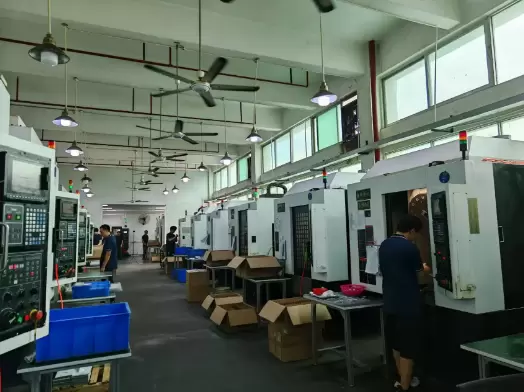
CNC precision machining of aluminum alloy.
Choosing a CNC aluminum machining manufacturer for complex OEM projects is a strategic decision. The right partner contributes engineering insight, process stability, and long-term reliability—not just machined parts.
By evaluating engineering capability, aluminum machining experience, process control, quality systems, and communication practices, buyers can reduce risk and build sustainable OEM partnerships.
In complex manufacturing environments, the right choice at the sourcing stage often determines project success.