Enhancing Electronic Device Reliability Through Thermal Simulation
May 06, 2026
Modern loudspeaker design is no longer just about sound quality. As speakers become smaller, more powerful, and more integrated into complex electronic systems, heat management has emerged as a critical engineering challenge. Excessive heat can degrade audio performance, shorten product lifespan, and even cause safety issues. This is where speaker thermal simulation plays a decisive role.
Thermal simulation allows engineers to predict, analyze, and optimize heat behavior inside a loudspeaker before physical prototypes are built. By combining simulation with advanced manufacturing capabilities, companies can design speakers that deliver consistent performance, reliability, and durability across demanding applications such as consumer electronics, automotive systems, medical devices, and intelligent hardware.
This article explores how speaker thermal simulation improves heat management in loudspeaker design, and how an integrated manufacturing partner like SOGOOD helps bring simulation-driven designs into production.
Loudspeakers convert electrical energy into sound, but not all input power becomes audio output. A significant portion is converted into heat, especially in the voice coil and magnetic assembly. As power density increases, heat accumulation becomes unavoidable.
Poor heat management can lead to several problems:
Thermal compression, where rising temperature increases coil resistance and reduces sound output
Material fatigue, causing deformation of the voice coil, adhesives, or diaphragm
Permanent damage, such as coil burnout or magnet demagnetization
Inconsistent performance, especially under long-term or high-volume operation
Traditional trial-and-error approaches to solving these issues rely on repeated prototyping and testing. This method is time-consuming, costly, and often fails to capture complex thermal interactions inside compact enclosures. Thermal simulation changes that equation.
Speaker thermal simulation uses numerical methods—typically finite element analysis (FEA) or computational fluid dynamics (CFD)—to model how heat is generated, transferred, and dissipated within a loudspeaker system.
A typical simulation considers:
Heat generation in the voice coil under different power loads
Conduction through metal components and structural parts
Convection inside the enclosure and to the surrounding air
Radiation effects in high-temperature regions
Interaction between thermal and mechanical behavior
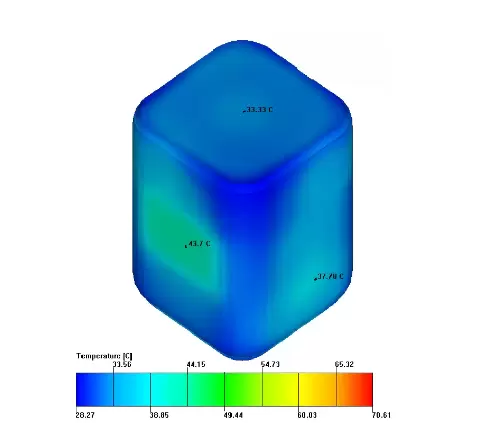
By visualizing temperature distribution and heat flow paths, engineers can identify hot spots, bottlenecks, and inefficiencies long before hardware is built.
Thermal simulation enables engineers to evaluate multiple design options at the concept stage. Parameters such as coil geometry, enclosure materials, venting structures, and heat sink placement can be adjusted virtually. This reduces reliance on physical prototypes and shortens development cycles.
Different materials conduct and store heat differently. Simulation helps designers compare aluminum, copper, steel, or advanced alloys for frames, back plates, and housings. This is especially important when balancing thermal performance with weight, cost, and manufacturability.
By keeping operating temperatures within safe limits, thermal simulation directly contributes to product reliability. Components experience less thermal stress, adhesives maintain integrity, and long-term degradation is minimized.
Temperature affects electrical resistance and mechanical behavior. Simulation-driven heat management reduces thermal compression and ensures stable sound output even during extended use or high-power conditions.
Thermal simulation alone does not guarantee success. Its value is fully realized only when simulation results can be translated into manufacturable designs. This requires close alignment between design, simulation, and production.
SOGOOD is a one-stop manufacturing service provider that bridges this gap. The company focuses on product design, thermal simulation design, precision hardware, and heat dissipation solutions. Its services cover the full development cycle, from concept validation to mass production.
For more details on their integrated capabilities, see the following SOGOOD one-stop manufacturing and thermal simulation services.
The voice coil is the primary heat source in a loudspeaker. Thermal simulation helps determine optimal wire materials, winding density, and former structure. It also guides the design of magnetic gaps and back plates to enhance heat conduction away from the coil.
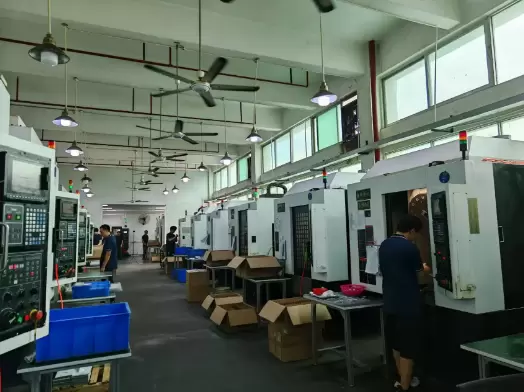
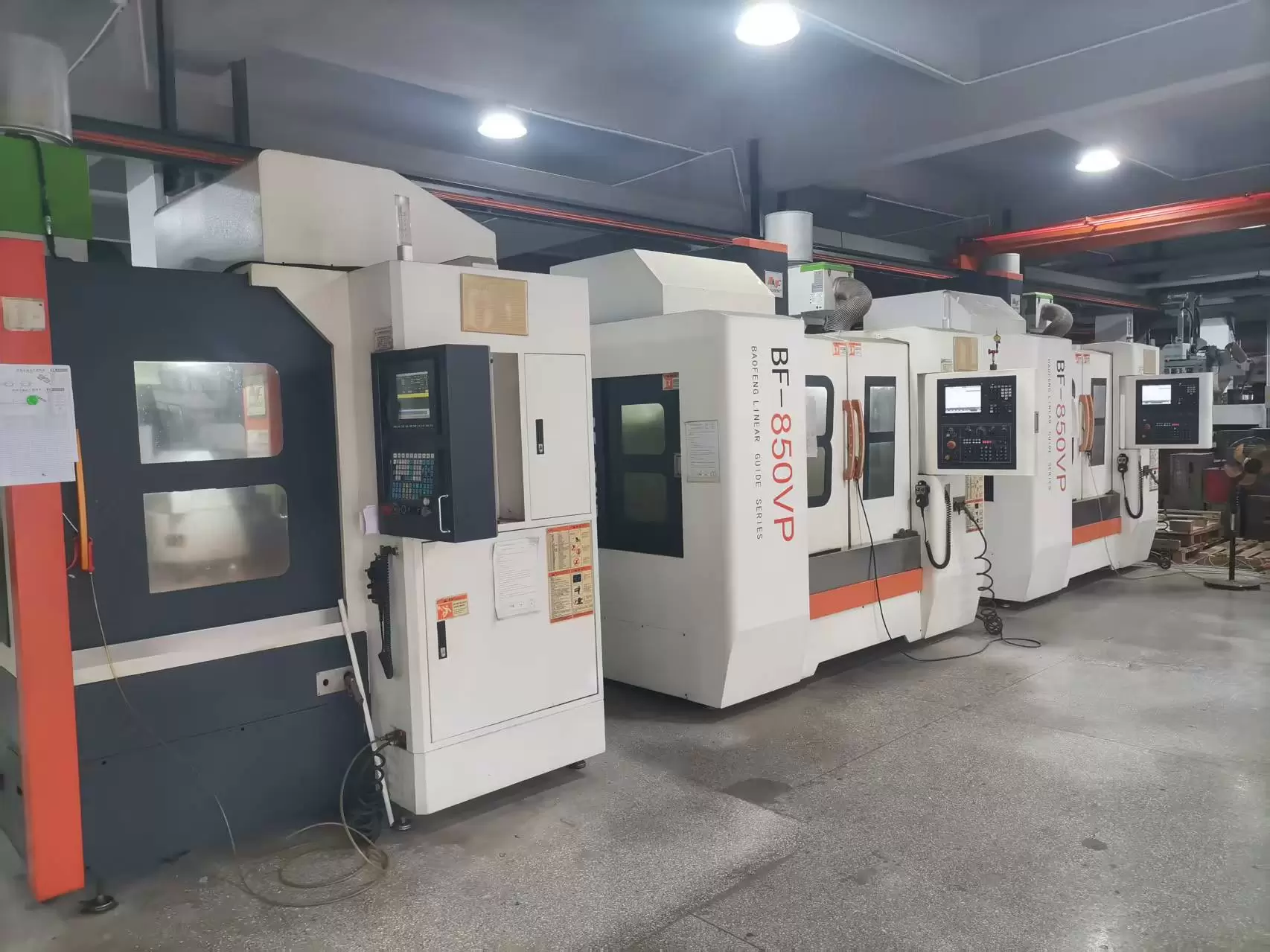
Frames and housings often serve as structural and thermal elements. Using thermal simulation, engineers can design frames that act as heat spreaders while maintaining mechanical rigidity. CNC-machined metal frames, especially aluminum-based designs, are commonly optimized this way.
Airflow plays a major role in convective cooling. Simulation can reveal whether vents, ports, or internal channels effectively remove heat or create stagnant zones. These insights are critical for compact or sealed speaker designs.
SOGOOD’s core technologies—metal nano molding technology and CNC precision machining—are particularly well-suited to simulation-driven designs.
Metal nano molding technology enables the creation of thin, complex metal structures with high thermal conductivity and precise surface quality.
CNC machining ensures tight tolerances, which is essential for maintaining designed thermal paths and contact interfaces.
With engineers who have over 20 years of experience in metal nano molding and CNC machining, many from their tenure at BYD, SOGOOD can faithfully translate simulation data into physical products.
Thermal simulation in loudspeaker design is not limited to home audio or portable devices. It is increasingly important in:
Automotive audio systems, where speakers must operate reliably under wide temperature ranges
Medical equipment, where stable performance and safety are critical
Communication devices, requiring long-term durability
AI and smart hardware, where speakers are integrated into dense electronic systems
SOGOOD serves clients across electronics, communications, automotive, medical, and artificial intelligence industries, designing and producing enclosures, accessories, auxiliary materials, and heat sinks tailored to these demanding environments.
Founded in Shenzhen, China’s “City of Design,” SOGOOD brings together industrial designers, structural engineers, and mold engineers with deep industry experience. Core team members come from the Motorola A1200 and A1600 design teams, and their industrial designers have received Red Dot Design Awards.
The company is ISO9001 certified and operates under a modern quality management system aligned with international standards. It has proudly served global industry leaders such as Qualcomm, ZTE, Lenovo, NEC, Han’s Laser, Philips, Panasonic, Haier, Midea, ASUS, and TCL.
This combination of simulation expertise, manufacturing depth, and proven quality systems is what allows thermal optimization strategies to succeed in real-world products.
Speaker thermal simulation has become an essential tool for modern loudspeaker design. It enables engineers to understand heat behavior in detail, optimize designs early, and ensure consistent performance and reliability. When combined with advanced manufacturing technologies and experienced engineering teams, simulation-driven design significantly reduces risk and accelerates time to market.
By offering integrated services spanning product design, thermal simulation, precision machining, and heat dissipation solutions, SOGOOD helps customers move seamlessly from R&D to market success. For companies seeking OEM or ODM cooperation, whether selecting from existing catalogs or developing custom solutions, a simulation-first approach is no longer optional—it is a competitive advantage.