How Metal Nano Molding Improves Surface Accuracy and Structural Strength
Mar 04, 2026
In today’s technology-driven industries, precision manufacturing plays a crucial role in transforming product concepts into reliable, high-performance solutions. From advanced communication equipment to electric vehicles and medical devices, manufacturers require components that are lightweight, durable, thermally efficient, and extremely precise.
CNC aluminum machining has emerged as one of the most effective manufacturing methods to meet these requirements. With its excellent material properties and the accuracy of modern computer numerical control (CNC) technology, aluminum components can achieve tight tolerances, complex geometries, and consistent quality.
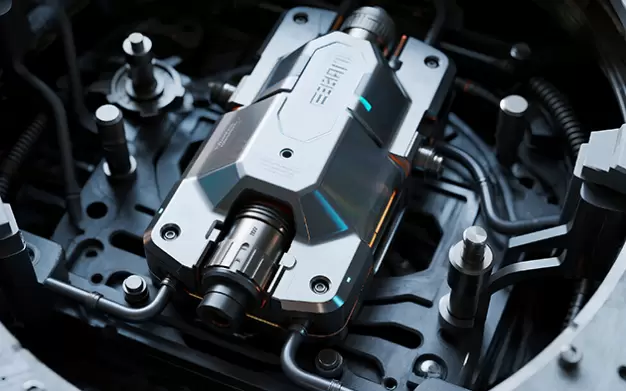
This article explores the key benefits of CNC aluminum machining and explains why it has become essential for high-performance industries worldwide.
Aluminum is one of the most widely used metals in precision manufacturing. Its mechanical properties and machinability make it highly suitable for CNC production.
Some of the core advantages of aluminum include:
Lightweight but strong
Excellent thermal conductivity
Good corrosion resistance
High machinability
Recyclable and environmentally friendly
These characteristics allow engineers to design parts that are both structurally reliable and efficient in heat management. This is especially important in industries such as electronics and telecommunications, where heat dissipation directly impacts product performance and lifespan.
When combined with advanced CNC machining technology, aluminum becomes an even more powerful solution for manufacturing precision parts.
CNC machining uses computer-controlled cutting tools to remove material from solid blocks of aluminum. This process enables extremely precise manufacturing with minimal human error.
High-performance industries rely on CNC aluminum machining because it delivers:
Exceptional dimensional accuracy
Repeatable production results
Complex geometries that traditional machining cannot achieve
Faster prototyping and production cycles
These benefits make CNC machining an essential part of modern industrial manufacturing.
Precision is a fundamental requirement in high-tech industries. Small deviations in dimensions can lead to performance issues or system failures.
CNC machining allows manufacturers to achieve extremely tight tolerances and maintain consistent accuracy across production batches. Complex features such as internal cavities, micro-holes, and intricate surface details can be produced with exceptional reliability.
For industries like medical devices and communications equipment, this level of precision is critical.
Thermal management has become a major design challenge in modern electronics. As devices become smaller and more powerful, heat generation increases significantly.
Aluminum’s natural thermal conductivity makes it an ideal material for components such as:
Heat sinks
Enclosures
Cooling plates
Structural frames
Precision CNC machining ensures that these thermal components are manufactured with optimized geometries that maximize heat dissipation.
Companies specializing in both machining and thermal engineering can significantly improve the performance and reliability of electronic systems.
Weight reduction is a major design priority in industries such as automotive, aerospace, and portable electronics.
Aluminum provides a unique combination of strength and lightness, allowing manufacturers to reduce component weight without sacrificing structural integrity.
CNC machining allows engineers to further optimize weight by removing unnecessary material and creating lightweight structures while maintaining rigidity.
This capability is particularly important for:
Electric vehicle systems
Communication equipment
AI computing hardware
Portable medical devices
CNC aluminum machining is highly adaptable to design changes. Unlike traditional molding processes, it does not require expensive tooling modifications.
This makes CNC machining ideal for:
Product development
Engineering validation
Rapid prototyping
Small to medium production runs
Engineers can quickly test design improvements and bring new products to market faster.
Modern industrial products require not only functionality but also high-quality visual appearance.
CNC aluminum machining supports a wide range of surface treatments, including:
Anodizing
Sandblasting
Brushing
Powder coating
These finishes improve corrosion resistance, durability, and aesthetics. High-end electronic products and consumer devices often rely on precision aluminum enclosures for both structural and visual quality.
Because of its versatility and performance advantages, CNC aluminum machining is widely used across multiple industries.
Precision aluminum components are commonly used in:
Device enclosures
Heat sinks
Structural frames
RF shielding components
These parts must maintain dimensional stability while efficiently dissipating heat.
The automotive sector increasingly relies on CNC-machined aluminum components to improve efficiency and performance.
Applications include:
Battery housings
Cooling systems
Structural brackets
Electronic control module enclosures
Lightweight materials help improve energy efficiency and reduce overall vehicle weight.
Medical device manufacturers demand high reliability and strict tolerances.
CNC aluminum machining is used for:
Imaging equipment components
Surgical device housings
Precision mechanical parts
The ability to produce accurate, repeatable parts ensures compliance with strict medical standards.
AI computing systems generate substantial heat due to their high processing power.
CNC-machined aluminum heat sinks and structural frames play an important role in maintaining stable operating temperatures for:
GPU clusters
AI servers
Data center infrastructure
Efficient thermal solutions directly affect system stability and processing performance.
While CNC technology is powerful, the expertise behind the manufacturing process is equally important.
Successful precision machining requires:
Advanced design capabilities
Engineering experience
Thermal analysis expertise
Quality control systems
SOGOOD is a one-stop manufacturing service provider that integrates product design, thermal simulation, precision hardware manufacturing, and heat dissipation solutions. The company focuses on designing and producing enclosures, accessories, auxiliary materials, and heat sinks for industries such as electronics, telecommunications, automotive, medical technology, and artificial intelligence.
Founded in Shenzhen, widely recognized as China’s “City of Design,” SOGOOD brings together an experienced team of industrial designers, structural engineers, and mold specialists. Several core team members were previously part of the engineering team behind the Motorola A1200 and A1600 devices, and the company’s industrial designers have received internationally recognized design awards.
SOGOOD has built long-term collaborations with global technology leaders including Qualcomm, ZTE, Lenovo, NEC, Han’s Laser, Philips, Panasonic, Haier, Midea, ASUS, and TCL.
To meet the demands of modern industries, SOGOOD focuses on advanced manufacturing technologies such as:
Metal nano forming technology
CNC precision machining
Mold flow analysis
Thermal design optimization
Senior engineers within the company bring more than two decades of experience in metal nano forming and CNC machining, with professional backgrounds that include engineering work at BYD.
This combination of technical expertise and advanced equipment enables the company to deliver highly reliable precision components for demanding applications.
For manufacturers seeking integrated precision machining solutions, the following service page provides additional information:
<a href="https://www.sogoodprecision.com/service/">CNC precision manufacturing services</a>
Quality control is essential in precision manufacturing.
To ensure consistent product performance and customer satisfaction, SOGOOD operates under a modern quality management system aligned with international standards. Its manufacturing processes comply with ISO9001 certification requirements.
This structured quality framework includes:
Strict inspection procedures
Process monitoring
Engineering validation
Continuous improvement
Such systems ensure that every component meets the required specifications before reaching the customer.
Many companies require more than just machining services. They need partners who can support product development from concept to production.
SOGOOD supports both OEM and ODM collaborations, helping clients with:
Product design optimization
Structural engineering
Precision machining
Thermal solution integration
Whether customers select products from an existing catalog or require customized engineering solutions, the company provides technical consultation and manufacturing support throughout the entire development process.
As industries continue to evolve toward higher efficiency and smarter systems, demand for precision aluminum components will continue to grow.
Key trends shaping the future of CNC aluminum machining include:
Integration with advanced thermal engineering
Increased demand for lightweight structures
Greater precision requirements in AI and electronics
Faster prototyping and agile manufacturing
Manufacturers that combine engineering expertise with advanced machining technologies will play a crucial role in enabling the next generation of industrial innovation.
CNC aluminum machining has become a foundational technology for high-performance industries. Its ability to deliver precision, strength, lightweight design, and excellent thermal performance makes it ideal for modern engineering applications.
From electronics and telecommunications to automotive systems and AI hardware, aluminum CNC machining enables manufacturers to build reliable, high-quality products that meet the increasing demands of today’s technology landscape.
Companies that integrate design expertise, advanced manufacturing capabilities, and rigorous quality control will continue to drive innovation and support global industries in achieving long-term success.