Why Material Selection Matters for CNC Precision Machining Manufacturers
Aug 19, 2026
Modern aerospace and medical industries demand components that combine extreme precision, reliability, lightweight performance, and long-term durability. From aircraft structural parts and engine components to surgical instruments and medical device housings, manufacturers must meet strict quality standards while maintaining efficiency and innovation.
Among various advanced manufacturing technologies, CNC precision machining has become a critical process for producing complex, high-performance parts. With computer-controlled accuracy, advanced material compatibility, and the ability to achieve tight tolerances, CNC machining supports industries where even the smallest manufacturing error can impact safety and performance.
As aerospace and medical technologies continue to evolve, professional CNC machining manufacturers play an increasingly important role in transforming innovative designs into reliable products. Companies with strong engineering capabilities, advanced manufacturing equipment, and comprehensive quality systems can help customers accelerate product development and achieve commercial success.
The aerospace industry operates under some of the most demanding manufacturing requirements. Aircraft components must withstand extreme temperatures, pressure changes, vibration, and mechanical stress while maintaining lightweight characteristics.
CNC precision machining provides aerospace manufacturers with the ability to produce complex components from high-performance materials such as aluminum alloys, titanium, stainless steel, and engineering plastics. These materials are commonly selected because they offer excellent strength-to-weight ratios and resistance to harsh operating environments.
Key aerospace applications of CNC machining include:
Unlike traditional manufacturing methods, CNC machining enables manufacturers to achieve highly accurate geometries with repeatable results. This is especially important for aerospace components where dimensional accuracy directly affects assembly performance, fuel efficiency, and operational safety.
Another major advantage is design flexibility. Aerospace engineers often develop lightweight structures with complex shapes to improve aircraft performance. CNC machining allows these designs to be manufactured without significant limitations, supporting continuous innovation in aerospace engineering.
The medical industry requires components with exceptional precision, cleanliness, and reliability. Medical devices often involve direct interaction with healthcare professionals and patients, meaning manufacturing quality must meet strict regulatory expectations.
CNC precision machining is widely used in the production of:
Medical manufacturers frequently rely on CNC machining because it can produce small, intricate parts with consistent quality. For example, surgical tools require smooth surfaces, accurate dimensions, and excellent mechanical performance. CNC technology helps manufacturers achieve these requirements through precise cutting, drilling, milling, and finishing processes.
In addition, medical products often require customized designs. Hospitals, research institutions, and medical equipment companies may need specialized components based on specific applications. CNC machining supports low-volume production and customized manufacturing, making it an ideal solution for medical innovation.
While CNC machining technology provides high accuracy, successful manufacturing depends on more than advanced equipment. Material selection, structural design, thermal performance, and manufacturing processes all influence final product quality.
A professional manufacturing partner should have experience evaluating different materials and recommending suitable solutions based on application requirements.
For aerospace applications, engineers may focus on:
For medical applications, considerations may include:
This is why companies that combine CNC machining expertise with engineering design capabilities can provide greater value. They can participate during the early product development stage, helping customers optimize designs before mass production.
Product development in aerospace and medical industries often involves multiple stages, including concept design, prototype manufacturing, testing, and final production. CNC machining plays an important role throughout this process.
During prototyping, CNC machining allows engineers to quickly produce functional samples for performance evaluation. This helps identify potential design problems before investing in large-scale manufacturing.
During production, CNC systems provide consistent repeatability, reducing variations between different batches. Automated machining processes also improve production efficiency while maintaining strict quality requirements.
For companies developing advanced products, choosing a manufacturing partner with integrated engineering and production capabilities can significantly shorten development cycles.
SOGOOD is a one-stop manufacturing service provider specializing in product design, thermal simulation design, precision hardware, and thermal management solutions. The company focuses on designing and manufacturing housings, accessories, supporting materials, and heat dissipation components for industries including electronics, communications, automotive, medical, and artificial intelligence.
Founded in Shenzhen, China’s “Design Capital,” SOGOOD brings together experienced industrial designers, structural engineers, and mold engineers. The core team members have backgrounds from the Motorola A1200 and A1600 product design teams, bringing extensive experience in innovative industrial product development.
The company has served global technology leaders including Qualcomm, ZTE, Lenovo, NEC, Han’s Laser, Philips, Panasonic, Haier, Midea, ASUS, and TCL. Through professional engineering capabilities and manufacturing experience, SOGOOD helps customers move smoothly from product concepts to market-ready solutions.
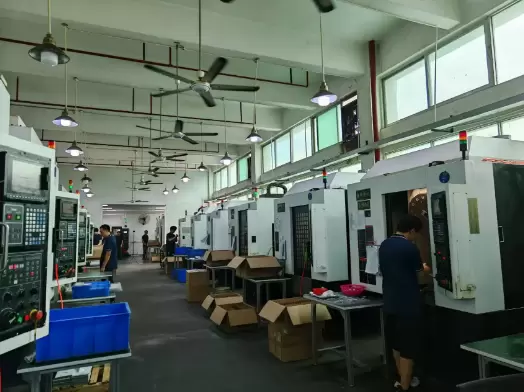
SOGOOD’s core technologies include metal nano molding technology, CNC precision machining, and mold flow analysis. With senior engineers who have more than 20 years of experience in metal nano molding and CNC processing from their previous work at BYD, the company provides reliable technical support for complex manufacturing projects.
For customers seeking customized precision manufacturing solutions, SOGOOD provides comprehensive services covering design optimization, engineering verification, prototype development, and production support. More information about its manufacturing capabilities can be found through the company’s CNC precision machining services.
Quality management is one of the most important factors when selecting a CNC machining partner. Aerospace and medical manufacturers require suppliers that can consistently deliver components meeting strict specifications.
SOGOOD has established a modern quality management system based on international standards, and its products have achieved ISO9001 certification. This quality-focused approach ensures every manufacturing stage, from material inspection and machining processes to final testing, follows controlled procedures.
Reliable quality control helps customers reduce production risks, improve product consistency, and maintain confidence in their supply chain.
As aerospace and medical technologies continue advancing, demand for precision manufacturing will continue to grow. Emerging trends such as lightweight aerospace structures, smart medical devices, artificial intelligence equipment, and advanced thermal solutions require manufacturers to deliver increasingly complex components.
Future CNC machining development will focus on:
Manufacturers that combine technology innovation with strong engineering experience will have a competitive advantage in supporting next-generation products.
CNC precision machining has become an essential manufacturing technology for aerospace and medical industries. Its ability to produce accurate, complex, and reliable components makes it a key solution for applications where quality and performance are critical.
Choosing the right CNC machining partner requires more than evaluating production capacity. Engineering expertise, quality management, material knowledge, and customized service capabilities are equally important.
With advanced CNC machining technology, metal nano molding expertise, and years of engineering experience, SOGOOD provides OEM and ODM customers with comprehensive manufacturing solutions. Whether developing precision medical components, aerospace hardware, or advanced thermal management products, SOGOOD helps businesses transform innovative ideas into high-quality products ready for the global market.