Enhancing Electronic Device Reliability Through Thermal Simulation
May 06, 2026
Thermal management is no longer a secondary consideration in industrial product development. As electronic devices become smaller, processing power increases, and equipment operates for longer periods, controlling heat has become an important part of product reliability and structural design.
Industrial equipment used in electronics, communications, automotive systems, medical devices, and AI hardware can generate significant amounts of heat in relatively compact spaces. If that heat is not properly controlled, it can affect component performance, shorten service life, cause unexpected shutdowns, and create difficulties during product validation.
For manufacturers and engineering teams, the challenge is not simply to add a heat sink. Effective thermal management requires the right combination of product structure, material selection, thermal simulation, precision machining, heat dissipation components, and manufacturing processes.
This article looks at several common thermal challenges faced during industrial product development and explains how integrated thermal management solutions can address them.
One of the most common problems is heat accumulation inside a compact enclosure.
Modern electronic products often have more processors, power modules, sensors, communication components, and control circuits packed into a smaller space. The enclosure may have limited room for ventilation or conventional cooling components.
Simply increasing the size of a heat sink is not always practical. The available internal space, component arrangement, enclosure dimensions, and assembly requirements all need to be considered.
A more effective approach is to analyze the complete thermal path.
Heat needs to move from the heat-generating component to a suitable heat-conducting material, then toward a heat sink, enclosure, or other dissipation structure. The interfaces between these components are also important because poor contact can increase thermal resistance.
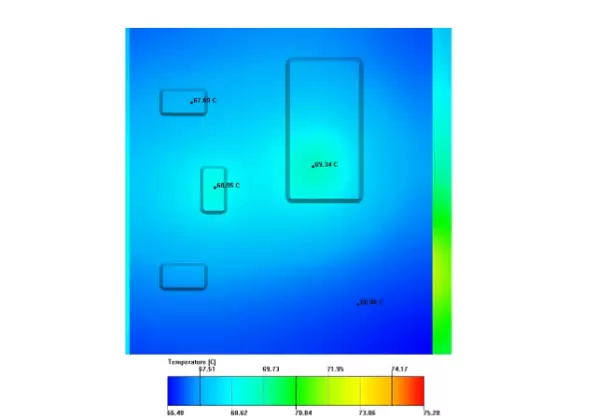
Thermal simulation can help engineers identify hot spots before physical prototypes are produced. This makes it easier to adjust component positions, heat sink geometry, material selection, and airflow paths during the design stage.
Many industrial products require sealed or highly protected enclosures. Applications such as industrial controllers, communication equipment, medical devices, automotive electronics, and outdoor electronic systems may require protection against dust, moisture, vibration, or other environmental factors.
However, a sealed enclosure creates a thermal problem: natural airflow is restricted.
Without sufficient airflow, heat generated by internal components can gradually raise the temperature of the entire enclosure. The enclosure itself must therefore become part of the thermal solution.
Metal housings can sometimes be designed to transfer internal heat toward external surfaces. Heat sinks, thermal interfaces, conductive structures, and carefully positioned cooling features can also be integrated into the enclosure design.
This is where thermal management and structural engineering need to work together rather than being treated as separate processes.
Overall product temperature may appear acceptable while individual components still experience excessive temperatures.
This is particularly common in products containing CPUs, GPUs, power semiconductors, LED modules, communication chips, or other high-power components. A small area around the heat source can become significantly hotter than the surrounding structure.
Localized hot spots can lead to thermal throttling, component degradation, or reliability problems.
Engineers need to understand not only the average temperature of the system but also where heat is concentrated and how it travels through the product.
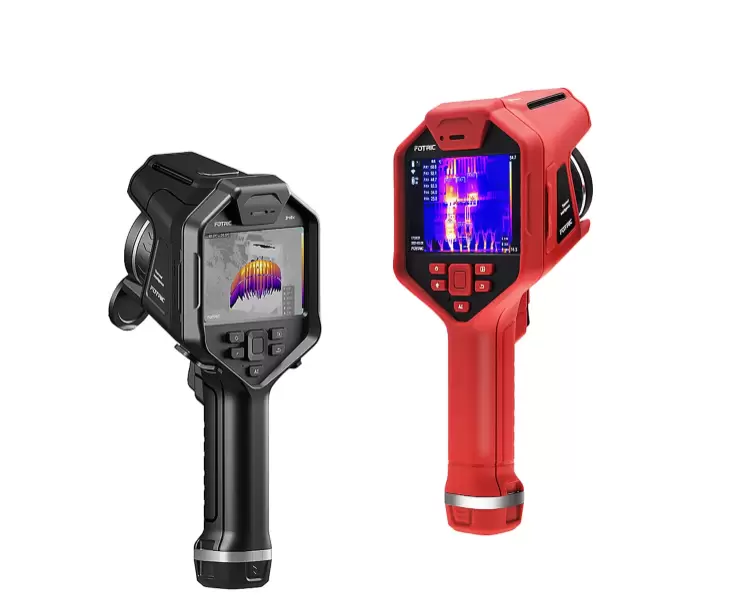
Thermal simulation and heat-flow analysis are useful tools for this purpose. They allow engineers to examine temperature distribution and compare different structural concepts before committing to tooling and mass production.
The resulting design may involve changes to heat sink fins, contact surfaces, thermal paths, mounting structures, or the arrangement of surrounding components.
Space constraints are another practical challenge.
Industrial products are often designed around strict dimensional requirements. There may be limited clearance between a PCB, enclosure wall, battery, optical module, connector, or mechanical assembly.
In these situations, standard heat sinks may not fit or may interfere with other components.
Custom thermal components can provide more flexibility. CNC machining, precision metal processing, and other manufacturing methods can be used to produce heat dissipation structures according to the actual product geometry.
Instead of designing the product around an off-the-shelf cooling component, engineers can develop the thermal component together with the enclosure and internal structure.
This approach is especially useful when the product requires a compact form factor or has complex internal geometry.
A thermal solution cannot be evaluated only by its ability to reduce temperature.
The component must also satisfy mechanical requirements such as dimensional accuracy, strength, assembly tolerances, vibration resistance, surface treatment, and long-term durability.
For example, an enclosure may need to function as both a protective structural component and part of the thermal path. A heat sink may need to meet precise mounting tolerances while maintaining sufficient surface area for heat dissipation.
These requirements can sometimes conflict.
Adding material may improve structural strength but increase weight. Increasing fin density may improve surface area but make manufacturing more difficult. Changing the material may improve thermal conductivity while affecting machining, forming, or finishing processes.
This is why thermal design should be considered together with structural design and manufacturing feasibility.
Another common issue is addressing thermal problems after the product has already entered the prototype or production stage.
When thermal analysis is delayed, engineers may discover that a component runs too hot only after a physical prototype has been assembled. Correcting the problem at this point can require redesigning parts, modifying tooling, changing materials, or rearranging internal components.
These changes can affect the entire development schedule.
A better approach is to introduce thermal analysis earlier in the product development process.
Simulation can be used to compare different concepts before manufacturing begins. Engineers can evaluate heat distribution, identify potential problem areas, and make structural changes while the design is still flexible.
This does not eliminate the need for physical testing. Instead, simulation and testing can complement each other.
Thermal management designs must eventually become manufacturable products.
A heat sink that performs well in simulation may still be difficult to produce. An enclosure with an ideal thermal path may have complex machining requirements. A precision component may require tolerances that are difficult to maintain consistently in mass production.
This is why engineering teams benefit from working with a manufacturer that understands both thermal design and production processes.
SOGOOD provides integrated engineering and manufacturing services covering product design, thermal simulation, precision hardware, and heat dissipation solutions. Its capabilities include metal nano molding, CNC precision machining, and mold flow analysis.
With experience in electronics, communications, automotive, medical, and AI-related applications, SOGOOD can participate in projects from early-stage engineering through manufacturing.
For examples of its engineering and manufacturing capabilities, companies can review the project portfolio using the following anchor text:
A successful prototype does not automatically guarantee consistent performance in mass production.
Small changes in dimensions, material properties, surface quality, machining accuracy, or assembly can influence thermal performance. This becomes particularly important when thermal interfaces or precision contact surfaces are involved.
Manufacturing quality control therefore plays an important role in thermal management.
SOGOOD has established a modern quality management system aligned with international standards, and its products are ISO9001 certified. Its engineering team includes experienced professionals with extensive backgrounds in metal nano molding and CNC precision machining.
Such manufacturing experience is valuable when thermal components require both functional performance and repeatable production quality.
The most effective thermal solutions are usually developed as part of the product rather than added after the design is completed.
A practical development process may include:
This integrated approach reduces the risk of discovering major thermal problems late in development.
Industrial thermal management is rarely solved by one component or one manufacturing process. A reliable solution depends on how heat moves through the entire product.
The enclosure, heat sink, thermal interface, internal structure, material, component layout, and manufacturing accuracy all contribute to the final thermal performance.
SOGOOD's one-stop manufacturing model brings these areas together. Founded in Shenzhen, the company combines industrial design, structural engineering, mold engineering, thermal simulation, metal nano molding, and CNC precision machining.
Its engineering team includes experienced designers and engineers, with core members having backgrounds in the design teams behind products such as the Motorola A1200 and A1600. The company has also worked with global industry leaders across electronics, communications, automotive, medical, consumer electronics, and related fields.
For OEM and ODM customers, this integrated capability can simplify communication between product design and manufacturing teams. More importantly, it allows thermal requirements to be considered alongside structural design and production feasibility from the beginning.
Industrial thermal management challenges are becoming increasingly complex as products become more compact, powerful, and multifunctional.
Excessive heat, localized hot spots, sealed enclosures, limited installation space, manufacturing constraints, and late-stage thermal problems can all affect product reliability and development efficiency.
The practical solution is to treat thermal management as part of the overall engineering process.
By combining thermal simulation, structural design, material selection, precision manufacturing, and physical validation, manufacturers can develop cooling solutions that are better matched to the actual requirements of the product.
For companies developing electronic, communication, automotive, medical, AI, or other industrial products, working with an experienced engineering and manufacturing partner can make this process more manageable. SOGOOD's integrated capabilities in thermal simulation, metal nano molding, CNC precision machining, and customized thermal solutions provide a foundation for OEM and ODM projects that require both engineering flexibility and manufacturing consistency.