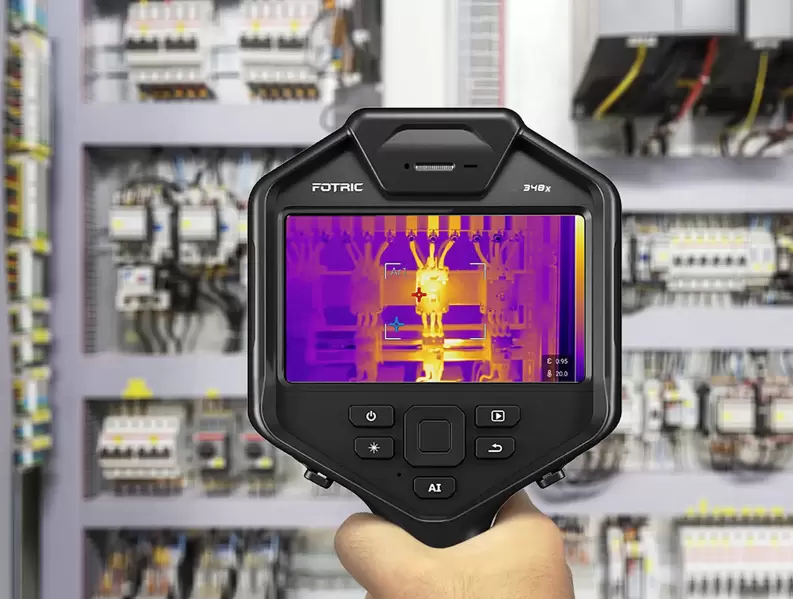
Key Technologies Used by Leading Thermal Imaging Instrument Manufacturers
Apr 22, 2026
Thermal imaging instruments are no longer niche tools reserved for defense or high-end laboratories. Today, they are widely used in electronics manufacturing, power inspection, building diagnostics, automotive testing, medical screening, and AI-driven monitoring systems. As demand increases, so does the number of suppliers in the market. Choosing the right thermal imaging instrument manufacturer is no longer just about price or lead time—it is about long-term reliability, engineering capability, and technical collaboration.
This guide will walk you through the key factors to evaluate when selecting a dependable manufacturer and explain why engineering depth, manufacturing integration, and quality systems matter more than ever.
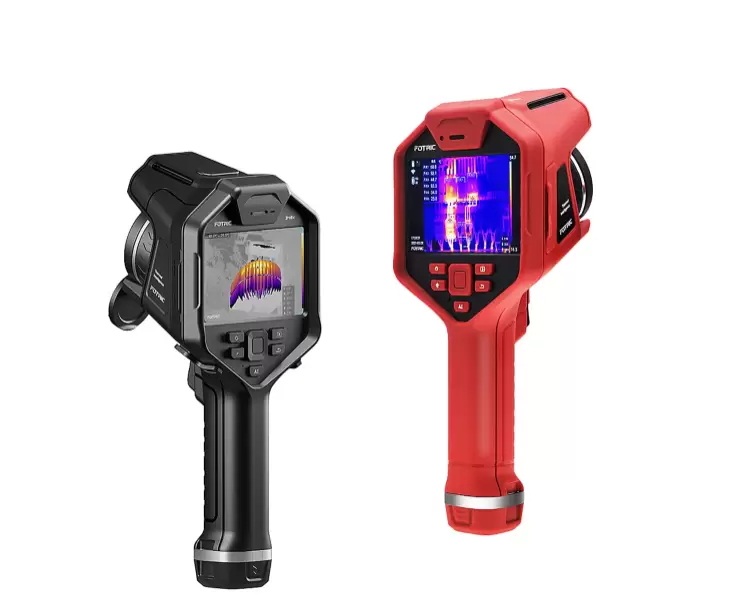
Many companies can assemble a thermal imaging device from off-the-shelf modules. Far fewer can truly design and optimize one.
A reliable manufacturer should demonstrate capabilities in:
Thermal simulation and heat flow modeling
Structural design optimization
Precision hardware engineering
EMC/EMI considerations
Cooling and heat dissipation design
Thermal imaging instruments are highly sensitive to internal temperature stability. Even small structural inefficiencies can affect measurement accuracy. That means the manufacturer must understand both optical and mechanical integration—not just electronics.
For example, companies like SOGOOD focus on product design, thermal simulation, precision hardware, and heat dissipation solutions. Instead of treating thermal imaging devices as simple housings for sensors, they approach development as a full-system engineering challenge. This makes a significant difference in product reliability and long-term field performance.
A serious manufacturer should have in-house expertise in advanced processing technologies.
Two areas are especially important:
Thermal imaging devices require stable mechanical structures to maintain sensor alignment and protect internal components. Technologies such as metal nano forming and high-precision CNC machining allow tighter tolerances and improved structural stability.
Precision matters when integrating infrared sensors, optical lenses, and calibration modules. Poor machining can lead to alignment errors and inconsistent thermal readings.
SOGOOD’s strength lies in metal nano forming technology and CNC precision machining, backed by senior engineers with over 20 years of industry experience. This level of technical depth reduces risks during prototyping and mass production.
When evaluating a manufacturer, ask:
Do they own their core manufacturing processes?
Do they outsource critical machining?
What tolerance levels can they consistently maintain?
Can they provide DFM (Design for Manufacturing) feedback?
If the answers are vague, consider that a warning sign.
Thermal imaging instruments are used across multiple sectors:
Electronics and semiconductors
Telecommunications infrastructure
Automotive thermal management
Medical diagnostics
Artificial intelligence monitoring systems
A manufacturer that has served diverse industries is more likely to understand strict performance and reliability requirements.
SOGOOD has supported global industry leaders such as Qualcomm, ZTE, Lenovo, NEC, Han’s Laser, Philips, Panasonic, Haier, Midea, ASUS, and TCL. Working with companies of this caliber demands rigorous engineering standards, structured communication, and dependable quality systems.
Experience across industries often translates into:
Better risk control
Mature project management
Faster problem-solving
Improved design validation processes
One major difference between average suppliers and reliable partners is integration capability.
Does the manufacturer only produce parts, or can they:
Assist with industrial design?
Conduct structural simulation?
Provide mold flow analysis?
Optimize heat dissipation pathways?
Support prototyping and validation testing?
An integrated development partner reduces coordination errors between design, tooling, and production.
For example, SOGOOD provides one-stop manufacturing services—from industrial design and thermal simulation to enclosure production and heat sink solutions. This integrated workflow helps customers move smoothly from R&D to mass production without repeated redesign cycles.
When choosing a thermal imaging instrument manufacturer, integration capability directly affects:
Development cycle time
Prototype iteration speed
Final product reliability
Manufacturing scalability
Thermal imaging instruments are measurement tools. Accuracy and stability are non-negotiable.
A reliable manufacturer should implement internationally recognized quality management systems such as ISO9001.
Important questions to ask include:
Is the factory ISO-certified?
How are incoming materials inspected?
What are the calibration procedures?
Is there traceability for each batch?
How are non-conformities handled?
SOGOOD implements a modern quality management system aligned with international standards, and its products are ISO9001 certified. This ensures structured process control rather than informal quality checks.
Quality control should not be an afterthought—it must be embedded in the workflow from material sourcing to final inspection.
Instead of relying on brochures, examine actual product pages and technical documentation.
For example, you can review detailed specifications and structural approaches in this thermal imaging instrument solution:
<a href="https://www.sogoodprecision.com/three-proof-electronic-products/thermal-imaging-instrument.html">thermal imaging instrument manufacturer solution</a>
Look for:
Structural durability features
Environmental resistance design
Heat dissipation strategies
Assembly details
Application scenarios
Concrete product documentation shows whether the company truly understands the product’s functional demands.
Behind every reliable product is a capable team.
Pay attention to:
Founding history
Engineering background
Notable design achievements
Awards and recognitions
SOGOOD was founded in Shenzhen, known as China’s “City of Design,” and its core team includes engineers from the Motorola A1200 and A1600 design team. Their industrial designers have won the Red Dot Design Award—an indication of strong product innovation capability.
A strong design background matters in thermal imaging instruments because:
Ergonomics affect field usability
Housing design impacts sensor stability
Cooling structures must integrate seamlessly
Durability must align with real working conditions
Manufacturers with strong design DNA tend to produce more user-centered, robust solutions.
Some clients require standardized products; others need fully customized engineering solutions.
A reliable thermal imaging instrument manufacturer should support:
OEM production
ODM development
Customized structural solutions
Private labeling
Small-batch pilot production
If your application involves specialized environments—such as industrial furnaces, automotive testing labs, or AI-based monitoring—you may need custom housings, reinforced structures, or enhanced heat sinks.
Companies that welcome OEM and ODM cooperation demonstrate confidence in their engineering and manufacturing flexibility.
Selecting a thermal imaging instrument manufacturer is not a one-time transaction. It is the beginning of a long-term technical partnership.
Key factors to consider:
Communication responsiveness
Engineering feedback quality
Transparency during problem-solving
Willingness to co-develop improvements
Scalability for future projects
Manufacturers with a reliable reputation, innovative mindset, and structured service approach can help clients transition smoothly from R&D to market success.
SOGOOD positions itself as a collaborative engineering partner, focusing on seamless transitions from development to commercialization, enabling sustainable business growth.
Be cautious if you notice:
Overemphasis on low pricing without technical depth
No in-house engineering team
No clear quality certification
Vague answers about tolerances
No documented case studies
Inconsistent communication
Thermal imaging instruments operate in demanding environments. Compromising on manufacturing quality can lead to field failures, inaccurate readings, and brand damage.
Choosing a reliable thermal imaging instrument manufacturer requires more than comparing quotations. It demands a deep evaluation of engineering capability, manufacturing expertise, quality systems, and innovation culture.
Look for a partner that:
Integrates design and production
Masters precision machining and metal forming
Understands heat dissipation engineering
Implements strict quality management
Has experience serving demanding global industries
When these elements come together, you gain more than a supplier—you gain a technical partner capable of supporting your product from concept to commercial success.
If you are evaluating manufacturing partners for your next thermal imaging instrument project, focus on depth, integration, and proven capability. The right choice will protect your product performance and strengthen your market competitiveness.