How Optical Medical Device Enclosure CNC Suppliers Meet Medical Industry Standards
Sep 04, 2026
Consumer electronics products are becoming more compact, more powerful, and more demanding to manufacture. A modern device may combine precision metal parts, plastic components, thermal management structures, decorative surfaces, electronic assemblies, and tightly controlled dimensional requirements. For product companies, managing all these processes through multiple suppliers can quickly become difficult.
This is why more consumer electronics brands are looking for one-stop manufacturing partners that can support product development from engineering design through production.
A capable one-stop partner does more than manufacture individual components. It can help connect industrial design, structural engineering, mold development, CNC machining, metal forming, thermal analysis, surface treatment, quality control, and production into a more coordinated process.
For companies developing new consumer electronics products, this approach can provide several practical advantages.
Working with multiple specialized suppliers is sometimes necessary, but it can create additional communication work.
For example, a product may require a precision CNC-machined metal housing, a plastic internal component, a heat dissipation structure, and a decorative exterior finish. If each part is handled by a different supplier, the product development team has to coordinate drawings, tolerances, samples, production schedules, quality requirements, and engineering changes across several companies.
A one-stop manufacturing partner can take responsibility for more of these processes under one project.
This makes communication more direct. Instead of explaining the same product requirements to several suppliers, the customer can work with one engineering and project management team that understands the complete product structure.
This is particularly useful when a design change affects several components. Engineers can evaluate the impact across different manufacturing processes before moving forward.
A common mistake in consumer electronics development is treating manufacturing as something that begins after the product design has already been finalized.
In reality, manufacturing considerations should be introduced much earlier.
Wall thickness, material selection, machining accessibility, draft angles, assembly interfaces, fastening methods, thermal paths, and surface requirements can all affect whether a design is practical to manufacture.
An experienced manufacturing partner can review these factors during the development stage.
For example, CNC machining may provide the required precision for a particular component, but the geometry may need to be adjusted to improve tool accessibility. Similarly, a metal housing may look excellent from an industrial design perspective but require structural modifications to improve strength, assembly, or heat dissipation.
Early engineering review helps identify these issues before tooling or mass production begins.
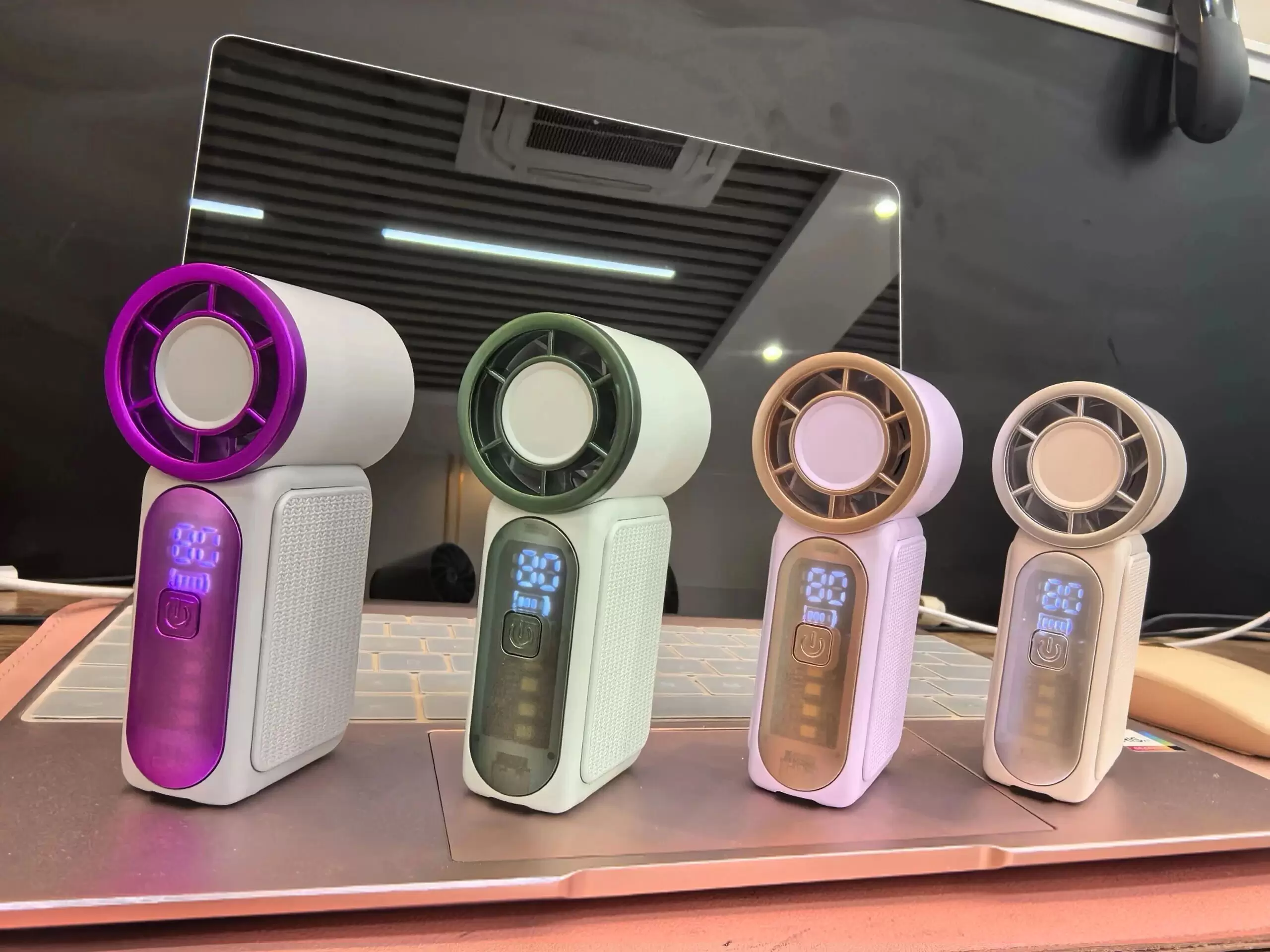
Consumer electronics products need to balance appearance, functionality, structural reliability, and manufacturability.
This requires close cooperation between industrial designers, structural engineers, mold engineers, and manufacturing engineers.
SOGOOD provides this type of integrated support. Founded in Shenzhen, China's major technology and manufacturing hub, the company focuses on product design, thermal simulation, precision hardware, and thermal management solutions.
Its engineering team includes experienced industrial designers, structural engineers, and mold engineers. Some core team members previously participated in the design work for the Motorola A1200 and A1600, while its industrial design professionals have also received Red Dot Design Awards.
This combination of design and engineering experience is particularly valuable for consumer electronics projects where appearance and manufacturing requirements must work together.
Before a consumer electronics product enters mass production, prototypes are often required to verify dimensions, assembly, appearance, thermal performance, and structural design.
A one-stop manufacturing partner can simplify this stage by handling several prototype requirements through the same engineering system.
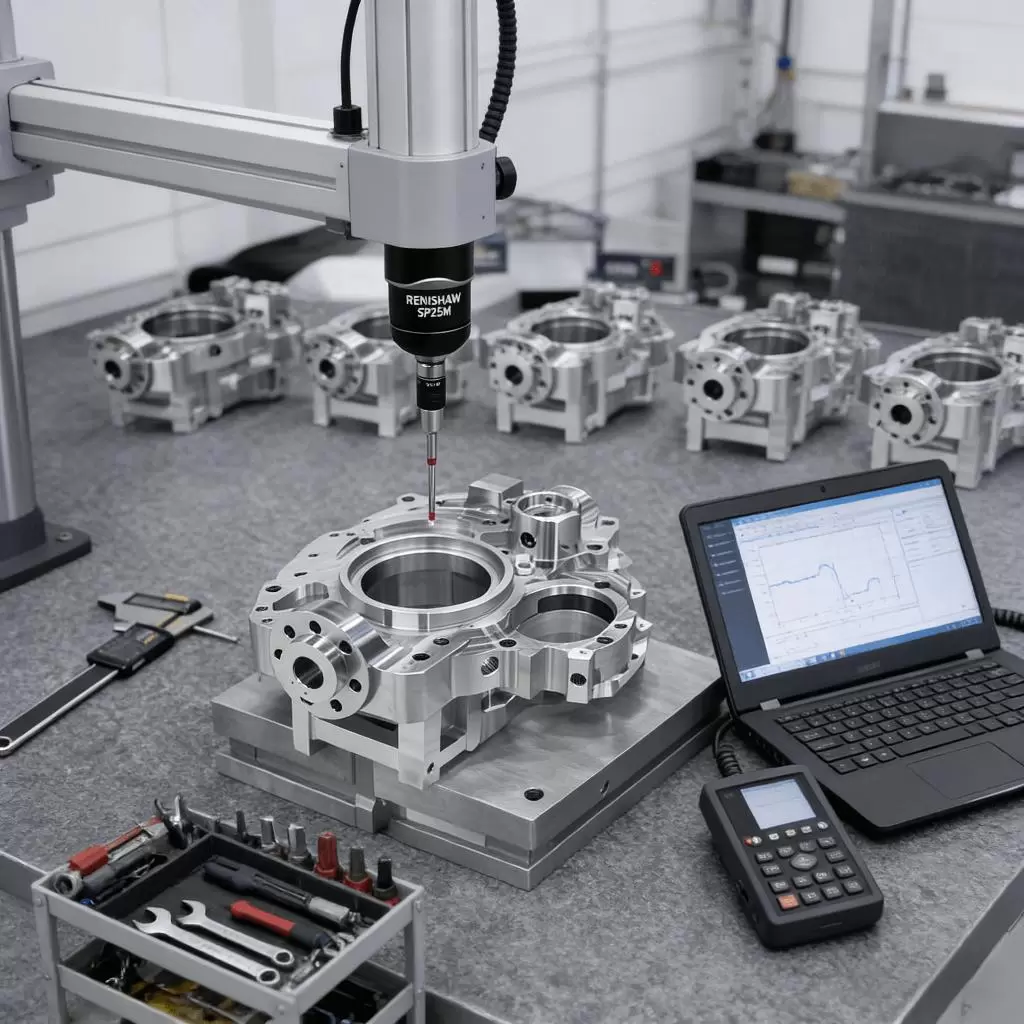
CNC machining is especially useful for producing functional metal prototypes because it can provide accurate dimensions and allow engineers to evaluate the actual component rather than relying only on computer models.
Thermal simulation can also be used to identify potential heat-related problems before physical production.
For electronics containing processors, power modules, communication components, batteries, or other heat-generating elements, thermal behavior can directly influence product reliability.
By combining simulation with physical prototypes, engineering teams can make better-informed design decisions.
Heat management is becoming increasingly important in consumer electronics.
Smaller products often contain more powerful processors and electronic components within limited internal space. This creates a greater challenge for moving heat away from critical components.
A manufacturing partner with thermal engineering capabilities can evaluate the complete heat dissipation path instead of treating the heat sink as an isolated component.
Factors such as material selection, contact surfaces, thermal interface structures, heat sink geometry, airflow, enclosure design, and component positioning may all influence the final thermal performance.
SOGOOD specializes in thermal simulation design and heat dissipation solutions, providing support for applications across electronics, communications, automotive, medical, and artificial intelligence industries.
This experience can be valuable when a consumer electronics product requires both precision manufacturing and effective thermal management.
Modern electronic products increasingly use metal components for structural strength, appearance, electromagnetic considerations, and heat transfer.
However, achieving a high-quality metal enclosure is not simply a matter of cutting material into shape.
Surface quality, dimensional accuracy, wall thickness, joining methods, machining tolerances, and finishing requirements all need to be considered.
SOGOOD's core manufacturing capabilities include metal nano molding technology and CNC precision machining.
Metal nano molding can be useful for applications where metal components need to integrate closely with other materials while maintaining a compact and refined product structure. CNC machining, meanwhile, supports the production of precision metal components with controlled dimensions and complex geometries.
For companies developing new electronic products, access to these technologies through one engineering partner can make the development process easier to manage.
Quality problems in consumer electronics can originate from many stages of production.
A component may meet its drawing dimensions but still create an assembly problem. A surface treatment may look acceptable on one sample but show inconsistencies during larger production runs. A thermal component may meet dimensional requirements but fail to deliver the expected performance when installed in the complete product.
A coordinated quality management process helps reduce these risks.
SOGOOD has established a modern quality management system aligned with international standards and has obtained ISO9001 certification.
Quality control should not only focus on final inspection. It should also be integrated into material control, process management, dimensional inspection, engineering validation, and production monitoring.
This approach is especially important for OEM and ODM projects where customers need consistent product quality across production batches.
Different customers require different levels of manufacturing support.
Some companies already have complete product drawings and only need a qualified manufacturing supplier. Others may have an initial concept but need assistance with industrial design, structural development, prototyping, tooling, and production engineering.
A one-stop manufacturer can support both situations.
SOGOOD welcomes OEM and ODM cooperation and can provide customized engineering solutions in addition to products from its existing capabilities.
For companies evaluating potential manufacturing partners, reviewing previous projects can provide useful information about engineering experience and manufacturing scope. You can explore representative work through the following project portfolio:
https://www.sogoodprecision.com/project/
A portfolio can help customers assess whether a supplier has experience with similar product structures, materials, manufacturing processes, and application requirements.
Engineering changes are normal during product development.
A component may need to be redesigned after testing. A material may be changed because of performance requirements. An enclosure may need modification after assembly verification. Thermal simulation may reveal that a heat dissipation structure needs additional optimization.
When several suppliers are involved, every change must be communicated and coordinated separately.
With a one-stop partner, the same engineering team can evaluate the relationship between different components and processes.
This does not eliminate engineering changes, but it can make them easier to manage.
Good communication is particularly important when the product is approaching pilot production, because late changes can affect tooling, machining, assembly, inspection, and production schedules at the same time.
The biggest advantage of a one-stop manufacturing partner is not simply having more services under one roof. It is the ability to connect different stages of product development.
For consumer electronics companies, this can mean starting with industrial design, moving into structural engineering, validating the thermal concept, developing prototypes, refining manufacturing details, and then transitioning into production with fewer handoffs.
SOGOOD has built its capabilities around this integrated model.
The company was established in 2009 and is headquartered in Shenzhen. Its manufacturing and engineering capabilities cover product design, thermal simulation, precision hardware, CNC machining, metal nano molding, mold flow analysis, and thermal management solutions.
Its senior engineers bring more than 20 years of experience in metal nano molding and CNC machining, including professional experience gained at BYD. The company has also served global industry leaders across electronics, communications, automotive, home appliances, and other technology-related sectors.
Choosing a one-stop consumer electronics manufacturing partner can simplify product development while improving communication between design, engineering, and production.
The most valuable partner is not necessarily the company offering the largest number of manufacturing processes. What matters is whether those capabilities work together effectively.
For consumer electronics projects, important evaluation points include engineering experience, prototyping capability, CNC precision machining, thermal simulation, mold development, quality management, material knowledge, and OEM/ODM flexibility.
A manufacturing partner that can bring these capabilities together can help turn a product concept into a manufacturable product with fewer unnecessary handoffs.
For companies developing electronic housings, precision metal components, thermal management structures, or customized assemblies, SOGOOD provides an integrated engineering and manufacturing approach designed to support the journey from product development to market-ready production.