Key Capabilities to Look for in an Industrial Printer Manufacturer
Jun 03, 2026
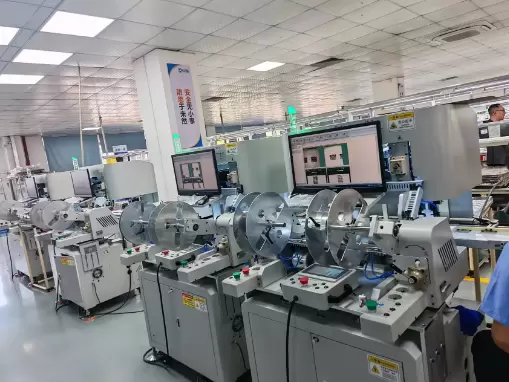
Custom plastic parts are used in almost every modern industrial product, from electronic housings and automotive components to medical equipment, communication devices, and AI hardware. While injection molding is often associated with high-volume production, an experienced industrial plastic injection molding factory does much more than operate molding machines. It can support the entire process from part design and mold development to material selection, trial production, quality control, and final manufacturing.
For companies developing a new plastic component, choosing the right manufacturing partner can make a significant difference. A capable factory can identify production problems early, improve part manufacturability, and help turn an engineering concept into a stable production part.
The first challenge in custom plastic part production is usually not the injection molding machine. It is the design.
A plastic component may look simple in a 3D model, but injection molding requires the design to work with material flow, mold structure, cooling, ejection, shrinkage, and production tolerances. Wall thickness, draft angles, ribs, bosses, holes, snap-fits, and other features all affect how the part can be molded.
An industrial injection molding factory with engineering capabilities can review these details before the mold is manufactured. This type of Design for Manufacturability (DFM) review helps identify potential problems such as uneven wall thickness, difficult-to-fill areas, excessive shrinkage, sink marks, warpage, or weak structural features.
Instead of waiting until the first mold trial to discover these issues, engineers can address them during the design stage.
This is particularly important for products with tight dimensional requirements or complex external surfaces. Small changes to the part geometry can sometimes make the difference between a stable production process and a mold that requires repeated modifications.
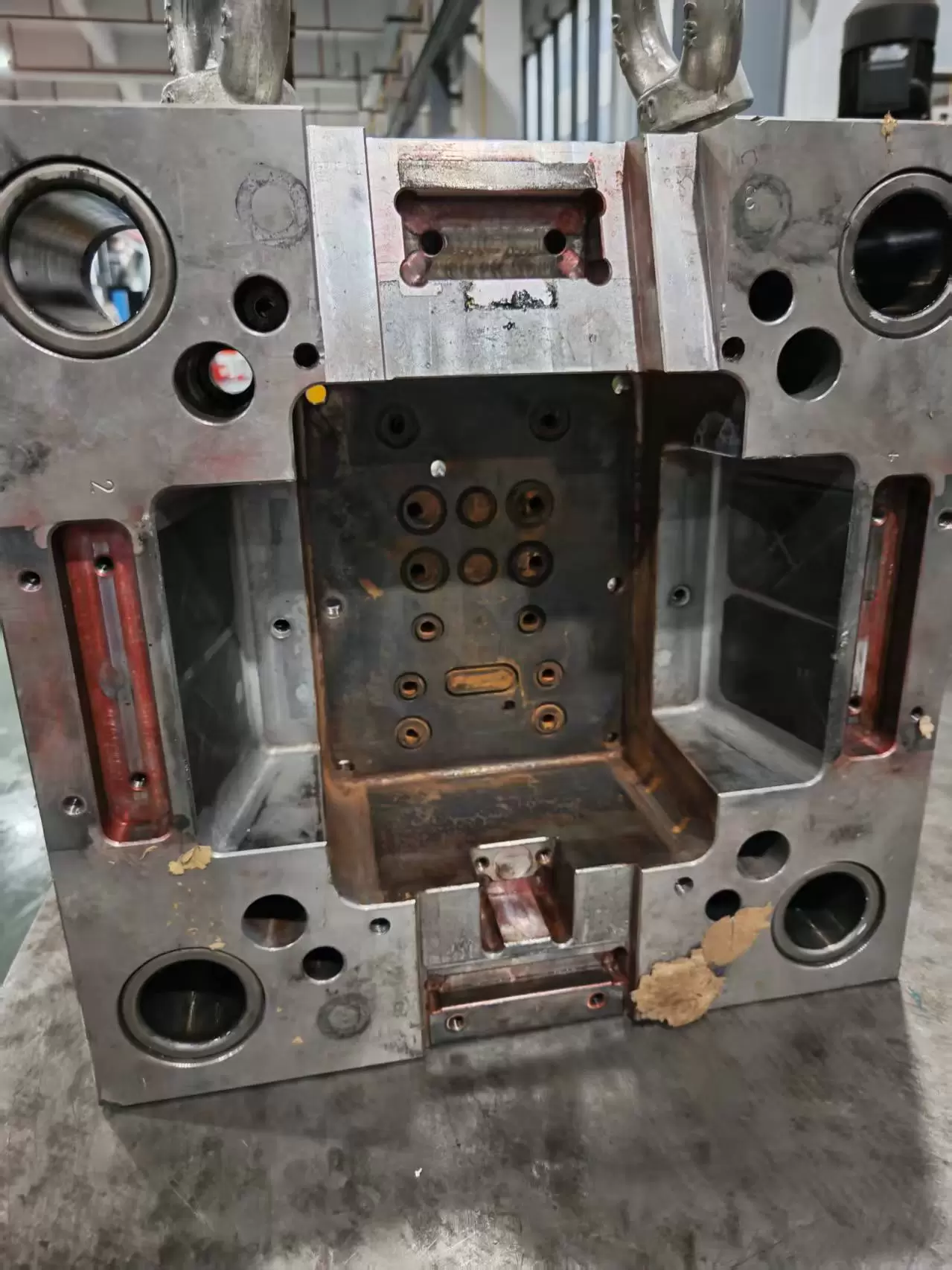
The injection mold determines much of the final production performance. Mold design affects cycle time, part quality, dimensional consistency, maintenance requirements, and long-term production stability.
A professional factory considers factors such as:
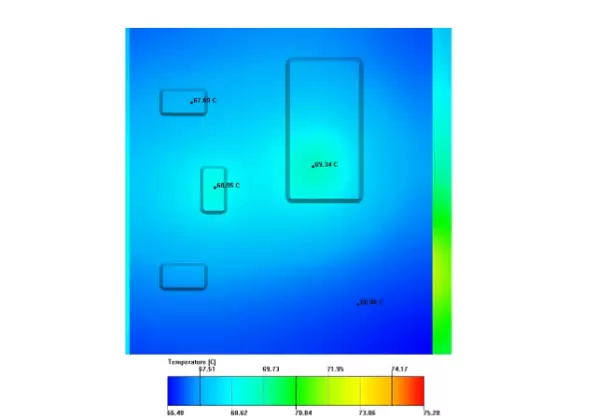
For complex components, mold flow analysis can provide additional information before machining begins. Engineers can evaluate how molten plastic is expected to fill the cavity and identify potential air traps, weld lines, filling imbalance, pressure requirements, and warpage risks.
This engineering approach reduces the need to rely entirely on trial and error.
Custom plastic parts can be produced from many different materials, and choosing one based only on appearance or general strength is rarely enough.
The material needs to match the actual operating environment of the finished product.
For example, an electronic housing may require dimensional stability, impact resistance, flame-retardant performance, and a suitable surface finish. An automotive component may need resistance to heat, vibration, chemicals, and long-term environmental exposure. A medical component may have different requirements related to cleanliness, durability, or regulatory considerations.
An experienced molding factory can help customers compare material characteristics and understand how a material will behave during injection molding.
Material selection also affects mold design and processing parameters. Different plastics have different shrinkage rates, flow characteristics, molding temperatures, and cooling behavior. These factors need to be considered together rather than separately.
For industrial products, injection molding is often only one part of the manufacturing process.
Some custom plastic parts require secondary machining, assembly, surface treatment, inserts, or integration with metal components. This is where a manufacturing partner with multiple technologies can provide a practical advantage.
SOGOOD, for example, provides one-stop manufacturing services covering product design, thermal simulation design, precision hardware, CNC precision machining, mold flow analysis, and thermal management solutions. Its capabilities support products used in electronics, communications, automotive, medical equipment, and artificial intelligence applications.
The company has engineering experience in both plastic and metal manufacturing, allowing different production technologies to be considered at the product-development stage rather than after the design has already been finalized.
For customers looking for integrated manufacturing support, SOGOOD's service capabilities can be explored through the following resource:
[Custom Manufacturing Services](https://www.sogoodprecision.com/service/)
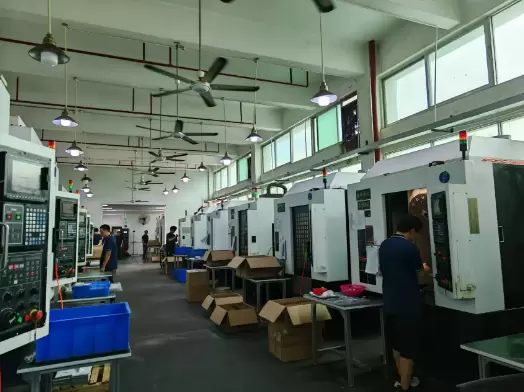
CNC machining is commonly used for prototypes, tooling, fixtures, and precision metal parts. It can also complement injection molding during custom plastic part development.
Before an injection mold is ready, CNC machining can sometimes be used to produce prototype parts for fit checks and functional testing. This gives product teams an opportunity to evaluate assembly relationships, mounting points, clearances, and overall dimensions before committing to the final mold design.
CNC machining is also valuable when a product combines plastic and metal components. For example, an electronic device may require a molded plastic housing together with precision-machined metal brackets, structural parts, heat spreaders, or mounting components.
SOGOOD has particular expertise in CNC precision machining and metal nanomolding technology. Its senior engineers have more than 20 years of experience in metal nanomolding and CNC machining, providing additional engineering support for products that combine different materials and manufacturing processes.
Quality control should not begin after mass production starts.
A reliable injection molding process is built around controlled parameters and clearly defined requirements. During development, manufacturers need to establish the critical dimensions, inspection methods, material specifications, appearance standards, and functional requirements of the part.
Typical inspection considerations include:
Process control is especially important for parts that will be assembled into larger products. A small dimensional variation in one plastic component can create an assembly problem later.
SOGOOD has established a modern quality management system aligned with international standards, and its products are produced under an ISO9001-certified quality management system. This provides a structured framework for controlling manufacturing quality throughout the project.
Not every customer starts with a large production order. Many industrial products go through prototype development, engineering validation, pilot production, and later volume manufacturing.
A factory that understands the full development cycle can help customers move between these stages more smoothly.
During early development, the priority may be rapid design verification. As the design becomes stable, attention shifts toward mold optimization, cycle time, repeatability, and production efficiency. Once production begins, quality consistency and process control become increasingly important.
This means the best manufacturing partner is not necessarily the factory with the largest number of machines. It is the factory that understands what the part needs at each stage of its development.
Experience is particularly valuable when a plastic component has unusual geometry or needs to work together with other technologies.
SOGOOD was established in Shenzhen, China's well-known design and innovation hub, and its engineering team includes experienced industrial designers, structural engineers, and mold engineers. Core team members have backgrounds in product design projects such as the Motorola A1200 and A1600.
The company's industrial designers have also received Red Dot Design Awards, reflecting experience in combining product appearance with engineering considerations.
Its manufacturing and engineering capabilities cover areas including plastic components, housings, accessories, precision hardware, CNC-machined parts, thermal solutions, and metal nanomolding. This combination allows product teams to discuss design, tooling, materials, thermal requirements, and manufacturing within one coordinated workflow.
When evaluating a factory for custom plastic parts, buyers should look beyond the molding machine list.
Important questions include:
These questions help distinguish a production-only supplier from a manufacturing partner capable of supporting product development.
Custom injection molding works best when design, tooling, materials, processing, inspection, and assembly are considered as one connected process.
For industrial customers, the goal is not simply to produce a plastic part. The part needs to fit the product, perform reliably in its operating environment, meet dimensional requirements, and remain consistent throughout production.
This is why engineering support is so important. An experienced industrial plastic injection molding factory can contribute during design review, mold development, prototyping, production validation, and quality control.
SOGOOD combines industrial design, structural engineering, mold engineering, CNC precision machining, mold flow analysis, metal nanomolding, and thermal management capabilities to support this integrated approach. With experience serving global companies across electronics, communications, automotive, medical, and AI-related industries, the company supports both OEM and ODM cooperation.
For businesses developing a new custom plastic component, working with a manufacturer that can participate in the engineering process—not simply produce parts from finished drawings—can make development more predictable and production more reliable.