Speaker Thermal Simulation Service for Preventing Voice Coil Overheating
May 18, 2026
The medical industry demands an exceptional level of precision, reliability, and consistency. From implantable devices and surgical instruments to diagnostic equipment housings, even the smallest dimensional deviation can affect performance, safety, and regulatory compliance. As medical technology advances toward miniaturization, higher integration, and stricter standards, CNC machining has become one of the most critical manufacturing technologies supporting this evolution.
This article explores how CNC machining enables high-precision medical components manufacturing, the specific requirements of medical-grade parts, and how an experienced one-stop manufacturing partner like SOGOOD helps medical companies move seamlessly from design to mass production.
Medical components are fundamentally different from parts used in many other industries. They often operate in or near the human body, interact with sensitive electronic systems, or support life-critical functions. Precision is not simply a quality goal—it is a requirement.
Key reasons precision is essential include:
Patient safety: Accurate dimensions ensure proper fit, stability, and performance.
Functional reliability: Tight tolerances reduce wear, vibration, and mechanical failure.
Regulatory compliance: Medical devices must meet strict international standards and validation requirements.
Interchangeability: Components must be consistent across batches to support assembly and maintenance.
CNC machining addresses these requirements by delivering repeatable accuracy, excellent surface finishes, and reliable process control.
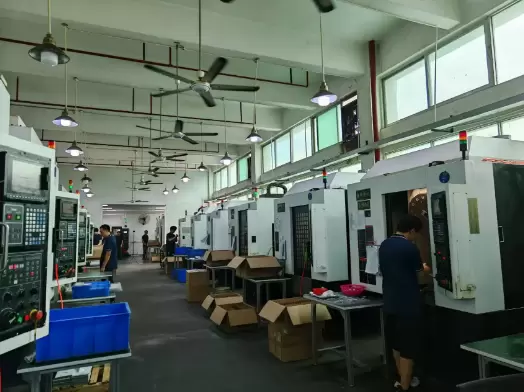
CNC (Computer Numerical Control) machining uses digitally programmed instructions to control cutting tools with extreme accuracy. Unlike manual or semi-automated processes, CNC machining eliminates variability caused by human operation, making it ideal for medical applications.
Micron-Level Tolerances
CNC machining can consistently achieve tight tolerances required for medical housings, connectors, frames, and structural parts.
Complex Geometry Capability
Multi-axis CNC machines allow for intricate internal channels, thin walls, and complex contours often needed in medical devices.
Material Versatility
CNC machining supports a wide range of medical-grade materials, including aluminum alloys, stainless steel, titanium, copper, and engineered plastics.
Excellent Surface Quality
High-quality surface finishes reduce friction, improve cleanliness, and support downstream treatments such as anodizing or passivation.
Scalable Production
CNC machining supports both prototyping and medium-to-high volume production with consistent quality.
CNC machining plays a role across many categories of medical products, including:
Medical device housings and enclosures
Diagnostic equipment structural parts
Surgical instrument components
Imaging equipment frames and brackets
Heat dissipation components for medical electronics
Precision connectors and mechanical interfaces
As medical devices increasingly integrate electronics and thermal-sensitive components, precision machining combined with thermal design expertise becomes even more valuable.
Modern medical devices are not purely mechanical. They often integrate sensors, processors, power modules, and communication systems, all within compact enclosures. This creates new challenges related to heat management, structural integrity, and manufacturability.
SOGOOD approaches medical manufacturing as a system-level process, not just part production. By integrating:
Industrial and structural design
Thermal simulation and analysis
CNC precision machining
Precision hardware and heat dissipation solutions
SOGOOD helps clients identify potential risks early, optimize designs for manufacturability, and reduce costly design iterations.
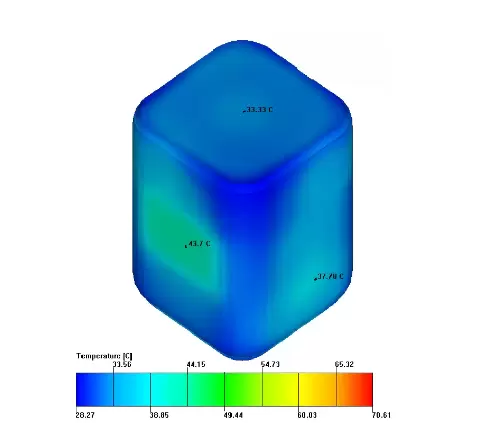
For example, thermal simulation can guide wall thickness, material selection, and heat sink placement before CNC machining begins. This ensures that machined medical enclosures not only meet dimensional requirements but also support long-term thermal stability and device reliability.
Choosing the right material is a critical step in medical component manufacturing. CNC machining allows precise control across a wide range of materials commonly used in medical devices.
Common materials include:
Aluminum alloys: Lightweight, corrosion-resistant, and suitable for device housings and frames
Stainless steel: High strength and durability for surgical tools and structural parts
Titanium: Biocompatible and strong, often used in implant-related components
Copper and alloys: Used for thermal and electrical performance in medical electronics
SOGOOD’s long-term experience in CNC machining and metal nano-forming enables engineers to recommend materials that balance performance, manufacturability, and regulatory requirements.
Medical manufacturing requires consistent and traceable quality. CNC machining supports this through digital process control, standardized tooling, and repeatable machining programs.
SOGOOD implements a modern quality management system aligned with international standards. With ISO9001 certification, every stage—from raw material inspection to final dimensional verification—is tightly controlled.
Key quality practices include:
Process validation for critical dimensions
Precision measurement and inspection
Stable production workflows for batch consistency
Documentation to support customer audits and compliance
This disciplined approach ensures medical customers receive components they can confidently integrate into regulated products.
Medical device development often requires fast iteration during R&D, followed by stable production once designs are validated. CNC machining excels in both phases.
During prototyping, CNC machining allows:
Rapid design verification
Functional testing with production-grade materials
Quick design adjustments without tooling delays
Once designs are finalized, the same CNC processes can scale into small or medium batch production with minimal changes, ensuring continuity between prototype and final product.
SOGOOD’s one-stop manufacturing model helps customers shorten development cycles while maintaining engineering consistency from early concept to market launch.
Behind every high-precision CNC-machined medical component is an experienced engineering team. SOGOOD was founded with a strong technical background in industrial product innovation, CNC precision machining, and metal nano-forming technology.
The company’s core team includes seasoned industrial designers, structural engineers, and mold engineers, with key members originating from the Motorola A1200 and A1600 design teams. Senior engineers bring more than 20 years of experience in metal nano-forming and CNC machining, gained during their tenure at BYD.
This combination of design insight and manufacturing expertise allows SOGOOD to deliver practical, production-ready solutions rather than theoretical designs.
Over the years, SOGOOD has supported projects for globally recognized technology and manufacturing leaders, including Qualcomm, ZTE, Lenovo, NEC, Philips, Panasonic, Haier, Midea, ASUS, TCL, and others. This experience has shaped a deep understanding of international quality expectations, communication standards, and long-term partnership requirements.
Medical customers benefit from this background through clear project coordination, reliable timelines, and solutions that align with global market needs.
To explore real manufacturing cases and precision machining projects, you can review SOGOOD’s project portfolio here:<a href="https://www.sogoodprecision.com/project/">CNC Precision Machining Projects</a>
CNC machining is a foundational technology enabling high-precision medical components manufacturing. Its ability to deliver tight tolerances, complex geometries, consistent quality, and scalable production makes it indispensable in today’s medical industry.
When combined with integrated product design, thermal simulation, and advanced material expertise, CNC machining becomes more than a manufacturing method—it becomes a strategic advantage.
As a one-stop manufacturing partner, SOGOOD helps medical companies bridge the gap between innovation and production, ensuring that precision, reliability, and performance are built into every component from the very beginning.