The Role of Chinese Plastic Mold Manufacturers in Global Supply Chains
Sep 11, 2026
In aluminum alloy manufacturing, product quality is rarely determined by a single process. Instead, it is shaped by how well design intent and manufacturing execution are aligned. Many quality issues attributed to CNC machining—such as deformation, inconsistent tolerances, or assembly mismatch—can often be traced back to decisions made much earlier in the design stage.
This is why integrated design and CNC machining have become increasingly important in modern aluminum alloy manufacturing. When design engineering and CNC machining operate as a connected system rather than isolated steps, product quality improves in measurable and repeatable ways.
In traditional workflows, product design and machining are handled by separate teams or even different companies. Designers focus on functionality and appearance, while machinists focus on how to produce the part.
This separation often creates gaps:
Designs that are difficult or inefficient to machine
Unrealistic tolerance assignments
Thin-wall structures prone to deformation
Thermal or structural issues discovered too late
When these issues surface during CNC machining, corrections are expensive and time-consuming. Integrated design aims to eliminate these gaps before machining begins.
Integrated design starts with manufacturability in mind. For aluminum alloy products, this means understanding how CNC machining interacts with material behavior, geometry, and process constraints.
Design engineers working closely with CNC specialists can:
Adjust wall thickness to improve rigidity
Optimize fillet radii for tool access
Balance tolerance requirements with machining stability
Simplify structures without sacrificing performance
These decisions reduce machining stress and improve dimensional consistency, directly enhancing product quality.
Aluminum alloys are versatile, but different alloys respond differently to CNC machining. Strength, machinability, thermal expansion, and surface finish potential vary by alloy and temper.
When design and machining teams collaborate early, material selection becomes a quality decision rather than a fixed constraint. Designers can choose alloys that not only meet performance requirements but also machine reliably at scale.
This alignment reduces unexpected variation and improves consistency across production batches.
CNC machining excels at producing precise geometry, but precision is only meaningful when it serves functional goals.
Integrated design ensures that critical features—such as mounting surfaces, alignment interfaces, and thermal contact areas—are clearly defined and prioritized. CNC machining then focuses accuracy where it matters most, rather than applying uniform tolerances indiscriminately.
This targeted precision improves functional performance and reduces unnecessary machining complexity.
Many aluminum alloy components serve both structural and thermal roles. Enclosures, frames, and housings often act as heat paths while supporting mechanical loads.
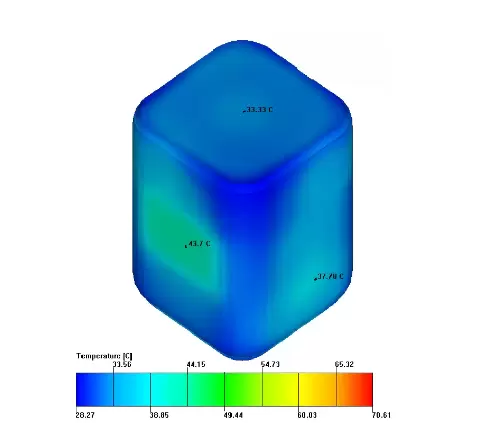
When design and CNC machining are integrated, thermal simulation and structural analysis inform machining strategy. Surface flatness, contact pressure, and internal geometry are optimized not just for manufacturability, but for real-world performance.
CNC machining then executes these optimized designs with high fidelity, ensuring that thermal and structural expectations are met simultaneously.
Deformation during machining is a common quality issue, especially for thin-walled or lightweight aluminum parts. Integrated design addresses this by anticipating machining-induced stress.
Designers can:
Modify geometry to improve stiffness during machining
Plan material removal sequences
Allow for finishing allowances where needed
CNC machinists, informed by design intent, adjust fixturing and cutting strategies accordingly. The result is better dimensional stability and fewer corrective steps.
Surface finish affects both appearance and function. Poor surface quality can lead to assembly issues, inconsistent anodizing, or reduced corrosion resistance.
Integrated design considers surface treatment requirements from the outset. Designers specify finishes based on realistic machining outcomes, while CNC processes are tuned to produce uniform surface conditions.
This coordination ensures that aluminum parts transition smoothly from machining to finishing without quality surprises.
In product development, speed often competes with quality. Integrated design and CNC machining help resolve this tension.
Because machinability is considered during design, prototypes require fewer revisions. CNC machining parameters established during early runs can often be reused for later iterations, maintaining consistency while reducing development time.
This approach allows manufacturers to move quickly without sacrificing quality.
One of the most significant advantages of integrated design and CNC machining is scalability. Quality achieved in prototype stages can be preserved during mass production.
Design documentation, machining strategies, and inspection criteria are aligned from the beginning. When volume increases, the same logic applies—reducing variation and maintaining product integrity.
This continuity is especially important for OEM and ODM projects where long-term consistency matters.
Integrated design works best within a one-stop manufacturing environment. When design, CNC machining, simulation, and quality control are managed under a unified system, communication barriers disappear.
SOGOOD applies this integrated model by combining product design, CNC machining, thermal simulation, Nano Molding Technology, and standardized quality management. This allows aluminum alloy products to be developed and manufactured with quality built in, not inspected in afterward.
To see how integrated design and machining are applied in real production environments, visit
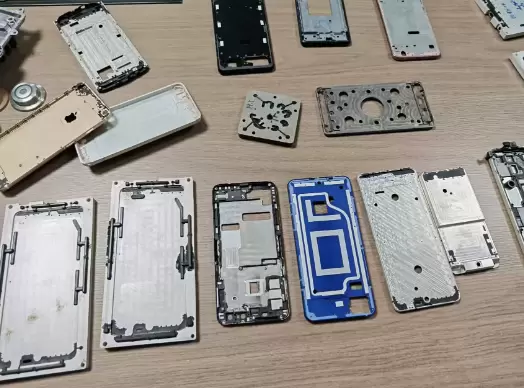
CNC precision machining of aluminum alloy.
High-quality aluminum alloy products are not the result of isolated excellence. They emerge from systems where design decisions and CNC machining capabilities reinforce each other.
Integrated design and CNC machining transform aluminum manufacturing from a reactive process into a controlled, predictable system—one where quality is planned, executed, and sustained.