What Makes a Professional Humidifier Manufacturer Stand Out in the Market
Jun 05, 2026
In industries where a few microns can determine whether a product succeeds or fails, tight tolerances are not a luxury—they are a requirement. From high-frequency communication housings to medical device components and automotive assemblies, CNC precision machining manufacturers play a critical role in ensuring dimensional accuracy, repeatability, and reliability.
But how exactly do manufacturers consistently achieve tolerances in the range of ±0.01 mm or even tighter? The answer lies in a systematic approach that combines advanced equipment, experienced engineering teams, strict quality management, and optimized production workflows.
This article explores the practical methods behind tight-tolerance CNC machining and highlights how companies like SOGOOD implement these strategies in real-world manufacturing.
Tight tolerances do not start on the shop floor—they start at the design stage.
Before machining begins, experienced engineers review 3D models and technical drawings to evaluate:
Tolerance stack-up risks
Material behavior under machining stress
Wall thickness and deformation risks
Heat dissipation requirements
Surface finish feasibility
At SOGOOD, headquartered in Shenzhen, China’s “City of Design,” the engineering team works closely with clients across electronics, communication, automotive, medical, and AI industries to refine designs before production. With team members experienced in the design of products such as the Motorola A1200 and A1600, the company integrates industrial design thinking with structural and mold engineering expertise.
By aligning structural design, thermal simulation, and CNC machining strategies early in development, dimensional deviations can be minimized before they occur.
Even the best design cannot compensate for unstable equipment.
Manufacturers that consistently achieve tight tolerances invest in:
High-speed, high-rigidity CNC machining centers
Multi-axis (3-axis, 4-axis, 5-axis) machines
Stable spindle systems
Precision tool holders
Regular laser calibration and ball bar testing
Machine calibration is critical. Over time, thermal expansion, vibration, and mechanical wear affect positioning accuracy. Professional CNC manufacturers implement scheduled calibration routines to ensure positioning accuracy remains within microns.
At SOGOOD, whose core technologies include metal nano molding and CNC machining, equipment stability is treated as a foundation rather than an upgrade.
Material behavior significantly influences dimensional accuracy.
Different metals respond differently to cutting forces and temperature changes:
Aluminum alloys offer good machinability but expand with heat
Stainless steel provides strength but increases tool wear
Copper has excellent conductivity but can deform under stress
Titanium requires specialized tooling and cutting parameters
Experienced engineers adjust:
Cutting speed
Feed rate
Depth of cut
Coolant type
Tool path strategy
SOGOOD’s engineering team, with more than 20 years of metal nano forming and CNC experience gained at BYD, applies material-specific machining strategies to ensure structural integrity and tolerance consistency.
Heat is one of the biggest threats to tight tolerance control.
When machining precision hardware components—especially for electronics and communication industries—thermal distortion can cause:
Warping
Internal stress release
Dimensional drift
To counteract this, manufacturers use:
Controlled coolant systems
Optimized cutting parameters
Symmetrical machining sequences
Temperature-controlled workshops
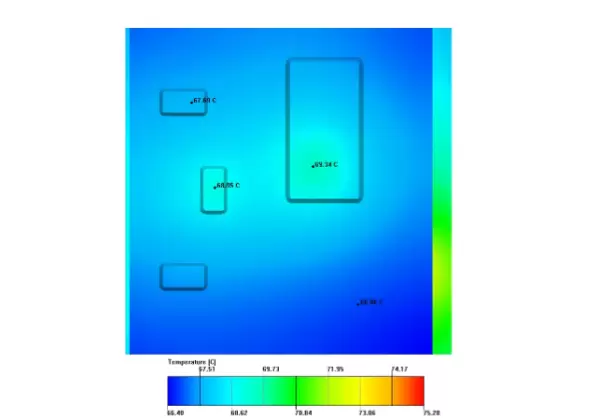
Given SOGOOD’s specialization in heat dissipation solutions and thermal simulation design, thermal behavior is evaluated not only during machining but also in the final product application environment. This integrated approach reduces both machining errors and performance risks.
Tool condition directly affects dimensional consistency.
A worn cutting tool can lead to:
Size deviation
Surface roughness inconsistency
Burr formation
Poor repeatability
Professional CNC manufacturers implement:
Tool life monitoring systems
Automatic tool length measurement
Scheduled tool replacement
Tool wear compensation
In tight tolerance projects, even micro-level tool wear compensation is programmed into CNC systems to maintain accuracy across production batches.
Waiting until final inspection is too late when tolerances are strict.
Reliable manufacturers conduct in-process inspection using:
Coordinate Measuring Machines (CMM)
Digital micrometers
Height gauges
Laser measurement systems
On-machine probing
Real-time data collection allows operators to make immediate adjustments before deviations accumulate.
SOGOOD operates under a modern quality management system aligned with international standards, and its products are certified under ISO9001. This ensures traceability, documentation, and standardized inspection processes across projects.
Consistency requires documentation.
Tight tolerance CNC machining relies on:
Standard Operating Procedures (SOPs)
Work instructions
Process control sheets
Inspection standards
First article approval systems
For OEM and ODM projects, process standardization ensures that prototypes, pilot runs, and mass production maintain the same dimensional standards.
SOGOOD supports both OEM and ODM cooperation, offering clients flexibility whether selecting from existing product catalogs or developing fully customized engineering solutions.
For detailed information about precision manufacturing services, you can explore:
<a href="https://www.sogoodprecision.com/service/">CNC precision machining services</a>
Surface treatment processes such as:
Anodizing
Plating
Sandblasting
Powder coating
can affect final dimensions.
For tight tolerance parts, manufacturers must:
Account for coating thickness
Adjust machining allowance
Control surface uniformity
In industries like electronics and communication, where enclosures must maintain electromagnetic shielding and thermal efficiency, finishing processes must balance aesthetics and dimensional integrity.
SOGOOD’s background in precision hardware and heat sink production allows it to integrate finishing considerations directly into machining planning.
Technology alone is not enough.
Achieving tight tolerances consistently requires:
Experienced CNC programmers
Skilled machine operators
Structural engineers
Mold engineers
Industrial designers
SOGOOD’s team includes award-winning industrial designers, including recipients of the Red Dot Design Award, and engineers with extensive experience in metal forming and CNC machining.
This multidisciplinary expertise enables the company to bridge the gap between industrial design, structural feasibility, and manufacturing precision.
Manufacturers that consistently meet tight tolerances rely on continuous improvement systems:
Statistical process control (SPC)
Root cause analysis
Process capability studies
Feedback loops from clients
By analyzing production data, machining parameters are optimized over time, improving Cp and Cpk values for critical dimensions.
Serving global industry leaders such as Qualcomm, ZTE, Lenovo, NEC, Han’s Laser, Philips, Panasonic, Haier, Midea, ASUS, and TCL has strengthened SOGOOD’s process discipline and quality expectations.
Emerging industries like AI hardware, high-frequency communication modules, and electric vehicles demand:
Compact structural design
Efficient heat dissipation
High-density integration
Lightweight yet durable materials
These trends reduce margin for dimensional error.
Precision CNC machining is no longer just about cutting metal—it is about integrating design, simulation, forming technology, machining strategy, and quality control into one cohesive system.
Ensuring tight tolerances in CNC precision machining requires more than advanced machines. It demands a comprehensive manufacturing ecosystem that integrates:
Early-stage design optimization
Stable and calibrated equipment
Material expertise
Thermal control
Tool management
In-process inspection
Certified quality systems
Experienced engineering teams
SOGOOD exemplifies this integrated approach. With strengths in metal nano forming technology, CNC precision machining, and thermal simulation design, the company supports clients from product R&D through mass production, enabling seamless market success and long-term value growth.
For manufacturers and product developers seeking reliable, high-precision solutions, working with a partner that understands both engineering depth and industrial design innovation makes all the difference.