Key Applications of Metal Nano Molding Process in Advanced Manufacturing
Apr 29, 2026
In high-end industries such as electronics, automotive, medical devices, and artificial intelligence hardware, product performance often depends on microscopic precision. A slight deviation in surface flatness, wall thickness, or structural density can directly affect heat dissipation, signal stability, sealing performance, and long-term durability.
Metal Nano Molding (MNM) has emerged as a powerful manufacturing technology that addresses these challenges by delivering exceptional surface accuracy and enhanced structural strength in complex metal components.
This article explores how metal nano molding works, why it significantly improves dimensional precision and mechanical performance, and how integrated manufacturers like SOGOOD apply it in real-world engineering solutions.
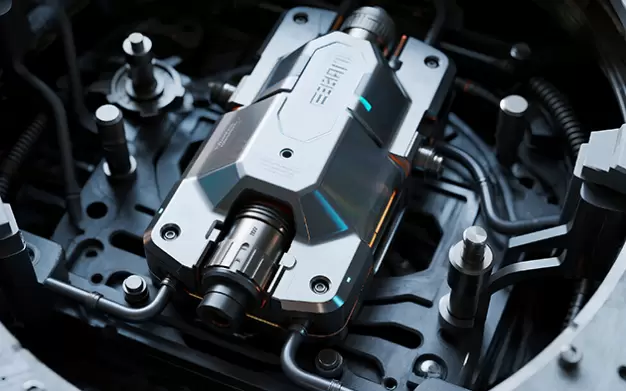
Metal Nano Molding is an advanced forming process that integrates ultra-fine mold fabrication, controlled material flow, and high-pressure precision forming to achieve micron-level surface replication. Unlike traditional casting or conventional stamping, MNM focuses on controlling material behavior at a much finer structural level.
The process typically involves:
High-precision mold design and micro-texture control
Optimized metal feedstock or billet preparation
Controlled injection or forming under tightly regulated temperature and pressure conditions
Post-forming refinement such as CNC finishing when required
By minimizing grain disruption and material turbulence during forming, nano molding significantly reduces internal porosity and dimensional instability.
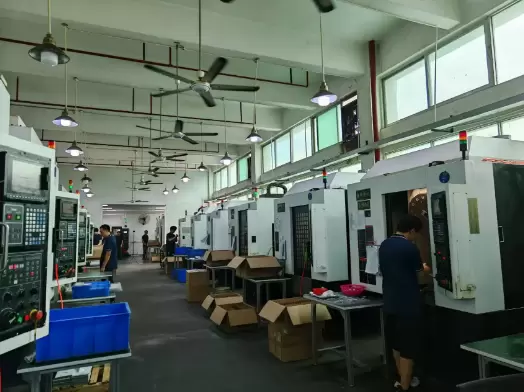
At SOGOOD, metal nano molding is combined with CNC precision machining and mold flow analysis to ensure both macro-structural reliability and micro-surface excellence. More details about integrated solutions can be found here:
<a href="https://www.sogoodprecision.com/service/">One-stop precision manufacturing services</a>
Surface accuracy is not just about smoothness. It includes dimensional tolerance, flatness, perpendicularity, and consistency across batch production. Metal nano molding enhances surface precision in several key ways.
Nano-level mold textures are accurately transferred to the metal surface due to controlled pressure and uniform material flow. This allows:
Fine surface details to be formed without secondary polishing
Consistent surface finish across multiple cavities
Improved cosmetic and functional surface integration
This is particularly important in electronic housings, where surface alignment affects sealing and EMI shielding performance.
Traditional casting processes often experience uneven cooling and shrinkage. Nano molding mitigates this through:
Controlled thermal profiles
Balanced material distribution
Predictive mold flow simulation
At SOGOOD, thermal simulation and mold flow analysis are integrated during product development to predict shrinkage behavior before mass production. This significantly reduces trial-and-error cycles.
Metal nano molding enables tighter dimensional control because:
Material grain flow remains more uniform
Internal stress concentration is minimized
Secondary machining allowances are reduced
As a result, components require less corrective CNC processing, improving overall production efficiency while maintaining micron-level tolerances.
Surface accuracy is only half the equation. Structural strength determines long-term reliability, especially in applications involving vibration, heat, or mechanical load.
The nano molding process reduces internal voids and porosity by applying controlled pressure during forming. Increased density leads to:
Better mechanical strength
Improved fatigue resistance
Enhanced impact durability
For automotive and AI hardware components exposed to continuous vibration, this translates to longer operational life.
When metal flow is precisely controlled, grain orientation becomes more uniform. This improves:
Tensile strength
Resistance to cracking
Load distribution capacity
Experienced engineers play a key role in achieving this balance. SOGOOD’s senior engineering team, with over 20 years of experience in nano molding and CNC machining gained during their tenure at BYD, focuses heavily on process parameter optimization.
Structural strength is not purely mechanical. In electronic and communication devices, structural integrity is closely linked with thermal performance.
SOGOOD specializes in heat dissipation solutions, designing enclosures and structural parts that integrate:
Optimized fin geometry
Uniform wall thickness
High-density metal formation
The combination of nano molding and thermal simulation ensures that structural reinforcement does not compromise heat transfer efficiency.
While nano molding provides excellent near-net shaping, CNC precision machining remains essential for ultra-critical features such as:
High-precision mounting holes
Threaded structures
Tolerance-critical interface surfaces
By combining both technologies, manufacturers achieve:
Reduced material waste
Shorter lead times
Consistent dimensional repeatability
SOGOOD’s core technological strength lies in this dual capability. Established in Shenzhen, known as China’s “City of Design,” the company integrates industrial design, structural engineering, mold development, and manufacturing under one roof. This integration ensures that design intent translates directly into manufacturable, high-strength components.
Metal nano molded housings offer:
Improved surface sealing
Enhanced EMI shielding
Reduced assembly gaps
Global brands such as Qualcomm, ZTE, Lenovo, NEC, Philips, Panasonic, and ASUS rely on high-precision metal components that demand both aesthetic and functional consistency.
Automotive parts require:
High fatigue resistance
Dimensional stability under temperature variation
Structural rigidity
Nano molding ensures dense material structure, reducing the risk of micro-cracks during long-term vibration exposure.
Medical hardware demands:
Precise tolerance control
Smooth, contamination-resistant surfaces
Stable mechanical strength
Metal nano molding supports these requirements through repeatable precision and superior surface quality.
Technology alone does not guarantee success. The effectiveness of nano molding depends heavily on:
Mold design experience
Process parameter optimization
Quality management systems
SOGOOD was founded in October 2009, focusing on industrial product innovation. In September 2016, the company expanded its specialization into nano molding technology, CNC precision machining, and mold flow analysis.
Its engineering team includes experienced industrial designers, structural engineers, and mold engineers. Core members previously participated in the design of Motorola A1200 and A1600 devices, bringing deep experience in precision hardware development.
To ensure product reliability, SOGOOD operates under a modern quality management system aligned with international standards, and its products are certified under ISO9001.
Many manufacturers focus solely on dimensional precision. Others emphasize mechanical strength. However, in advanced industries, these two characteristics are interdependent.
Poor surface accuracy can cause:
Misalignment during assembly
Heat dissipation inefficiency
Sealing failure
Weak structural integrity can result in:
Fatigue cracks
Thermal deformation
Reduced product lifespan
Metal nano molding addresses both simultaneously, enabling manufacturers to produce components that are not only precise but also structurally robust.
For companies seeking OEM or ODM collaboration, integrated engineering capability is critical. SOGOOD offers:
Product design support
Thermal simulation and structural optimization
Precision nano molding
CNC finishing
Quality assurance under ISO standards
Whether selecting from an existing product portfolio or developing a fully customized solution, clients can work directly with experienced engineers to ensure seamless transition from R&D to mass production.
By combining reliable manufacturing processes with innovative industrial design, SOGOOD helps customers achieve smooth commercialization and sustainable growth.
Metal Nano Molding represents a significant advancement in precision manufacturing. By improving surface accuracy through ultra-fine mold replication and reducing structural defects through controlled material flow, it delivers components that meet the demanding standards of modern industries.
When integrated with CNC precision machining, thermal simulation, and strong engineering expertise, nano molding becomes more than a forming process — it becomes a foundation for high-performance product development.
Manufacturers aiming to enhance durability, precision, and production efficiency will find metal nano molding to be a strategic technology for future-ready hardware solutions.