OEM and ODM Services Offered by Modern Humidifier Manufacturers
Aug 03, 2026
As electronic devices continue to evolve toward higher power density, smaller form factors, and greater functional integration, thermal management has become one of the most critical factors influencing product performance, reliability, and lifecycle cost. From consumer electronics and communication equipment to automotive electronics, medical devices, and AI hardware, excessive heat remains one of the leading causes of system instability and premature failure.
Heat dissipation simulation is no longer a “nice to have” step in product development. It is a core engineering discipline that directly impacts design decisions, material selection, manufacturing processes, and time-to-market. When applied correctly, thermal simulation enables engineers to predict real-world behavior, optimize designs before tooling, and avoid costly redesigns later in the production cycle.
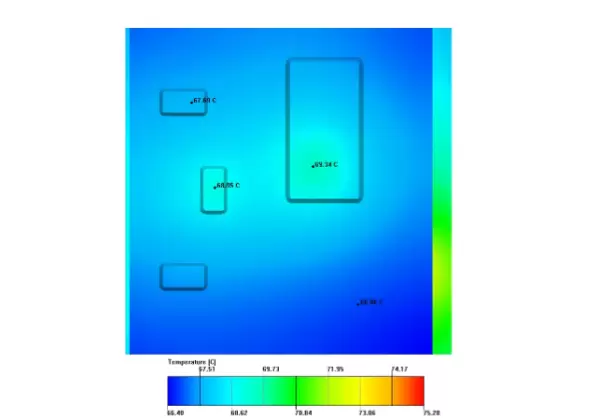
Every electronic component generates heat during operation. As processing power increases and devices shrink, that heat has less physical space to escape. Without proper thermal management, devices can suffer from:
Reduced performance due to thermal throttling
Shortened component lifespan
Increased failure rates and warranty costs
User discomfort or safety risks
Regulatory compliance issues
Traditional thermal design methods based on empirical rules or post-prototype testing are no longer sufficient. By the time overheating is discovered in physical testing, tooling may already be complete, making changes expensive and slow.
Heat dissipation simulation addresses these challenges early in the design phase, when changes are still flexible and cost-effective.
Heat dissipation simulation uses computational tools to model how heat is generated, transferred, and released within an electronic system. These simulations typically analyze:
Heat sources such as chips, power modules, and batteries
Heat conduction through materials and structures
Convection within enclosed or ventilated spaces
Radiation effects for high-temperature or exposed surfaces
By creating a digital thermal model, engineers can visualize temperature distribution, identify hotspots, and test different design scenarios without building physical prototypes.
One of the biggest advantages of heat dissipation simulation is its ability to guide decisions across the entire product lifecycle.
During concept development, simulation helps evaluate enclosure layouts, component placement, and airflow paths. Engineers can compare multiple design directions and eliminate high-risk options before committing resources.
For example, changing the orientation of a PCB or adjusting internal rib structures may significantly improve airflow with minimal impact on aesthetics or cost.
Thermal simulation is closely tied to material engineering. Different metals, coatings, and composite materials behave very differently under heat load.
Companies like SOGOOD integrate heat simulation with advanced manufacturing technologies such as metal nano molding and CNC precision machining. This allows thermal performance to be evaluated alongside manufacturability, surface finish, and structural strength.
Modern products increasingly require thermal components to serve multiple functions. A housing may act as both a structural shell and a heat spreader. Simulation enables engineers to design integrated solutions where aesthetics, strength, and thermal efficiency coexist.
Rather than adding bulky heatsinks late in the process, heat dissipation becomes part of the product’s DNA.
Effective heat dissipation is not achieved by simulation alone. It requires tight coordination between design, analysis, tooling, and production.
SOGOOD operates as a one-stop manufacturing service provider, combining product design, thermal simulation, precision hardware, and thermal solution development under one roof. This integrated approach reduces communication gaps between designers and manufacturers, ensuring that what is simulated can actually be produced at scale.
To learn more about integrated thermal and manufacturing services, you can explore their capabilities here:<a href="https://www.sogoodprecision.com/service/">heat dissipation simulation and manufacturing services</a>
By aligning simulation data with real manufacturing constraints, design intent is preserved from digital model to mass production.
Heat dissipation performance is heavily influenced by manufacturing precision. Surface flatness, wall thickness, internal channel geometry, and material density all affect heat transfer efficiency.
SOGOOD’s core strengths in metal nano molding technology and CNC machining enable the production of complex thermal structures that are difficult to achieve with conventional processes. These capabilities are particularly valuable in:
High-power communication equipment
Automotive control units exposed to harsh environments
Medical devices requiring stable long-term operation
AI hardware with continuous high thermal loads
With engineers who have over 20 years of experience in metal nano molding and CNC machining—many of whom previously worked at BYD—manufacturing feasibility is evaluated alongside thermal performance from the beginning.
Thermal simulation also plays a key role in quality assurance. By validating thermal behavior before mass production, manufacturers can reduce variability and improve consistency across batches.
Combined with a modern quality management system compliant with international standards and ISO9001 certification, simulation contributes to predictable, repeatable outcomes—especially important for OEM and ODM projects serving global brands.
Heat dissipation challenges vary widely across industries. A consumer device prioritizes slimness and aesthetics, while automotive electronics demand durability under vibration and extreme temperatures.
With experience serving leading global companies such as Qualcomm, ZTE, Lenovo, NEC, Panasonic, Philips, ASUS, TCL, Haier, and Midea, SOGOOD brings cross-industry insight into every project. Lessons learned in one sector often inspire innovative solutions in another.
This depth of experience is reinforced by a design team rooted in real product history. Core members previously participated in the design of Motorola A1200 and A1600, and SOGOOD’s industrial designers have received Red Dot Design Awards for their work.
The ultimate goal of heat dissipation simulation is not just lower temperatures—it is commercial success. Products that manage heat effectively perform better, last longer, and earn stronger market trust.
By bridging R&D and manufacturing, simulation helps companies move faster from prototype to production while reducing risk. It supports seamless collaboration between design, engineering, and supply chain teams, enabling products to launch on time and perform as expected in real-world conditions.
Whether selecting from an existing product catalog or developing a fully customized engineering solution, manufacturers that embrace simulation-driven design gain a clear competitive advantage.
Maximizing electronic device performance requires more than powerful components and sleek design. Thermal behavior must be understood, predicted, and optimized from the earliest design stages through mass production.
Heat dissipation simulation, when combined with advanced manufacturing technologies and experienced engineering teams, transforms thermal management from a problem-solving exercise into a strategic advantage. For industries facing increasing thermal demands, this approach is no longer optional—it is essential.