How an Industrial Plastic Injection Molding Factory Ensures Consistent Product Quality
Feb 09, 2026
Thermal imaging instruments have become an important tool for industries where temperature monitoring, heat distribution, and equipment reliability directly affect product performance. Unlike conventional temperature sensors that measure a specific point, thermal imaging instruments can visualize temperature variations across an entire surface. This makes them useful for inspection, preventive maintenance, product development, and quality control.
As electronic devices become smaller and more powerful, thermal management has become increasingly important. At the same time, industries such as automotive, communications, medical equipment, industrial automation, and artificial intelligence are dealing with higher power densities and more demanding operating conditions. These factors are driving continued demand for reliable thermal imaging instruments and the manufacturers capable of producing their supporting structures, housings, and precision components.
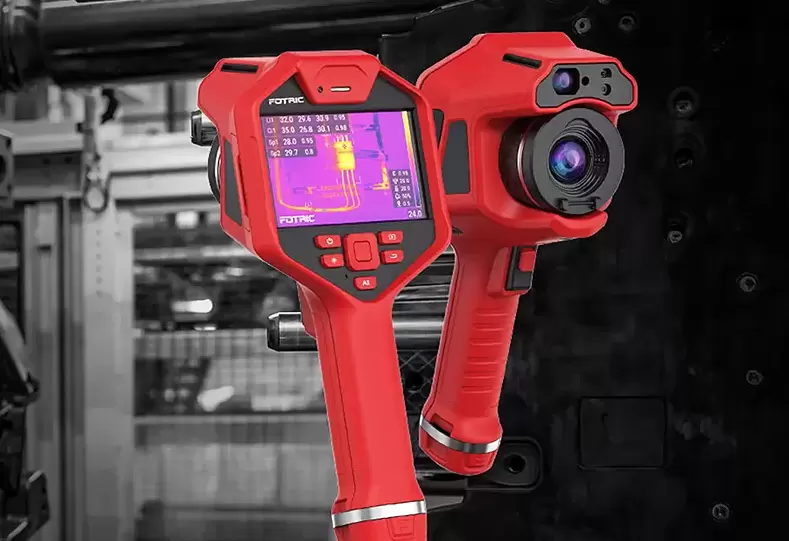
Electronics is one of the most common industries using thermal imaging technology.
Modern electronic products contain processors, batteries, power management components, sensors, and other heat-generating elements in increasingly compact spaces. Excessive heat can reduce component reliability, cause performance degradation, or shorten product service life.
Thermal imaging instruments allow engineers to identify hot spots during product testing. For example, engineers can use thermal imaging to examine a circuit board under load and determine whether a power component, processor, connector, or other area is generating abnormal heat.
The instrument itself also requires a carefully designed enclosure. Its housing must protect sensitive optical and electronic components while remaining lightweight, durable, and comfortable to handle. Internal structures may need precise CNC machining to maintain the required alignment between optical and electronic components.
For manufacturers developing thermal imaging equipment, enclosure design cannot be separated from the instrument's functional requirements.
The automotive industry is another major application area for thermal imaging.
Vehicles contain numerous systems where temperature can indicate operating conditions or potential faults. Thermal imaging can be used during vehicle development, electrical system testing, battery evaluation, brake inspection, and maintenance.
Electric vehicles have made thermal management even more important. Battery packs, motors, inverters, charging systems, and power electronics all generate heat. Engineers need to understand how heat moves through these systems and where localized temperature increases occur.
During development, thermal imaging can complement simulation and conventional temperature measurement. A physical prototype can be tested under real operating conditions, while the resulting thermal data can be compared with engineering predictions.
For thermal imaging instrument manufacturers, this creates demanding requirements for mechanical design. Equipment used in automotive environments may need impact resistance, reliable assembly, stable mounting structures, and protection against dust or moisture.
Precision-machined metal parts can be particularly useful where dimensional accuracy, structural rigidity, or heat dissipation is important.
Communication equipment is another industry where temperature monitoring plays an important role.
Network devices, communication modules, optical equipment, power supplies, and other hardware can operate continuously for long periods. If heat accumulates inside an enclosure, component temperatures can rise beyond their intended operating range.
Thermal imaging helps engineers locate heat concentration and evaluate cooling performance. It can also be used during maintenance to identify abnormal temperature patterns before a component fails completely.
For manufacturers of thermal imaging instruments, this means the equipment itself needs to perform reliably in professional environments. The housing must protect internal components without unnecessarily increasing weight or size.
In addition, many professional instruments contain multiple mechanical interfaces, buttons, displays, lenses, mounting points, and connectors. These details require close cooperation between industrial designers, structural engineers, mold engineers, and precision machining teams.
Medical equipment represents another important application for thermal imaging technology.
Thermal imaging can be used in equipment testing, research, laboratory applications, and certain non-contact temperature measurement scenarios. In these environments, stability and reliability are particularly important because the instrument may be used alongside other sensitive equipment.
The mechanical structure of a medical thermal imaging device needs to balance protection, usability, and precision. Smooth surfaces can simplify cleaning, while accurate component positioning can help maintain optical performance.
Manufacturers may also need customized housings and internal components rather than standard off-the-shelf parts. This is where OEM and ODM manufacturing capabilities become valuable.
A manufacturing partner that can handle industrial design, structural engineering, mold development, CNC machining, and finishing through coordinated processes can reduce communication gaps during product development.
Industrial facilities use thermal imaging extensively for equipment inspection.
Motors, electrical cabinets, transformers, bearings, mechanical assemblies, and production equipment can develop abnormal heat patterns before a visible failure occurs. Thermal imaging allows maintenance personnel to inspect these systems without physical contact.
For example, an electrical connection with increased resistance may produce localized heating. A thermal camera can identify the abnormal area during operation, allowing technicians to investigate the problem before it develops into a larger equipment failure.
Industrial thermal imaging instruments are often expected to withstand demanding working conditions. Their housings may need protection against dust, moisture, impacts, and repeated handling.
The design also needs to consider ergonomics. Operators may use the instrument for extended periods, so the shape, grip, button placement, screen position, and weight distribution all affect usability.
These requirements demonstrate why thermal imaging instrument manufacturing involves more than assembling optical and electronic components.
The rapid development of artificial intelligence has created another area where thermal imaging and thermal management are becoming increasingly relevant.
AI servers, accelerators, processors, power supplies, and data center infrastructure can generate substantial amounts of heat. Engineers need to understand how heat is distributed across hardware and cooling systems.
Thermal imaging can provide a visual reference for identifying thermal hotspots during prototype testing and system validation.
However, thermal imaging is only one part of the engineering process. Effective thermal management may also involve heat sinks, thermal interface materials, ventilation structures, metal housings, and other components.
This is an area where product design and thermal engineering need to work together. A poorly designed enclosure can restrict airflow or create localized heat accumulation, even when the electronic components themselves are correctly specified.
The performance of a thermal imaging instrument depends on more than its sensor or imaging technology. Mechanical design has a direct influence on reliability, usability, protection, and production consistency.
An enclosure may need to accommodate optical modules, displays, circuit boards, batteries, connectors, cooling structures, and other internal components within a limited space.
At the prototype stage, engineers may need CNC-machined parts to verify dimensions and assembly before committing to mass production tooling. Once the design is validated, injection molding, metal processing, surface finishing, and other manufacturing processes can be introduced according to product requirements.
Thermal considerations should also be addressed during product development. Components that generate heat may require dedicated cooling structures or thermally conductive materials. In some products, the enclosure itself can contribute to heat dissipation.
This is why manufacturers with experience in both precision manufacturing and thermal engineering can provide greater value during product development.
SOGOOD provides one-stop manufacturing services covering product design, thermal simulation design, precision hardware, and thermal management solutions.
The company works with industries including electronics, communications, automotive, medical equipment, and artificial intelligence, providing housings, accessories, auxiliary materials, and heat sinks for demanding products.
For thermal imaging equipment, SOGOOD can support customized product structures and manufacturing requirements. Its capabilities include metal nano molding technology, CNC precision machining, mold flow analysis, and engineering development.
The company's engineering team includes experienced industrial designers, structural engineers, and mold engineers. Its core members have experience working on products such as the Motorola A1200 and A1600, while senior engineers have more than 20 years of experience in metal nano molding and CNC machining, including experience from BYD.
For customers developing thermal imaging products, these capabilities can be useful at different stages of the project. CNC machining can support prototype development and functional verification, while manufacturing processes can be optimized for later production requirements.
SOGOOD also places emphasis on quality management, with an ISO9001-certified quality management system. This provides a structured approach to production consistency and quality control.
Customers looking for a customized solution can explore the company's thermal imaging instrument manufacturing capabilities and discuss their specific mechanical, structural, and production requirements with its engineering team.
Thermal imaging technology is now used across a wide range of industries because temperature can provide valuable information about equipment condition and product performance.
But producing a reliable thermal imaging instrument requires more than integrating a thermal sensor and display. The product needs a suitable enclosure, precise mechanical components, effective thermal management, and a manufacturing process that can consistently reproduce the design.
For OEM and ODM customers, choosing a manufacturing partner with integrated engineering and production capabilities can simplify this process. Instead of managing separate suppliers for industrial design, tooling, CNC machining, thermal solutions, and structural components, customers can work with a coordinated manufacturing team.
SOGOOD combines industrial product innovation with precision manufacturing and thermal engineering to support customers from development through production. With experience across electronics, communications, automotive, medical, and AI-related applications, the company is positioned to provide practical OEM and ODM solutions for thermal imaging instruments and other demanding electronic products.