Why Global Brands Partner with Experienced Neck Massager Manufacturers
Oct 07, 2026
Plastic injection molding is a key manufacturing process for industries ranging from consumer electronics and automotive components to medical equipment and industrial products. Behind many of these molded parts is a critical piece of tooling: the injection mold.
As global manufacturers continue to optimize their supply chains, Chinese plastic mold manufacturers have become important partners for companies that need reliable tooling, engineering support, production flexibility, and consistent quality. Their role is no longer limited to simply producing molds. Many manufacturers now participate in product development, mold flow analysis, precision machining, testing, and production support.
For international companies, this broader capability can make a significant difference when moving a product from an early design concept to stable mass production.
An injection mold directly affects the quality, consistency, and manufacturability of plastic parts. A well-designed mold can help control dimensions, surface appearance, filling performance, cooling efficiency, and cycle stability.
A poorly designed mold, on the other hand, can create problems such as warping, sink marks, short shots, weld lines, uneven cooling, difficult ejection, or premature mold wear. These issues can become more difficult and expensive to correct once a product has entered mass production.
This is why mold manufacturing should not be viewed as an isolated purchasing activity. It is closely connected to product design and the entire manufacturing process.
For companies operating across international supply chains, working with a capable mold manufacturer can provide engineering input before tooling begins. This can help identify potential problems while design changes are still relatively straightforward.
China has developed a mature manufacturing ecosystem covering mold design, CNC machining, EDM, injection molding, surface treatment, component manufacturing, assembly, and quality control. This integrated environment allows mold manufacturers to support customers through multiple stages of product development.
Modern Chinese mold manufacturers often work with international customers based on drawings, 3D CAD files, samples, or early-stage product concepts. Their engineering teams may review part geometry, wall thickness, draft angles, gate locations, cooling layouts, and ejection systems before manufacturing starts.
This engineering involvement is particularly valuable for complex plastic components.
For example, an electronics enclosure may need thin walls, snap-fit structures, textured surfaces, precise openings, and tight dimensional requirements. Simply converting the CAD model into a mold is not enough. The design needs to be evaluated from a molding and tooling perspective.
That is where experienced mold engineers can contribute practical solutions.
Mold flow analysis is another important part of modern tooling development.
Before a mold is manufactured, simulation can be used to evaluate how molten plastic is likely to fill the cavity. Engineers can study potential filling problems, weld lines, air traps, pressure distribution, cooling behavior, and warpage.
The purpose is not to replace engineering judgment. Instead, simulation gives engineers additional information before physical tooling is completed.
For global customers, this can be especially useful because tooling projects often involve teams working in different locations. A simulation report can provide a technical basis for discussing design changes between the product designer, mold engineer, manufacturer, and production team.
At SOGOOD, mold flow analysis is integrated into the engineering process alongside mold development and precision manufacturing. This approach helps connect product design with actual manufacturing conditions rather than treating tooling as a separate step.
The performance of a plastic mold depends heavily on machining accuracy.
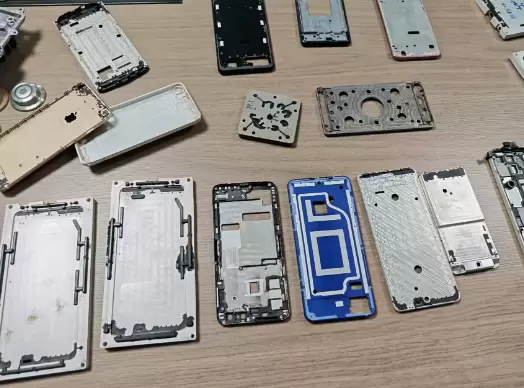
Mold components such as cavities, cores, sliders, inserts, and precision holes often require CNC machining and other high-precision manufacturing processes. Small dimensional deviations can influence part fit, appearance, assembly, and long-term mold performance.
This is one reason why the relationship between mold design and machining capability matters.
SOGOOD has a team of experienced engineers with more than 20 years of experience in metal nano molding and CNC precision machining. Their experience includes working with demanding manufacturing environments and complex engineering requirements.
The company combines CNC precision machining, mold engineering, mold flow analysis, and product design capabilities to support customers with more than basic tooling production.
One of the advantages of working with an integrated manufacturing partner is that potential tooling problems can be considered during the product design stage.
For example, a product designer may create a plastic housing with a deep internal structure. From a product appearance perspective, the design may look acceptable. However, the mold engineer may identify difficulties related to draft angles, ejection, cooling, or machining access.
Making adjustments before mold manufacturing can be much easier than modifying a completed tool.
This design-for-manufacturing approach is particularly useful for companies developing new electronic devices, automotive components, communication equipment, medical products, and AI-related hardware.
SOGOOD provides one-stop manufacturing services covering product design, mold-related engineering, CNC precision machining, thermal simulation design, precision hardware, and thermal management solutions. Customers can therefore discuss different manufacturing requirements with an engineering team that understands both product development and production considerations.
For companies looking for broader manufacturing support, the service scope can be explored through the following anchor:
<a href="https://www.sogoodprecision.com/service/">manufacturing services</a>
Global supply chains increasingly require manufacturers to respond quickly to design changes, production adjustments, and different product requirements.
A capable mold manufacturer can support this flexibility in several ways.
First, standardized engineering communication makes it easier to work with overseas product development teams. CAD data, technical drawings, inspection reports, mold flow results, and production feedback can be shared throughout the development process.
Second, an experienced engineering team can help customers evaluate design changes before they affect tooling.
Third, precision machining and internal manufacturing capabilities can reduce dependence on multiple external suppliers for critical tooling components.
This integrated model is useful when a customer needs to move from prototype development to small-batch validation and eventually to larger-scale production.
Tooling quality is closely connected to production consistency. A mold may be used repeatedly over a long production cycle, so its dimensional stability, material selection, machining quality, cooling design, and maintenance requirements all matter.
International customers also need clear quality procedures and traceability.
SOGOOD has established a modern quality management system aligned with international standards, and its products have obtained ISO9001 certification. Such systems help establish consistent procedures for design review, manufacturing, inspection, and quality control.
For overseas customers, quality management is particularly important because physical distance makes it less practical to rely on frequent on-site inspections during every manufacturing stage.
A structured quality system provides a more reliable foundation for long-term cooperation.
Advanced equipment and software are important, but they do not eliminate the need for experienced engineers.
Every mold project involves practical decisions. These may include selecting an appropriate gate position, balancing cooling channels, designing the ejection system, choosing mold materials, determining machining methods, or modifying a part design to improve manufacturability.
These decisions often depend on previous project experience.
SOGOOD's engineering team includes professionals with extensive experience in industrial product development, structural engineering, mold engineering, and precision machining. Some core team members previously participated in the design work for Motorola A1200 and A1600 projects, while senior engineers have more than two decades of experience in metal nano molding and CNC machining.
This combination of product development and manufacturing experience allows the company to approach tooling from both sides: what the product needs and what the manufacturing process requires.
Global customers do not always begin a project with a finished mold design.
Some have an existing product drawing and need a manufacturer to build the tooling. Others have only a concept, prototype, or product requirement and need engineering support before production.
This is where OEM and ODM cooperation can provide greater flexibility.
SOGOOD welcomes both OEM and ODM projects. Customers can select suitable solutions based on existing product requirements or work with the engineering team to develop customized manufacturing solutions.
The company serves industries including electronics, communications, automotive, medical equipment, and artificial intelligence. Its customer experience includes working with major international and domestic technology and manufacturing companies, giving the engineering team exposure to different product requirements and manufacturing environments.
When evaluating a Chinese plastic mold manufacturer for a global supply chain, companies should look beyond basic tooling capability.
Important factors include:
A supplier that can participate in product development may provide more value than a supplier that only manufactures tooling according to finished drawings.
Chinese plastic mold manufacturers have become an important part of modern global supply chains because their capabilities increasingly extend beyond traditional mold production.
The strongest suppliers combine mold engineering, simulation, precision machining, quality management, and product development support. This allows international customers to address manufacturability issues earlier, improve communication between design and production teams, and build a more stable path from product development to market launch.
For companies developing plastic components for electronics, automotive, medical, communication, and emerging technology applications, the right mold manufacturer can become more than a tooling supplier. It can become an engineering partner that contributes to product quality, production reliability, and supply chain efficiency.
With experience in product design, mold flow analysis, CNC precision machining, metal nano molding, and customized OEM/ODM manufacturing, SOGOOD is positioned to support customers throughout different stages of product development and manufacturing. Its one-stop approach is designed to connect engineering decisions with practical production requirements and help customers move from concept to finished product with greater confidence.