Optimizing PCB Designs Through Heat Dissipation Simulation
May 15, 2026
LED technology has become a standard choice for lighting, displays, automotive electronics, industrial equipment, communication devices, and many other applications. LEDs are efficient, compact, and capable of delivering high light output, but they still generate heat during operation. If that heat is not managed properly, the LED junction temperature can rise, affecting light output, reliability, component life, and overall system performance.
For this reason, thermal management should not be treated as an afterthought during product development. Engineers need to understand how heat moves through the complete LED assembly and determine whether the enclosure, heat sink, thermal interface materials, and surrounding structures can effectively dissipate heat.
Thermal simulation services provide a practical way to evaluate these factors before physical prototypes are produced. By combining simulation with product design and precision manufacturing, manufacturers can identify thermal problems earlier and develop more reliable LED systems.
The heat generated by an LED does not simply disappear. It must travel through several thermal paths before it reaches the surrounding environment. Depending on the product structure, heat may move from the LED junction to the substrate, thermal interface material, heat sink, housing, and finally the air.
If one part of this path has excessive thermal resistance, heat can accumulate around the LED.
Higher operating temperatures can lead to several problems. LED luminous performance may decrease, color characteristics can shift, and electronic components may experience accelerated aging. In sealed or compact products, the problem can become even more serious because there is less space for natural airflow.
A good thermal design therefore considers more than just the size of a heat sink. The material, geometry, contact surfaces, ventilation, mounting method, and overall enclosure design all influence thermal performance.
Traditional thermal development often involves building a prototype, testing it under operating conditions, identifying a problem, modifying the design, and building another prototype. This process can take considerable time, particularly when several design parameters need to be evaluated.
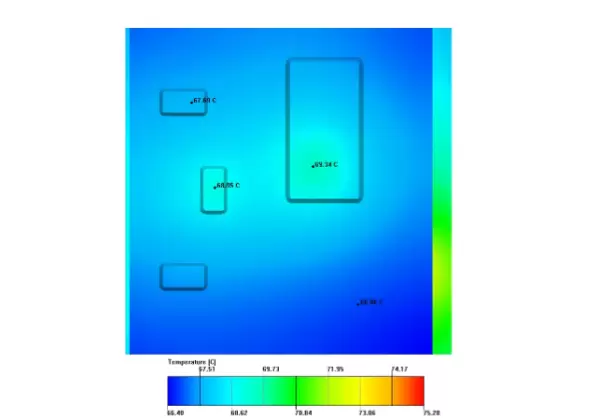
Thermal simulation allows engineers to study heat distribution digitally before committing to a physical design.
A simulation model can examine factors such as:
The purpose is not simply to produce a colorful temperature map. A useful simulation should answer engineering questions that can directly influence the product design.
For example, if a particular section of an aluminum housing becomes significantly hotter than expected, engineers can investigate whether the problem comes from insufficient contact area, an inefficient heat path, inadequate ventilation, or an unsuitable component arrangement.
The heat sink is one of the most important components in many LED thermal systems. However, adding more fins does not automatically produce better thermal performance.
Fin height, thickness, spacing, orientation, and overall geometry need to work with the actual operating environment. Closely spaced fins may provide a large surface area but restrict natural airflow. Very thin fins may improve surface area while creating manufacturing challenges or structural weaknesses.
Thermal simulation makes it possible to compare different geometries before selecting a final design.
Engineers can evaluate several concepts and determine which structure provides a suitable balance between heat dissipation, mechanical requirements, available installation space, and manufacturability.
This is particularly useful for compact LED modules where there is little room for a conventional heat sink.
Material selection also has a direct influence on thermal performance.
Aluminum is widely used for heat sinks and electronic housings because it combines good thermal conductivity with relatively low weight and practical manufacturability. Copper provides higher thermal conductivity but can introduce additional considerations related to weight, cost, machining, and structural integration.
In some products, the housing itself can serve as part of the thermal management system. Instead of treating the enclosure as a simple protective shell, engineers can design it to participate in heat spreading and heat dissipation.
Simulation can help determine how effectively heat moves through different material configurations and whether the selected material is appropriate for the intended application.
One of the biggest advantages of working with an integrated engineering and manufacturing service provider is that thermal considerations can be addressed together with mechanical design.
A heat sink may perform well in a simulation but still be difficult to manufacture. A housing may provide excellent thermal performance but interfere with assembly or create excessive machining requirements.
This is where design, simulation, structural engineering, and manufacturing experience need to work together.
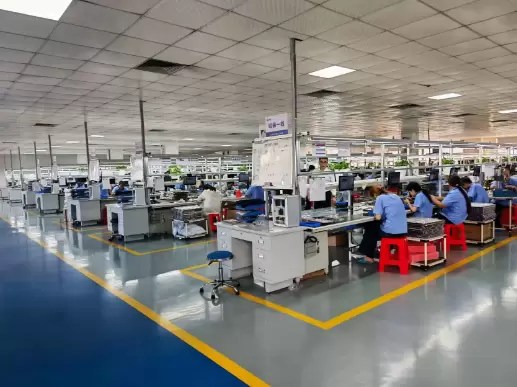
SOGOOD provides one-stop manufacturing services covering product design, thermal simulation design, precision hardware, and thermal management solutions. Its engineering capabilities support applications across electronics, communications, automotive, medical equipment, and artificial intelligence.
For companies developing LED products or other thermally sensitive electronic devices, services such as thermal simulation and engineering solutions can help connect early-stage product development with practical manufacturing requirements.
A common issue in LED systems is localized overheating.
The average system temperature may appear acceptable, while one area around an LED, driver, connector, or power component reaches a much higher temperature. These localized hotspots can become the limiting factor for reliability.
Simulation can identify these areas and show how heat spreads through the product.
Once a hotspot is identified, engineers can consider several practical solutions:
The best solution depends on the product structure. In many cases, a small change to the thermal path can be more effective than simply increasing the overall size of the heat sink.
Thermal design is closely connected to manufacturing accuracy, particularly when the heat sink or housing needs to maintain precise contact with another component.
CNC precision machining can be used to manufacture complex metal housings, heat sinks, brackets, and other thermal components. Accurate dimensions and controlled surface characteristics help ensure that components fit together as intended.
SOGOOD combines CNC precision machining with its experience in thermal design and metal nanomolding technology. Its engineering team includes professionals with extensive experience in metal nanomolding and precision CNC processing.
This combination allows the design team to consider not only how a component performs thermally but also how it can be manufactured consistently.
For products involving injection molding or complex structural components, mold flow analysis can also contribute to better product development.
Manufacturing defects, uneven wall thickness, material distribution, and structural deformation can influence the final geometry of a component. These issues may subsequently affect assembly accuracy and thermal contact.
By using simulation earlier in the development process, engineers can identify potential manufacturing problems before tooling and mass production.
This approach is particularly valuable for customized LED housings, electronic enclosures, and components that combine thermal, mechanical, and aesthetic requirements.
Simulation should not replace physical testing. Instead, it should make physical testing more focused and efficient.
Once a design has been optimized through simulation, engineers can build a prototype and compare measured temperature data with simulation results. If there are differences, the simulation model can be adjusted based on real operating conditions.
This creates a practical development cycle:
Design → Simulation → Optimization → Prototype → Thermal Testing → Design Refinement
The process helps engineers understand why a product behaves the way it does instead of relying solely on repeated trial and error.
LED products increasingly combine optical, electronic, mechanical, and thermal requirements within a compact structure. Managing these elements separately can create communication gaps between design and manufacturing teams.
A one-stop engineering partner can help reduce these gaps by connecting industrial design, structural engineering, thermal simulation, precision machining, and manufacturing.
SOGOOD was established in 2009 and is headquartered in Shenzhen, China. Its team includes experienced industrial designers, structural engineers, and mold engineers, with core members having backgrounds in the design teams behind products such as the Motorola A1200 and A1600. The company's designers have also received Red Dot Design Awards.
Its experience serving companies across electronics, communications, automotive, medical, consumer electronics, and other technology sectors provides a practical foundation for handling projects where thermal performance and product structure need to be considered together.
Effective thermal management is essential for maintaining the reliability and performance of modern LED systems. As products become smaller, more powerful, and more integrated, simply adding a larger heat sink is often not enough.
Thermal simulation gives engineers a clearer view of how heat moves through the complete product. It helps identify hotspots, compare heat sink structures, evaluate materials, improve thermal paths, and make better decisions before physical production begins.
When simulation is combined with product design, CNC precision machining, mold flow analysis, and manufacturing expertise, thermal management becomes part of the product development process rather than a late-stage correction.
For LED manufacturers and electronics companies developing customized products, this integrated approach can help reduce design iterations, improve thermal performance, and create products that are easier to manufacture and more reliable in real-world operation. SOGOOD's combination of thermal simulation, precision engineering, metal nanomolding, and CNC machining provides a practical foundation for OEM and ODM projects that require both engineering performance and manufacturing capability.