Optimizing PCB Designs Through Heat Dissipation Simulation
May 15, 2026
With the increasing popularity of self-driving travel, cycling sports, and outdoor lifestyles, air inflators are gradually evolving from traditional tool products into mobile devices that combine intelligent detection, portable storage, and multi-scenario usage capabilities. The portable smart air inflator designed this time takes the actual operational needs of users as the starting point. Through simple industrial product design, clear functional layout, and compact and reliable structural design, it integrates functions such as inflation, pressure display, mode selection, lighting, and mobile power supply within a limited volume, providing a more convenient inflation solution for cars, motorcycles, bicycles, and ball-related products.
The concise and rounded appearance enhances its portability
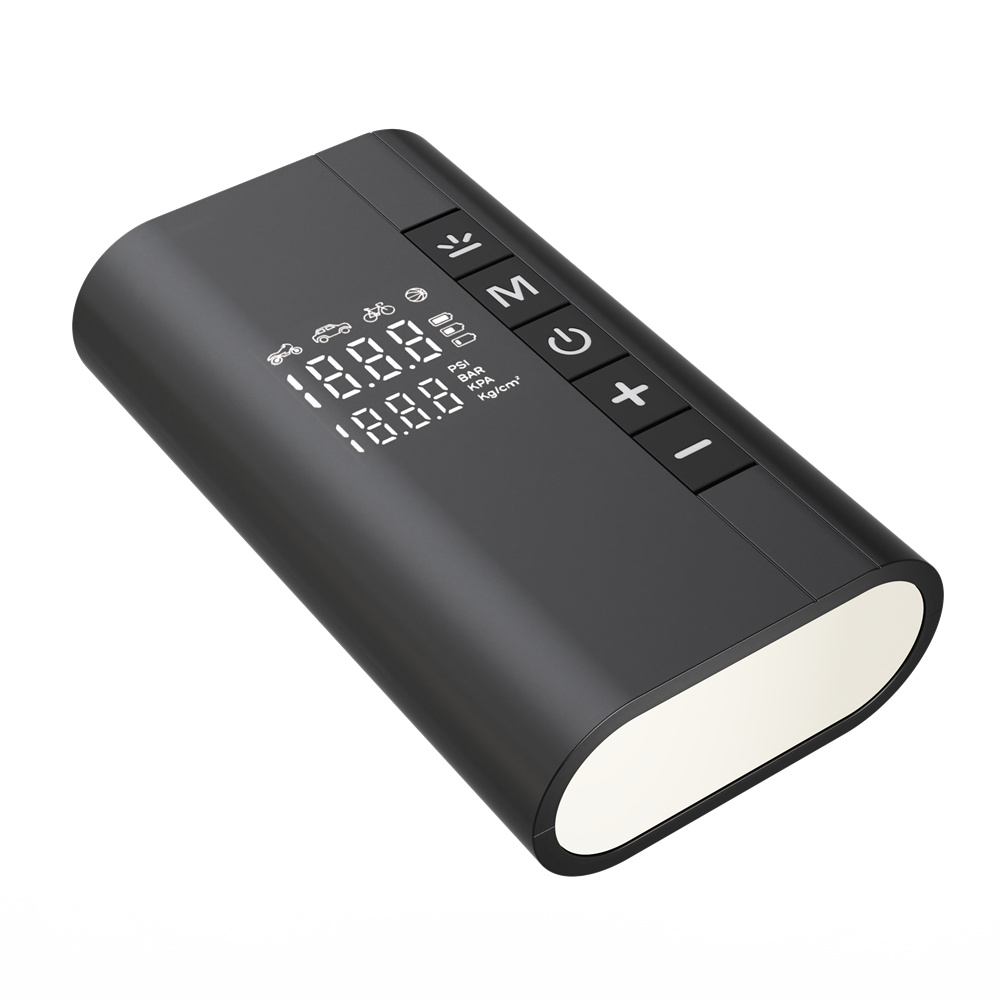
From the overall design perspective, this inflatable pump adopts a vertically extending rounded rectangular body. The large rounded surfaces run through both sides of the product, making the body visually thinner, lighter, and more rounded, while also reducing the bulky and mechanical feel commonly seen in traditional tool products. The smooth curved surface can fit naturally into the palm of the hand, making it less likely to cause a noticeable uncomfortable feeling during picking up, holding, and moving.
The main color of the body is black, with a low-reflective matte finish, embodying a product that is both stable and durable. The black body can obscure minor scratches and stains from daily use and naturally blend with environments such as car interiors and outdoor gear. A red decorative ring is set around the inflation port, creating a visual focus with a small area of high-saturation color, allowing users to identify the main functional port while enhancing the sporty feel and attributes of the product.
The entire machine does not employ excessive decorative elements, but establishes design order through continuous surfaces, delicate seams, and layered changes between functional areas. This restrained appearance language helps extend the visual lifecycle of the product and aligns with the modern trend of simplicity and practicality in portable electronic devices.
Digital display and physical buttons enhance operational efficiency
The front of the product features a digital display area, which can centrally present tire pressure values, working status, application modes, as well as pressure units such as PSI, BAR, KPA, and kg/cm². Icons of cars, motorcycles, bicycles, and balls can help users understand the current mode, reducing learning costs for users of different age groups.
The display area is seamlessly integrated with the black panel, maintaining a sleek and complete appearance when not illuminated. Once lit, it provides clear feedback through high-contrast numbers. This concealed display approach not only enhances the technological feel of the product but also prevents the overall appearance from being disrupted by a cluttered interface.
The side of the device features vertically arranged physical buttons, including lighting, mode switching, power, and pressure adjustment, among other commonly used functions. The button icons are simple and intuitive, with a clear arrangement, reducing the time required to find a specific function. Compared to touch operation, physical buttons are more suitable for outdoor and emergency vehicle scenarios, as they provide clear feedback even when the user is wearing gloves or in a low-light environment.
Optimized usage process for centralized interface layout
The air inflation interface, charging interface, USB output interface, and heat dissipation area are centrally located at the end of the body, forming a relatively modular operation for the main functions. The centralized layout can shorten the connection distance between internal wiring harnesses and air paths, and also facilitates users in locating the required interfaces before use.
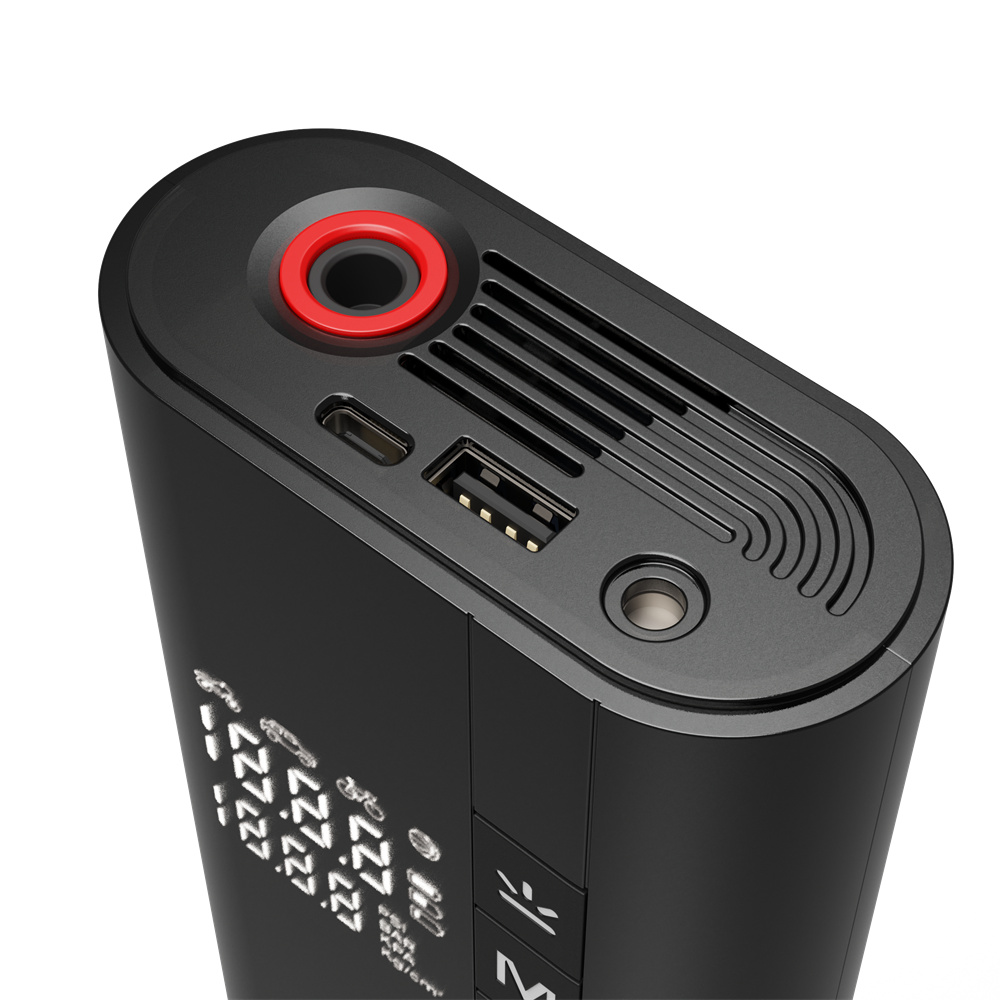
The area around the air inflation port is reinforced with a red ring, which not only enhances its recognizability but also forms a clear functional boundary in structure. The charging interface is suitable for charging devices, while the USB interface can expand mobile power supply scenarios, making the air pump more practical during vehicle emergencies, cycling, or camping. The large-area light-colored panel on the other end of the body can serve as a visual carrier for lighting functions, providing assistance for finding air valves, checking tires, or outdoor emergencies at night.
Compact structure that balances strength, heat dissipation, and assembly
The interior of an air pump typically needs to accommodate a motor, cylinder, transmission mechanism, battery, circuit board, display components, and an air path system. Therefore, the key to structural design lies in the rational utilization of limited space. This product adopts a longitudinal body proportion, allowing the power components and battery module to be arranged along the length direction, reducing interference between internal parts. The overall horizontal size of the product makes it easier to hold with one hand and store in the car.
The shell can adopt a structural form combining a main body shell and an end cap. The end cap is responsible for carrying components such as the inflation interface, charging interface, and heat dissipation holes, while the main body shell undertakes overall protection and grip functionality. Clear module division is beneficial for production assembly, functional testing, and later maintenance, while also reducing the manufacturing difficulty brought by complex mold structures.
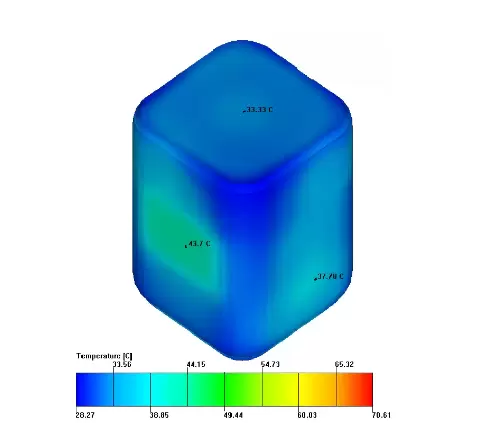
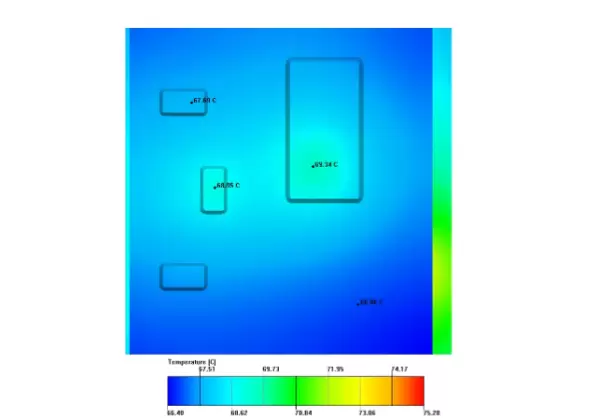
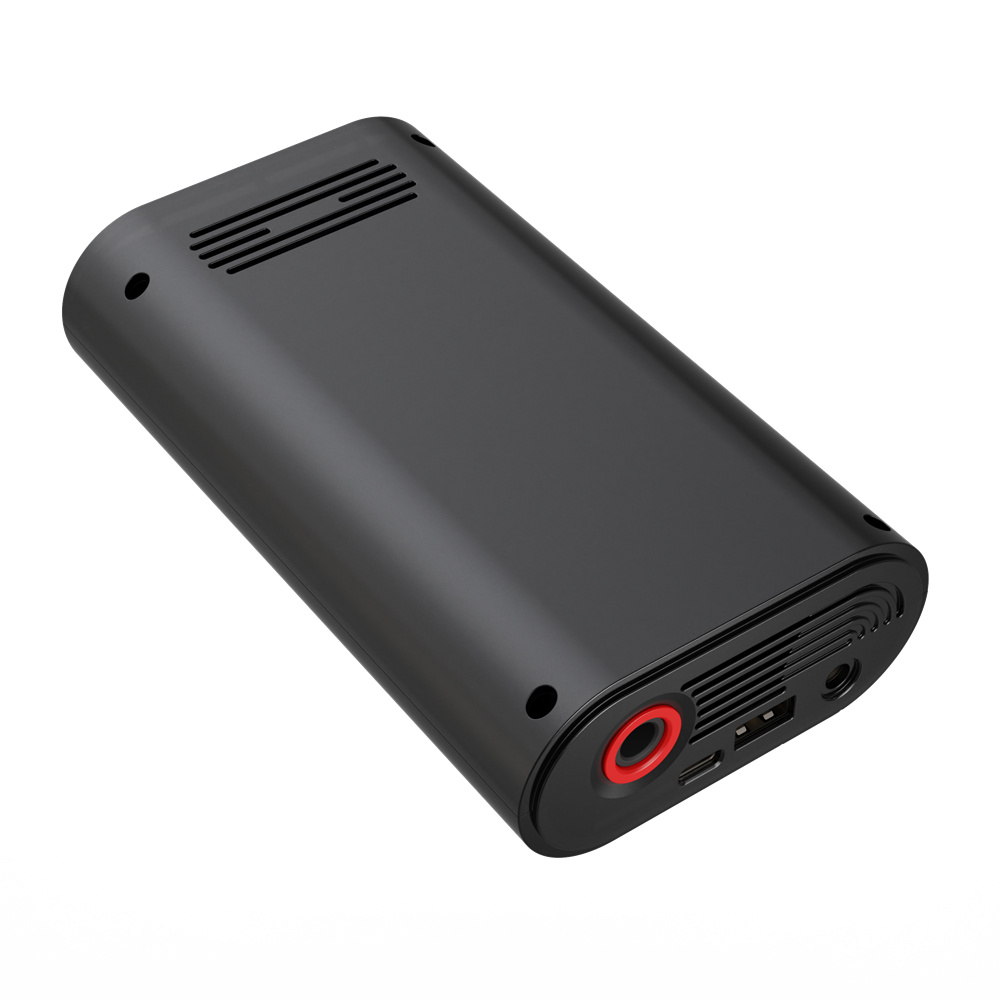
When the product is operating, the motor and cylinder continuously generate heat. To improve internal heat accumulation, strip-shaped cooling vents are set at the ends and back, forming a relatively complete air inlet and outlet path through their arrangement direction. The cooling vents are designed to be elongated and regular, ensuring ventilation area while reducing the probability of foreign objects directly entering the body, and also maintaining consistency with the overall rounded corner shape.
In terms of structural strength, reinforcement ribs and fixed supports can be arranged internally around the stressed positions such as motors, cylinders, and interfaces to reduce vibration and abnormal noise during equipment operation. The joints of the shell need to be reasonably designed with buckles, screw studs, and structures to ensure assembly accuracy and avoid problems such as loosening, misalignment, or uneven gaps after long-term use. The gas connection area should also focus on sealing, temperature resistance, and pressure stability, as well as reliable performance during continuous inflation.
From tool products to smart travel equipment
The design value of this portable intelligent inflatable pump lies not only in its simple appearance, but also in the systematic integration of its functions, structure, and usage process. The sleek and compact body enhances portability, while the hidden digital display and physical buttons lower the operational threshold. The centralized interface and multi-zone cooling design further improve assembly efficiency and work stability.
Against the backdrop of consumption upgrading and the growing demand for outdoor travel, inflatable pumps have evolved from being merely emergency tools to becoming daily equipment for car users, cyclists, and outdoor enthusiasts. Through collaborative innovation in industrial product design and structural design, this product strikes a balance between performance, visual quality, and scene adaptability, and also provides new design ideas for the intelligent, integrated, and refined development of portable inflatable equipment.