Why Working Directly with an Industrial Printer Manufacturer Matters
Jul 31, 2026
The smart device industry has evolved rapidly over the past decade. From smartphones and wearable devices to medical electronics, AI-powered hardware, and connected automotive systems, innovation is no longer driven by software alone. Behind every successful smart device is a sophisticated manufacturing ecosystem capable of turning concepts into reliable, scalable products.
OEM manufacturers now play a central role in this process. They are no longer simply production vendors. Today’s OEM partners contribute to industrial design, thermal engineering, material innovation, structural optimization, precision machining, and manufacturing scalability. For brands seeking faster product development and stronger market competitiveness, choosing the right OEM manufacturer has become a strategic decision rather than a procurement task.
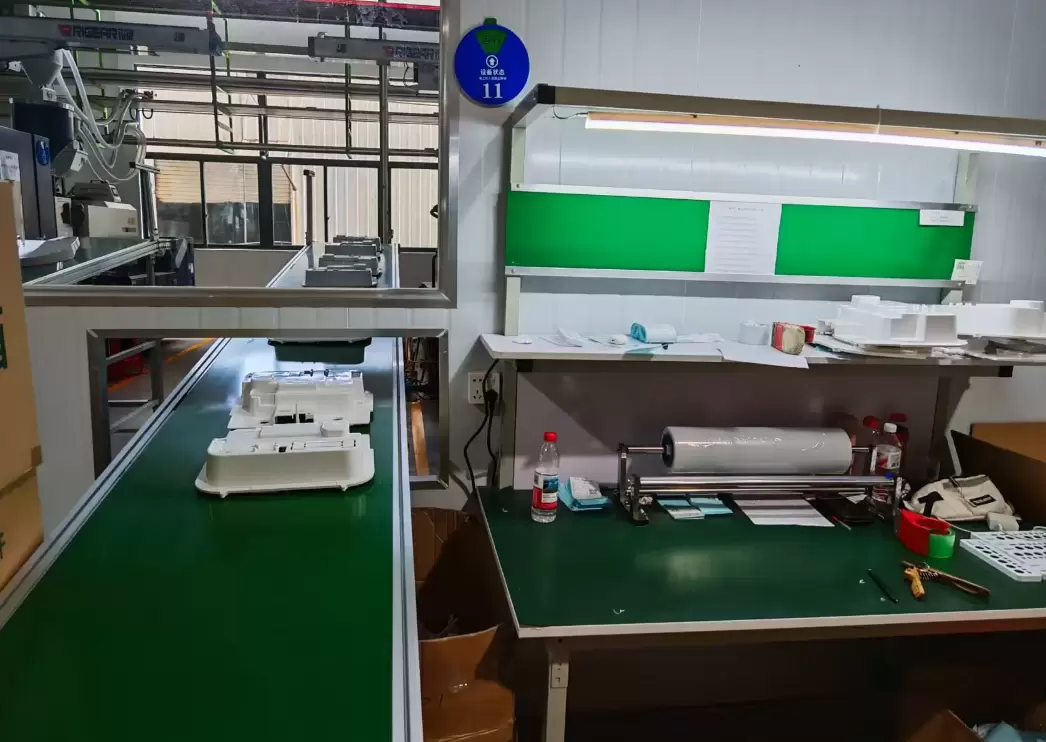
Smart devices are becoming thinner, lighter, more powerful, and more integrated. This creates engineering challenges that require specialized expertise in both design and manufacturing.
Modern devices must balance several critical factors simultaneously:
Meeting these requirements demands collaboration between R&D teams and experienced OEM manufacturers from the earliest stages of development.
Unlike traditional manufacturing models where factories simply follow drawings, advanced OEM manufacturers participate in product optimization throughout the development cycle. This helps reduce redesign costs, shorten lead times, and improve production stability.
Companies like SOGOOD have adopted this integrated approach by combining industrial design, heat simulation, CNC precision machining, nano molding technology, and thermal solution development under one manufacturing framework. With experience serving industries such as electronics, telecommunications, automotive, medical equipment, and artificial intelligence, OEM manufacturers can help bridge the gap between concept engineering and commercial production.
In the past, many OEM factories focused mainly on labor efficiency and mass production capacity. However, smart device manufacturing requires a much deeper level of technical involvement.
Today’s OEM manufacturers often contribute in areas such as:
Before tooling begins, experienced engineering teams evaluate whether a design can be manufactured efficiently and reliably. This includes:
Identifying manufacturing risks early can prevent expensive modifications later in production.
As processors become more powerful, thermal performance has become one of the biggest challenges in smart device development.
Devices with inadequate heat dissipation may experience:
OEM manufacturers specializing in thermal engineering can help integrate heat sinks, vapor chambers, precision metal housings, and airflow optimization into product structures.
SOGOOD’s experience in thermal simulation design and heat dissipation solutions reflects how modern OEM partners contribute directly to device reliability and long-term performance.
The functionality of smart devices often depends on micron-level manufacturing accuracy.
For example:
Precision CNC machining and nano molding technologies are increasingly important in achieving these standards.
Nano molding technology, in particular, allows stronger bonding between metal and plastic components while improving product aesthetics and structural durability. This technology is widely used in premium consumer electronics and communication equipment where lightweight construction and signal performance are both critical.
Manufacturers with deep expertise in these processes can significantly improve product consistency during mass production.
One major change in smart device development is the growing overlap between industrial design and manufacturing engineering.
A visually attractive design may still fail commercially if it:
This is why many OEM manufacturers now maintain in-house industrial design and structural engineering teams.
SOGOOD’s engineering background reflects this trend. With team members experienced in iconic Motorola A1200 and A1600 projects and designers recognized by the Red Dot Design Award, the company demonstrates how industrial design and production engineering can work together to create commercially viable products.
The integration of industrial design with manufacturing capability helps brands accelerate development while reducing communication gaps between design agencies and factories.
Speed is increasingly important in competitive technology sectors. Product cycles are shorter, and brands must launch updates more frequently to remain competitive.
An experienced OEM manufacturer can help accelerate product development through:
When engineering, manufacturing, and thermal design are managed within one ecosystem, communication becomes more efficient and project delays can be minimized.
For startups and emerging hardware brands, this can be especially valuable because internal engineering resources are often limited.
In smart device manufacturing, innovation must be matched by consistent quality control.
A single production issue can affect:
This is why modern OEM manufacturers invest heavily in standardized quality management systems.
SOGOOD’s ISO9001-certified quality management framework reflects the importance of process consistency in precision manufacturing environments. Quality assurance is especially important for industries such as medical electronics, automotive systems, and AI hardware, where reliability standards are extremely high.
Key quality processes often include:
These systems help ensure stable production outcomes even during large-scale manufacturing.
Today’s smart device market changes quickly. Consumer demands evolve rapidly, and product customization is becoming more common.
OEM manufacturers must now support:
This flexibility is particularly important for AI hardware, IoT devices, and specialized industrial electronics where products may require unique structural or thermal requirements.
Manufacturers that combine engineering support with flexible production capability are better positioned to support long-term product innovation.
One major advantage of experienced OEM manufacturers is their ability to apply knowledge across multiple industries.
For example:
SOGOOD’s experience across electronics, telecommunications, automotive, medical, and AI sectors demonstrates how cross-industry engineering knowledge can contribute to smarter product development strategies.
This broader technical exposure often helps OEM partners identify solutions that internal product teams may overlook.
The future of smart device manufacturing will depend increasingly on collaboration between brands, engineers, and OEM manufacturers.
As devices become more compact and technologically advanced, manufacturers are expected to contribute more than production capacity. They must provide:
OEM manufacturers that invest in advanced CNC machining, nano molding technology, industrial design integration, and engineering simulation capabilities will continue to play a central role in the next generation of smart device innovation.
For companies developing connected products, wearable technology, AI devices, or advanced electronic systems, choosing an OEM partner with both engineering depth and manufacturing experience can significantly improve the chances of long-term market success.
To learn more about precision manufacturing and engineering solutions for smart devices, visit:<a href="https://www.sogoodprecision.com/project/" target="_blank">OEM Precision Manufacturing Solutions</a>