What Sets a Professional Thermal Imaging Instrument Manufacturer Apart
Jun 17, 2026
In modern automotive and aerospace engineering, thermal management has become a critical factor in determining product reliability, performance, safety, and service life. As electronic systems become more compact and power densities continue to increase, excessive heat can quickly become a major obstacle to achieving design objectives. Thermal simulation design services help engineers predict heat generation, distribution, and dissipation before physical prototypes are produced, significantly reducing development risks and accelerating product launches.
Whether it is an electric vehicle battery pack, an automotive control module, an aircraft communication system, or a satellite electronic enclosure, thermal simulation plays a vital role throughout the product development cycle.
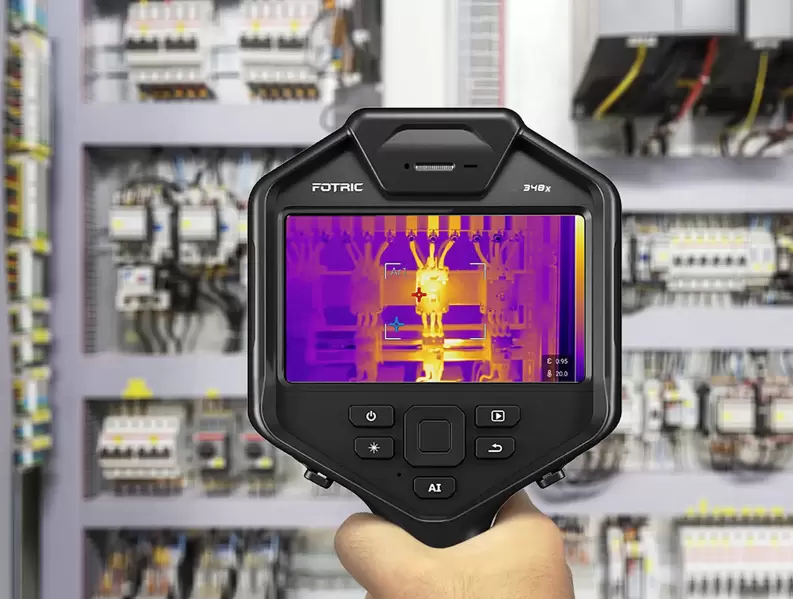
Heat is one of the leading causes of electronic component failure. High temperatures can reduce component lifespan, affect operational stability, and increase maintenance costs. In industries such as automotive and aerospace, where systems operate under demanding environmental conditions, effective thermal management is not optional—it is essential.
Thermal simulation enables engineers to:
By leveraging advanced simulation tools, engineering teams can evaluate multiple design alternatives quickly and make data-driven decisions before manufacturing begins.
The automotive industry is undergoing rapid transformation driven by electrification, autonomous driving technologies, and advanced connectivity systems. These innovations introduce increasingly complex thermal management requirements.
Lithium-ion batteries generate significant heat during charging and discharging cycles. Uneven temperature distribution can lead to reduced battery efficiency, shortened lifespan, and safety concerns.
Thermal simulation helps engineers:
Components such as inverters, converters, and motor controllers operate under high electrical loads. Maintaining stable operating temperatures is critical for achieving long-term reliability.
Simulation models help identify:
Modern LED headlights generate substantial heat despite their energy efficiency. Poor thermal design can reduce brightness and shorten component life.
Thermal analysis enables engineers to optimize heat sink structures and airflow paths, ensuring consistent performance under varying operating conditions.
Aerospace applications present even more demanding thermal challenges. Equipment must perform reliably under extreme temperatures, pressure variations, vibration, and harsh environmental conditions.
Aircraft avionics contain highly integrated electronic components operating continuously during flight. Temperature fluctuations can affect accuracy and system stability.
Thermal simulation helps engineers:
In space environments, thermal management becomes exceptionally complex because traditional convection cooling is unavailable.
Simulation tools assist engineers in:
Aircraft structures are subjected to varying thermal loads during operation. Temperature gradients can cause material expansion and stress concentrations.
Thermal simulations support:
Effective thermal simulation requires more than software expertise. It involves a comprehensive understanding of product functionality, materials, manufacturing methods, and operational environments.
A typical thermal simulation workflow includes:
Engineers collect detailed information regarding:
Accurate CAD models are created to represent the product geometry. The quality of simulation results depends heavily on model accuracy.
Thermal conductivity, specific heat, density, and other material characteristics are assigned to simulation models.
Engineers define:
Advanced computational methods are used to evaluate thermal behavior under different operating scenarios.
Based on simulation results, engineers refine designs to improve cooling efficiency and reduce thermal risks.
Simulation findings are verified through testing, ensuring alignment between virtual models and real-world performance.
One common challenge in product development is the disconnect between simulation results and manufacturing realities. A design that performs well in simulation may encounter production difficulties if manufacturability is not considered from the beginning.
This is where integrated engineering and manufacturing capabilities become valuable.
SOGOOD provides comprehensive product development support, combining thermal simulation design, industrial design, structural engineering, CNC precision machining, and advanced manufacturing technologies. This integrated approach allows thermal optimization strategies to be evaluated not only for performance but also for practical production feasibility.
For companies seeking complete engineering support, SOGOOD offers professional thermal simulation and manufacturing services through its one-stop development platform:
<a href="https://www.sogoodprecision.com/service/">Thermal Simulation Design Services</a>Established in Shenzhen, China's renowned "City of Design," SOGOOD has built extensive expertise in product innovation and precision manufacturing.
The company's engineering team includes experienced industrial designers, structural engineers, and mold specialists who have participated in numerous successful product development programs across various industries.
SOGOOD serves customers in:
Its core technical strengths include:
Metal Nano Molding (MNM) enables strong and precise bonding between metal and plastic materials, supporting lightweight and highly integrated product designs.
Advantages include:
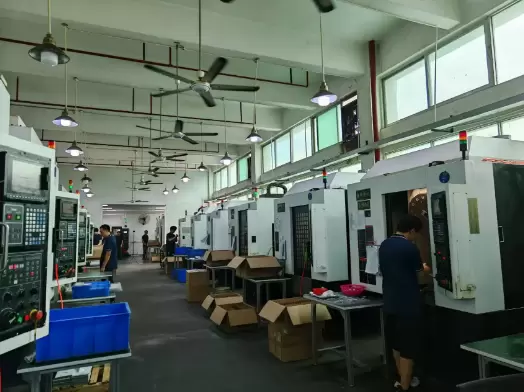
High-precision CNC machining capabilities support the production of:
With experienced engineers possessing more than two decades of expertise in nano molding and CNC machining, SOGOOD is capable of supporting projects from concept development to mass production.
Thermal management is integrated into the product development process from the earliest design stages. This allows engineering teams to identify and solve heat-related issues before manufacturing begins.
Services include:
Organizations that incorporate thermal simulation early in product development often achieve measurable advantages.
Identifying thermal issues before tooling and manufacturing minimizes expensive redesigns.
Virtual testing allows engineers to evaluate multiple design alternatives without building numerous physical prototypes.
Thermal optimization reduces component stress and improves long-term operational stability.
When simulation and manufacturing teams collaborate closely, products can be optimized for both performance and production.
As automotive electrification and aerospace innovation continue to accelerate, thermal simulation technologies are becoming increasingly sophisticated.
Emerging trends include:
These technologies will help engineering teams develop more efficient, reliable, and sustainable products while reducing development complexity.
Thermal simulation design services have become an essential part of modern automotive and aerospace product development. By enabling engineers to predict thermal behavior before manufacturing, simulation technologies help improve reliability, optimize performance, reduce costs, and accelerate innovation.
For organizations developing advanced electronic systems, electric vehicle components, aerospace equipment, or high-performance industrial products, integrating thermal simulation with practical manufacturing expertise provides a significant competitive advantage.
With strengths in thermal simulation, industrial design, CNC precision machining, metal nano molding, and heat dissipation solutions, SOGOOD delivers comprehensive engineering support that helps transform innovative concepts into reliable, manufacturable products ready for market success.