Key Applications of CNC Precision Machining Across Modern Industries
Mar 06, 2026
Humidifiers may appear to be relatively simple consumer appliances, but developing a reliable humidifier for the global market involves much more than selecting a water tank, fan, and control system. Product appearance, internal structure, heat management, material selection, manufacturability, sealing, assembly, and long-term reliability all have to work together.
For global brands, this makes the choice of manufacturing partner an important part of product development. An experienced humidifier manufacturer can contribute much earlier than the production stage, helping transform an industrial design concept into a product that can be manufactured consistently and used reliably.
This is particularly important when brands are developing products for consumer electronics, smart home applications, healthcare environments, or other markets where appearance and functional reliability are equally important.
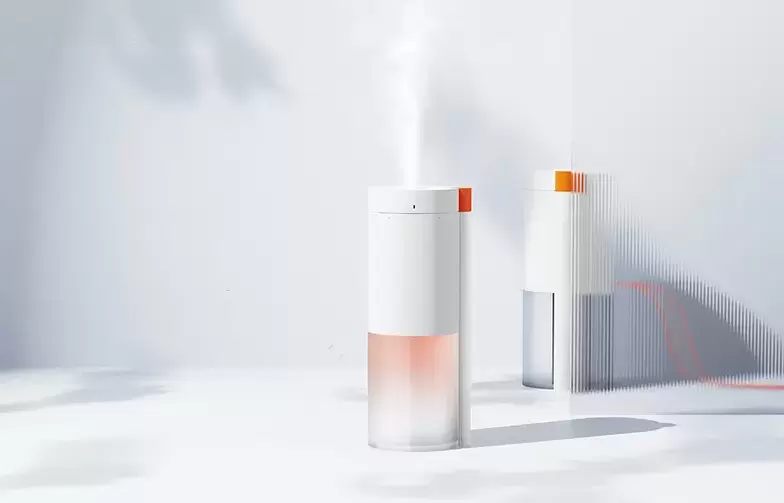
A common mistake in product development is to treat manufacturing as the final step after the design has already been completed. In practice, manufacturing considerations should be introduced during the early engineering stage.
An experienced manufacturer can review a humidifier design and identify potential problems before tooling or mass production begins.
For example, engineers may examine:
These details can have a direct impact on production quality. A design that looks excellent on a screen may still be difficult to manufacture if its structure has not been properly optimized.
For global brands, working with an experienced manufacturing team means that potential production issues can be addressed while changes are still relatively easy to make.
The exterior housing is one of the first things users notice. However, humidifier housings also have to perform several practical functions.
They need to protect internal components, support assembly, provide access to water-related areas, and maintain dimensional stability during daily use. Depending on the product architecture, the housing may also need to accommodate fans, motors, sensors, control boards, water tanks, filters, lighting components, and other parts within a limited space.
This creates a structural challenge.
A thinner housing may provide a more refined appearance but can introduce problems with strength or molding. A thicker structure may improve rigidity but increase material usage and affect the overall product design.
The solution is not simply to add material. Instead, engineers need to understand load conditions, molding behavior, assembly requirements, and the intended user environment.
This is where an experienced manufacturer can provide practical engineering input rather than simply producing parts according to drawings.
For brands developing customized humidifier products, SOGOOD provides custom humidifier manufacturing solutions, combining product engineering and precision manufacturing capabilities to support different enclosure and component requirements.
The development of a humidifier often involves multiple iterations. A prototype may reveal issues that were not obvious during the initial design stage.
For example, a housing may show deformation after molding, a component may interfere with another part during assembly, or a decorative surface may not meet the expected visual standard.
An experienced engineering team can help identify the root cause and recommend practical modifications.
This may involve changing a rib structure, adjusting wall thickness, modifying a mounting point, improving tolerance allocation, or redesigning a section of the part to make tooling and assembly more reliable.
The goal is not simply to make one prototype work. The objective is to create a design that can be manufactured repeatedly with stable quality.
This distinction becomes increasingly important when production volumes increase.
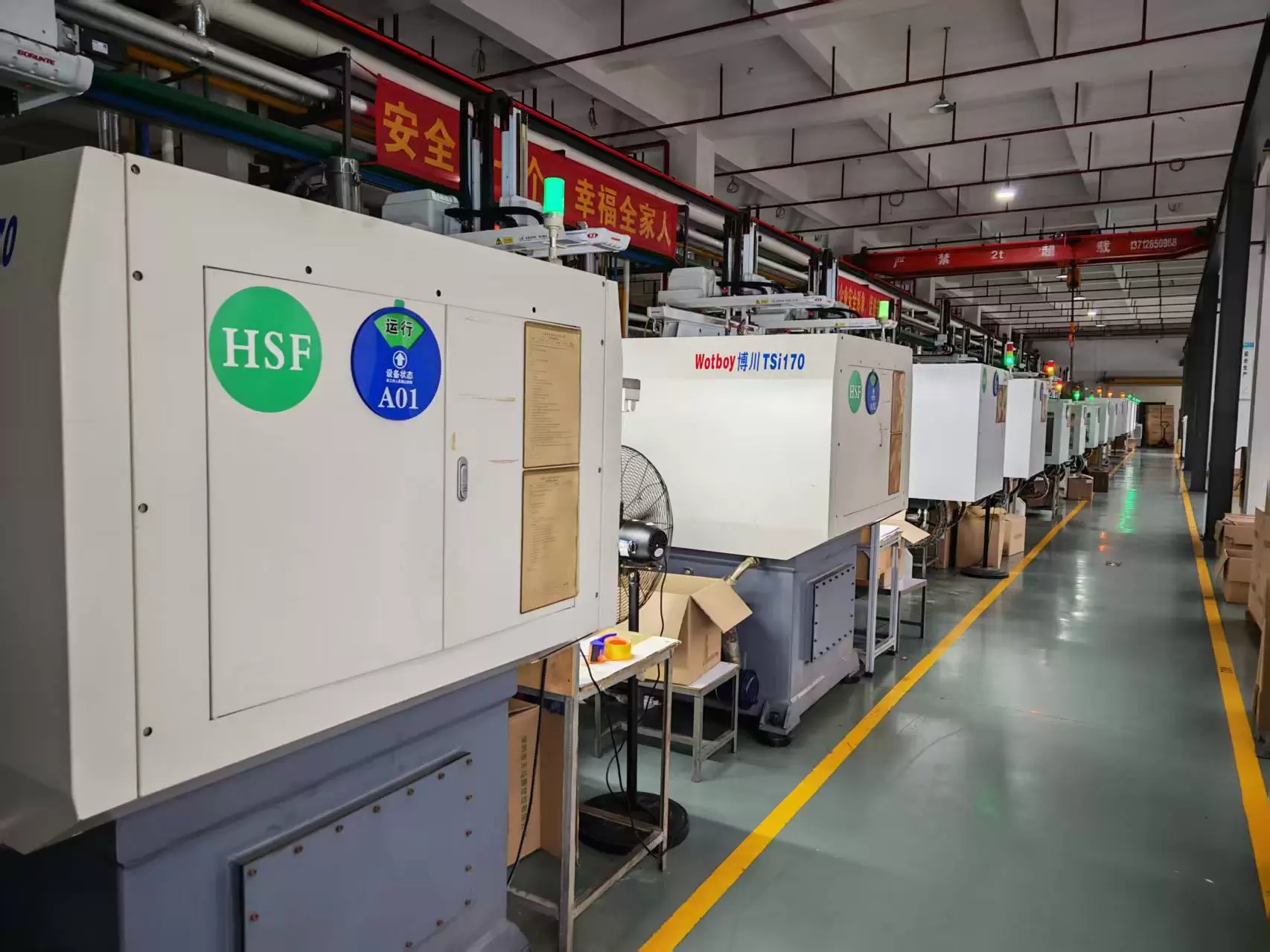
Plastic components are widely used in humidifier housings, covers, water-related components, brackets, control panels, and other structural parts.
Injection molding provides efficiency and design flexibility, but the quality of molded parts depends heavily on the design of the part and the behavior of the material during filling and cooling.
Mold flow analysis can be used to evaluate potential issues before the mold is manufactured.
Engineers can study factors such as:
For a complex humidifier housing, this analysis can help engineers make better decisions about gate positions, wall thickness, rib placement, and other structural details.
Finding these issues digitally before tooling can save considerable development time and reduce unnecessary mold modifications.
For global brands, this type of engineering support is valuable because it connects product design with actual production conditions.
Not every humidifier component is best produced through injection molding.
Certain metal parts, prototypes, fixtures, structural components, or precision components may require CNC machining. CNC machining is particularly useful during the product development stage when engineers need functional prototypes for testing and design verification.
A machined prototype can help teams evaluate:
It also provides a practical way to verify a design before committing to larger-scale tooling.
SOGOOD's manufacturing capabilities include CNC precision machining, supported by engineers with extensive experience in precision metal processing. This allows the manufacturing process to cover both development requirements and more specialized component applications.
As consumer electronics become smaller and more sophisticated, product designers are increasingly looking for ways to combine metal components with compact structures.
Metal nano molding technology can provide an option for integrating metal and plastic in applications where conventional assembly methods may not provide the desired combination of appearance, strength, and dimensional requirements.
For humidifier products, this type of technology may be relevant to specific structural or decorative components depending on the product architecture.
It is not a universal solution for every humidifier. The right manufacturing process depends on the component's function, material requirements, production volume, and overall design.
The advantage of working with an experienced engineering team is that different processes can be evaluated based on actual product requirements rather than being selected simply because a technology is available.
For an international brand, manufacturing quality cannot depend entirely on individual operators or final inspection.
A reliable manufacturing system should include quality controls throughout the production process.
This can include incoming material inspection, process monitoring, dimensional inspection, assembly checks, surface inspection, and final product verification.
A modern quality management system also helps create traceable and repeatable production procedures.
SOGOOD has implemented a quality management system aligned with international standards and has obtained ISO9001 certification. This provides a structured foundation for managing manufacturing processes and maintaining consistent quality.
For global brands, this is particularly important when products need to move from prototype development to stable production without major changes in quality.
Developing a humidifier can involve industrial design, structural engineering, mold development, plastic components, metal components, thermal considerations, prototyping, and production.
If every stage is handled by a different supplier, communication can become complicated.
Design changes need to be passed between teams. Engineering responsibility may become unclear. A problem discovered during assembly may require several suppliers to coordinate before a solution can be implemented.
A one-stop manufacturing partner can simplify this process by bringing multiple capabilities together.
SOGOOD focuses on integrated product design, thermal simulation, precision hardware, CNC machining, mold flow analysis, and heat dissipation solutions. Its engineering team includes experienced industrial designers, structural engineers, and mold engineers, with core members having backgrounds in the design teams behind products such as the Motorola A1200 and A1600.
The company was established in Shenzhen and has worked with major international companies across consumer electronics, communications, automotive, medical, and other industries.
This cross-industry experience can be useful when humidifier products require more than basic plastic part manufacturing.
Different brands enter the humidifier market with different product strategies.
Some already have complete product designs and need a manufacturing partner capable of producing specific components. Others may only have a product concept and need engineering support to develop the structure and manufacturing process.
OEM cooperation is suitable when the customer provides established product specifications and manufacturing requirements.
ODM cooperation can provide broader engineering support, including design optimization and manufacturing development.
An experienced manufacturer should be able to adapt its role according to the customer's development stage rather than forcing every project into the same production model.
This flexibility can make collaboration more efficient, especially for brands developing multiple product generations.
When evaluating potential manufacturing partners, brands should look beyond basic production capacity.
Several questions are worth considering:
Does the manufacturer provide engineering support?
Manufacturing expertise should be involved before production begins.
Can the supplier support prototyping and design optimization?
Early-stage engineering feedback can prevent costly problems later.
Does the company understand molding and material behavior?
This is essential for stable plastic housing production.
Can it handle precision metal components?
CNC machining and other metal-processing capabilities may be useful for specialized structures.
Does it have a documented quality management system?
Consistent production requires systematic quality control.
Can it support OEM and ODM projects?
A flexible manufacturing model allows brands to choose the level of support they actually need.
Can the supplier scale from development to production?
A successful prototype is only the beginning. The manufacturing process must remain stable as production increases.
The humidifier market continues to evolve toward products that are more compact, connected, visually refined, and integrated into modern living spaces. Behind these products is a manufacturing process that requires careful coordination between design, engineering, materials, tooling, machining, and quality control.
For global brands, partnering with an experienced humidifier manufacturer can therefore provide more than production capacity. The right partner can contribute practical engineering knowledge, identify manufacturing risks early, optimize components for production, and help maintain consistent quality throughout the product lifecycle.
SOGOOD combines industrial product design, thermal simulation, mold flow analysis, CNC precision machining, metal nano molding, and other manufacturing capabilities to support OEM and ODM customers. With an engineering team experienced in consumer electronics and precision manufacturing, SOGOOD aims to help customers move more smoothly from product concept and development to reliable market-ready production.
For brands looking to develop a new humidifier or improve an existing product design, choosing a manufacturing partner with strong engineering and production capabilities can be an important step toward building a product that is not only attractive, but also practical, manufacturable, and reliable.