AI Reinvents Industrial Design: From Efficiency Revolution to Creative Symbiosis
Nov 26, 2025
Consumer electronics are becoming more compact, more connected, and more demanding. Smartphones, smart devices, communication equipment, wearable products, and other electronic products must perform reliably while meeting strict requirements for appearance, dimensions, thermal performance, and durability.
For brands working with an OEM manufacturer, product quality is therefore not simply a matter of checking finished parts. It starts much earlier, from product design and material selection to mold development, machining, assembly, testing, and production control.
A reliable OEM manufacturing partner can help reduce engineering problems before mass production begins, maintain consistent product quality, and make the transition from prototype to production much smoother. For companies developing consumer electronics, choosing the right manufacturing partner can have a direct impact on product performance and long-term market success.
Many manufacturing problems can be traced back to decisions made during product development.
A component may look correct on a CAD drawing but become difficult to manufacture because of thin walls, sharp corners, complicated structures, insufficient draft angles, or unsuitable material combinations. These problems can lead to deformation, assembly difficulties, inconsistent dimensions, or repeated mold modifications.
This is why OEM manufacturing should not begin only after the product design has been finalized.
Experienced engineers can review the structure and manufacturing requirements at an early stage. Design for manufacturability, material selection, tolerance analysis, mold-flow analysis, and thermal considerations can all be evaluated before production.
For consumer electronics, this early engineering work is particularly important because products often combine multiple requirements. A housing, for example, may need to provide an attractive appearance, protect internal components, support assembly, dissipate heat, and maintain precise dimensions at the same time.
Early engineering involvement helps identify conflicts between these requirements before they become expensive production problems.
Consumers expect every unit of the same product to look and perform the same way. Small differences between batches can become serious problems when a product is produced in large quantities.
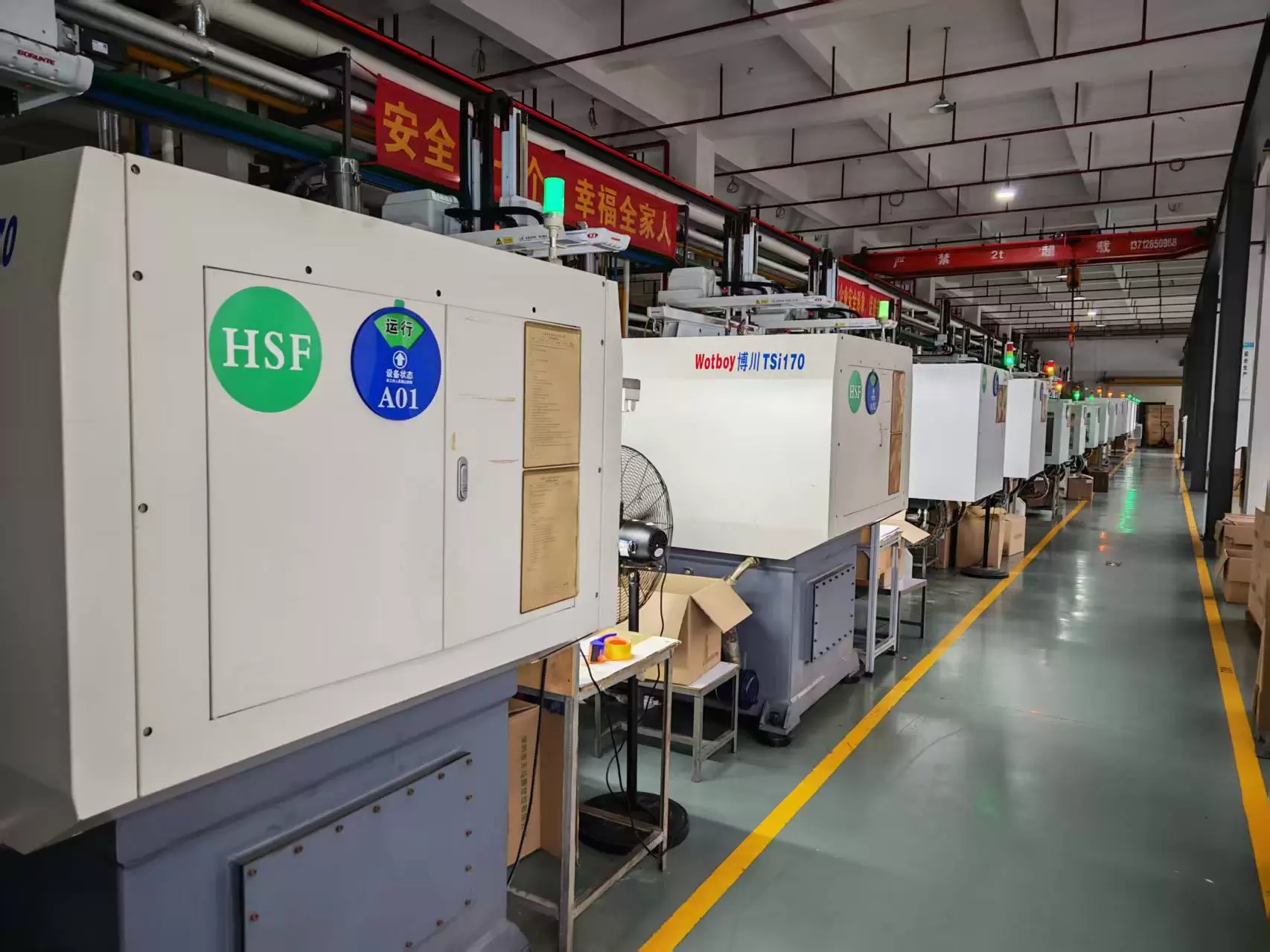
For OEM manufacturing, consistency depends on much more than the quality of the raw material. It involves tooling accuracy, machining capability, process parameters, inspection procedures, operator control, and production management.
CNC precision machining is one example. When electronic components require tight dimensional control, machining accuracy directly affects how parts fit together. A small dimensional deviation may influence assembly clearance, connector positioning, heat transfer, or the final appearance of the product.
The same principle applies to metal forming and nanomolding processes. Process stability must be maintained from the first production batch to subsequent orders.
A structured quality management system helps manufacturers establish repeatable processes rather than relying on individual operator experience.
For consumer electronics, quality is visible.
A customer may never see the internal engineering behind a device, but they will notice an uneven surface, inconsistent texture, visible machining marks, poor edge treatment, or an inaccurate assembly gap.
This makes surface finishing and dimensional control important parts of OEM manufacturing.
Metal components used in consumer electronics may require precise CNC machining, polishing, anodizing, coating, or other finishing processes. Each process needs to be matched to the material, product structure, and intended application.
The goal is not simply to make a component look attractive. Surface treatment must also meet functional requirements such as corrosion resistance, wear resistance, electrical performance, or heat dissipation.
A capable manufacturer should therefore consider appearance and function together instead of treating finishing as the final step after everything else has been completed.
Modern consumer electronics continue to become more powerful while maintaining compact product dimensions. Processors, communication modules, batteries, LEDs, and other electronic components generate heat during operation.
If heat is not managed properly, it can affect performance, reliability, component life, and user experience.
This is where thermal design becomes an important part of OEM development.
An experienced manufacturing partner can evaluate the thermal behavior of a product during the engineering stage and help develop suitable heat dissipation structures. Depending on the application, this may involve metal housings, heat sinks, thermal components, or customized structural solutions.
Thermal simulation can also be used to identify potential hot spots and compare different design approaches before physical samples are produced.
For manufacturers serving consumer electronics, combining product design, thermal analysis, precision machining, and manufacturing capabilities can shorten the communication cycle between different engineering teams.
Consumer electronics often contain many small components that must fit together accurately.
Housing dimensions, mounting holes, brackets, connectors, and internal supports may all have specific tolerance requirements. If one component is outside its acceptable range, the problem may not become obvious until final assembly.
Precision manufacturing helps reduce this risk.
CNC machining is particularly useful for producing metal parts with complex geometries and tight dimensional requirements. It can also support prototype development and small-batch production before a product moves into larger-scale manufacturing.
For OEM customers, this creates an opportunity to test the actual component rather than relying only on theoretical design data.
When prototype parts accurately represent the intended production process, engineering teams can evaluate fit, function, appearance, and assembly more effectively.
A quality system should not be limited to final inspection.
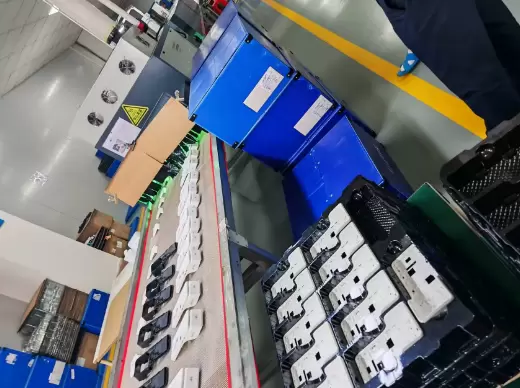
Effective quality control covers the complete production process. Incoming materials should be checked, production parameters should be controlled, key dimensions should be inspected, and finished products should be verified according to clearly defined requirements.
Documentation is also important. Inspection records, process specifications, drawings, and quality standards help ensure that production teams understand the same requirements.
For international OEM and ODM projects, this becomes even more important because customers and manufacturers may be working across different locations and engineering teams.
SOGOOD has implemented a modern quality management system aligned with international standards and has obtained ISO9001 certification. This provides a structured foundation for controlling product quality throughout the manufacturing process.
Technical capability is important, but manufacturing experience also affects how quickly problems can be solved.
An experienced engineering team can often identify potential issues by looking at the product structure, material, manufacturing process, and application requirements together.
SOGOOD brings together industrial designers, structural engineers, mold engineers, and manufacturing specialists. Some core team members have experience from the design teams behind Motorola A1200 and A1600 products, while senior engineers have more than 20 years of experience in metal nanomolding and CNC precision machining.
This type of cross-functional experience is valuable for consumer electronics projects because product development rarely involves only one manufacturing process.
A housing project, for example, may require industrial design, structural optimization, mold development, CNC machining, thermal analysis, surface treatment, and final inspection. Having these capabilities coordinated through one manufacturing partner can reduce unnecessary communication between separate suppliers.
One of the biggest challenges in OEM manufacturing is moving from a successful prototype to stable mass production.
A prototype may be produced under controlled conditions, but mass production introduces more variables. Tooling, cycle times, material batches, process parameters, inspection frequency, and assembly conditions all need to be considered.
The manufacturing partner should therefore be involved in production planning before the prototype is approved.
Design changes should be evaluated from both engineering and production perspectives. Critical dimensions should be identified, inspection methods should be established, and manufacturing processes should be verified before production is scaled up.
For customers looking for examples of engineering and manufacturing capabilities, SOGOOD's project portfolio can provide a useful reference:consumer electronics OEM ODM manufacturer.
Consumer electronics development involves many interconnected decisions. Product appearance affects structure. Structure affects tooling. Tooling affects production consistency. Material selection affects machining and finishing. Internal components affect thermal performance.
Managing each part separately can create gaps between design and manufacturing.
An integrated OEM partner can approach the project as a complete system.
SOGOOD provides one-stop manufacturing services covering product design, thermal simulation design, precision hardware, CNC precision machining, metal nanomolding, mold-flow analysis, housings, accessories, supporting materials, and heat dissipation solutions.
The company has worked with global industry leaders including Qualcomm, ZTE, Lenovo, NEC, Philips, Panasonic, Haier, Midea, ASUS, and TCL, supporting applications across electronics, communications, automotive, medical, and artificial intelligence industries.
This experience allows the team to understand that manufacturing quality is not only about producing parts that meet drawings. It is about helping customers develop products that can be manufactured consistently and perform reliably in real applications.
In consumer electronics OEM manufacturing, quality affects every stage of the product lifecycle.
Good engineering reduces design problems. Accurate tooling improves consistency. Precision machining supports reliable assembly. Proper thermal design protects product performance. Controlled surface finishing improves appearance and durability. A structured quality system helps maintain standards during production.
Most importantly, quality should be built into the process rather than inspected into the product at the end.
For OEM and ODM customers, the ideal manufacturing partner is one that can contribute engineering knowledge as well as production capacity. By combining design experience, precision manufacturing, thermal solutions, quality management, and responsive technical support, manufacturers can make the path from product concept to market-ready production more predictable.
SOGOOD welcomes OEM and ODM cooperation and provides customized engineering solutions for customers with different product requirements. Whether a project starts with an existing product concept, a prototype, or a specific engineering challenge, early communication with an experienced manufacturing team can help identify practical solutions and create a more reliable production path.