Customization Options Offered by Professional Three-Proof Tablet Housing OEM Manufacturers
Oct 28, 2026
Industrial printers are no longer simple machines designed only to print labels, receipts, or documents. Modern industrial printing equipment often needs to operate continuously in demanding environments while maintaining dimensional accuracy, stable thermal performance, mechanical strength, and reliable user interaction. Behind these requirements is a manufacturing process that starts long before the first printer reaches the production line.
For an industrial printer manufacturer, the path from product concept to mass production involves industrial design, structural engineering, material selection, tooling, precision machining, thermal analysis, prototyping, testing, and quality control. When these stages are managed together, manufacturers can reduce development problems and create printer housings and components that are suitable for long-term production.
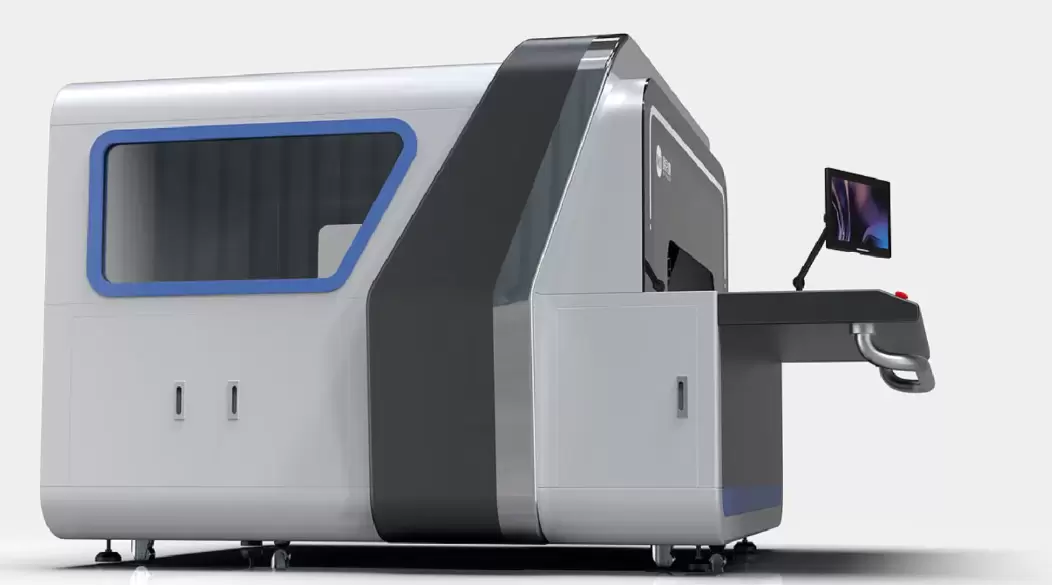
The first stage is not simply deciding what a printer should look like. Industrial printer design must consider how the product will be used, installed, maintained, and manufactured.
For example, a printer used in a factory may need a housing that protects internal electronics from dust, vibration, and accidental impact. A commercial printer may place greater emphasis on compact dimensions, user accessibility, and appearance. A printer integrated into automated equipment may require precisely positioned mounting points and interfaces.
This is why industrial design and mechanical engineering need to work together from the beginning.
Design engineers typically need to consider:
A visually attractive housing that cannot be assembled efficiently or cannot dissipate heat properly will eventually create problems during testing or production.
Material selection has a direct influence on printer performance and manufacturing efficiency.
Plastic materials are commonly used for lightweight external housings, covers, trays, and internal structural components. Metal is often selected when higher strength, rigidity, thermal conductivity, electromagnetic shielding, or a premium appearance is required.
Aluminum, for example, can provide a useful combination of low weight, structural strength, machinability, and thermal performance. Depending on the application, CNC machining may be used to produce precision metal components, while other forming or molding processes may be considered for larger-volume production.
For products that combine metal and plastic components, engineers also need to pay attention to dimensional tolerances, fastening methods, thermal expansion, and assembly interfaces.
A reliable industrial printer manufacturer should therefore evaluate material and process selection together rather than treating them as separate decisions.
Once the industrial design is defined, structural engineering becomes critical.
An industrial printer housing may contain motors, rollers, circuit boards, power supplies, sensors, heating elements, and other moving or heat-generating components. The housing must maintain its shape while these components operate.
Engineers may analyze:
Small structural details can have a significant effect on manufacturing. A poorly designed boss, for instance, can crack during assembly. An excessively thin wall may deform during molding. An unnecessarily complex structure can also make tooling and production more difficult.
Design for manufacturing should therefore be incorporated before tooling begins.
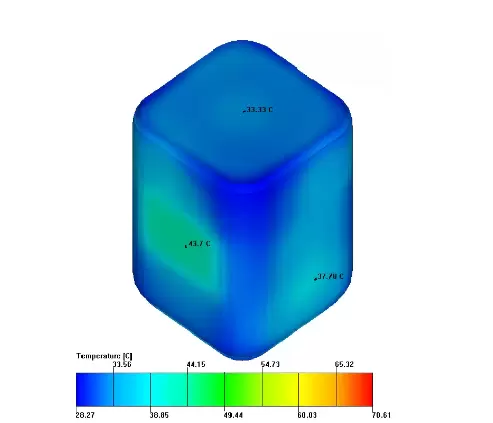
Thermal performance is particularly important for industrial printers containing high-power electronics, motors, power supplies, or printing systems that generate heat during operation.
Simply adding ventilation openings does not always solve the problem. Engineers need to understand where heat is generated and how it moves through the product.
Thermal simulation and analysis can help evaluate:
This type of analysis can identify potential thermal problems before physical prototypes are produced.
For industrial equipment, this can be especially useful because changing the internal structure after tooling has already been completed can be time-consuming. Early thermal analysis gives engineers an opportunity to modify the design while changes are still manageable.
A CAD model may look correct on a computer screen, but physical testing can reveal issues that are difficult to identify digitally.
A prototype can be used to check:
For industrial printers, prototypes can also help manufacturers confirm how the product interacts with external equipment and operators.
At this stage, it is often better to identify a problem and modify the design before mass production rather than discover it after large quantities of components have already been manufactured.
When plastic parts are selected for production, tooling becomes one of the most important steps.
The geometry of an injection-molded printer housing must be designed with the molding process in mind. Wall thickness, draft angles, ribs, bosses, gates, cooling channels, and parting lines can all influence production quality.
Mold flow analysis can provide useful information about potential filling and molding problems, including:
Addressing these issues during engineering can reduce the need for costly tooling modifications later.
For an industrial printer manufacturer, this is especially important when the housing contains large flat surfaces or complex internal structures. These parts can be more sensitive to warpage and dimensional variation.
Not every printer component should be produced through molding. Some parts require tighter dimensional control, special geometries, or rapid engineering changes.
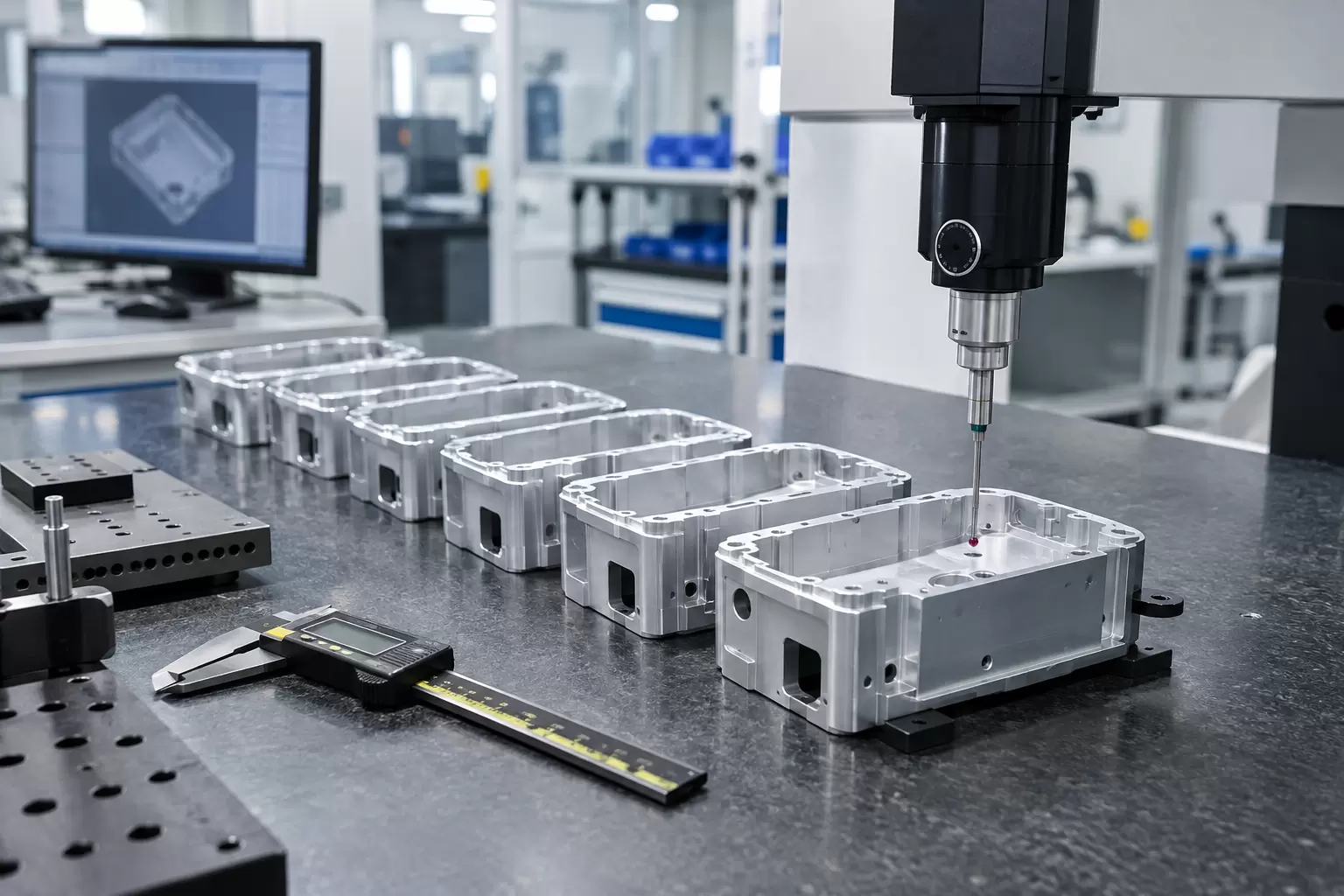
CNC precision machining is commonly used for metal brackets, mounting components, heat dissipation structures, frames, fixtures, and prototype parts.
The main advantages include precise dimensional control, flexible geometry, and suitability for both prototypes and specialized production components.
For example, a mounting bracket connecting a printer mechanism to the housing may require accurately positioned holes and reference surfaces. A small dimensional deviation could affect the alignment of moving components.
CNC machining allows engineers to produce these parts directly from digital designs while maintaining control over critical dimensions.
Advanced manufacturing technologies can also help simplify product structures.
Metal nanomolding technology can be used to create strong integration between metal and plastic materials. This can be valuable for electronic and industrial products where mechanical strength, compact design, and functional integration are important.
Instead of treating every metal and plastic component as an independent part, engineers can explore ways to combine functions within a single assembly.
For industrial printers, potential applications may include structural interfaces, electronic component housings, brackets, and other areas where metal strength and plastic molding characteristics need to work together.
The actual process should be selected according to the product structure, material requirements, production volume, and performance targets.
The transition from prototype to mass production is where engineering discipline becomes particularly important.
Before production begins, manufacturers should confirm:
A manufacturing partner that can support several of these stages under one system can reduce communication gaps between design, engineering, tooling, and production teams.
This is one reason many companies look for a one-stop manufacturing partner rather than managing multiple suppliers for industrial design, tooling, machining, thermal analysis, and component production.
SOGOOD provides integrated manufacturing services covering product design, thermal simulation, precision hardware, and thermal management solutions. Its capabilities are relevant to industrial equipment manufacturers looking for engineering support beyond simple component production.
For companies developing printer housings and related components, SOGOOD can support the development process from industrial design and structural engineering through mold flow analysis, CNC precision machining, and metal nanomolding.
The company's engineering team includes experienced industrial designers, structural engineers, and mold engineers. Some core team members have backgrounds in the design teams behind Motorola A1200 and A1600 products, while senior engineers have more than 20 years of experience in metal nanomolding and CNC machining.
SOGOOD's experience also extends across electronics, communications, automotive, medical, and artificial intelligence applications. This cross-industry experience can be useful when an industrial printer incorporates requirements commonly found in other industries, such as compact electronics packaging, precision metal components, thermal management, or high-strength structural interfaces.
For more information about its capabilities in this field, explore SOGOOD's industrial printer manufacturing solutions.
Mass production is not successful simply because a factory can produce large quantities. Consistency between batches is equally important.
Quality management should cover incoming materials, tooling, machining, molding, assembly, and final inspection.
Typical inspection activities may include:
SOGOOD operates a modern quality management system aligned with international standards, with products and processes supported by ISO9001-certified quality management practices.
For OEM and ODM customers, this provides a structured foundation for moving from engineering samples to repeatable production.
Developing an industrial printer is a process that connects design decisions with manufacturing realities. Product appearance, structural strength, thermal performance, material selection, tooling, machining, and quality control all influence the final result.
The most effective approach is to consider these factors early rather than solving them one by one after problems appear.
For companies developing industrial printers or related equipment, an experienced manufacturing partner can provide practical support across multiple stages of the product lifecycle. From industrial design and thermal simulation to mold flow analysis, CNC precision machining, metal nanomolding, and mass-production quality control, integrated engineering capabilities can make the transition from concept to finished product more predictable.
With its experience in industrial product innovation and precision manufacturing, SOGOOD supports OEM and ODM projects that require customized engineering solutions. Whether the requirement involves an existing product design or a new industrial printer housing developed from the ground up, the right manufacturing process should always begin with a clear understanding of the product's real-world requirements.