Why China Is a Global Hub for Plastic Mold Manufacturing
Jan 28, 2026
With the development of artificial intelligence, robotics technology, and intelligent manufacturing industry, quadruped robots are gradually moving from the laboratory research stage to practical application scenarios. Recently, a new type of quadruped robot created using highly biomimetic design concepts has attracted industry attention. The robot is important for its simple and smooth industrial design, modular structure design, and strong environmental adaptability,
By integrating mechanical engineering, industrial design, and intelligent algorithms, the innovative direction of future mobile robots has been demonstrated.
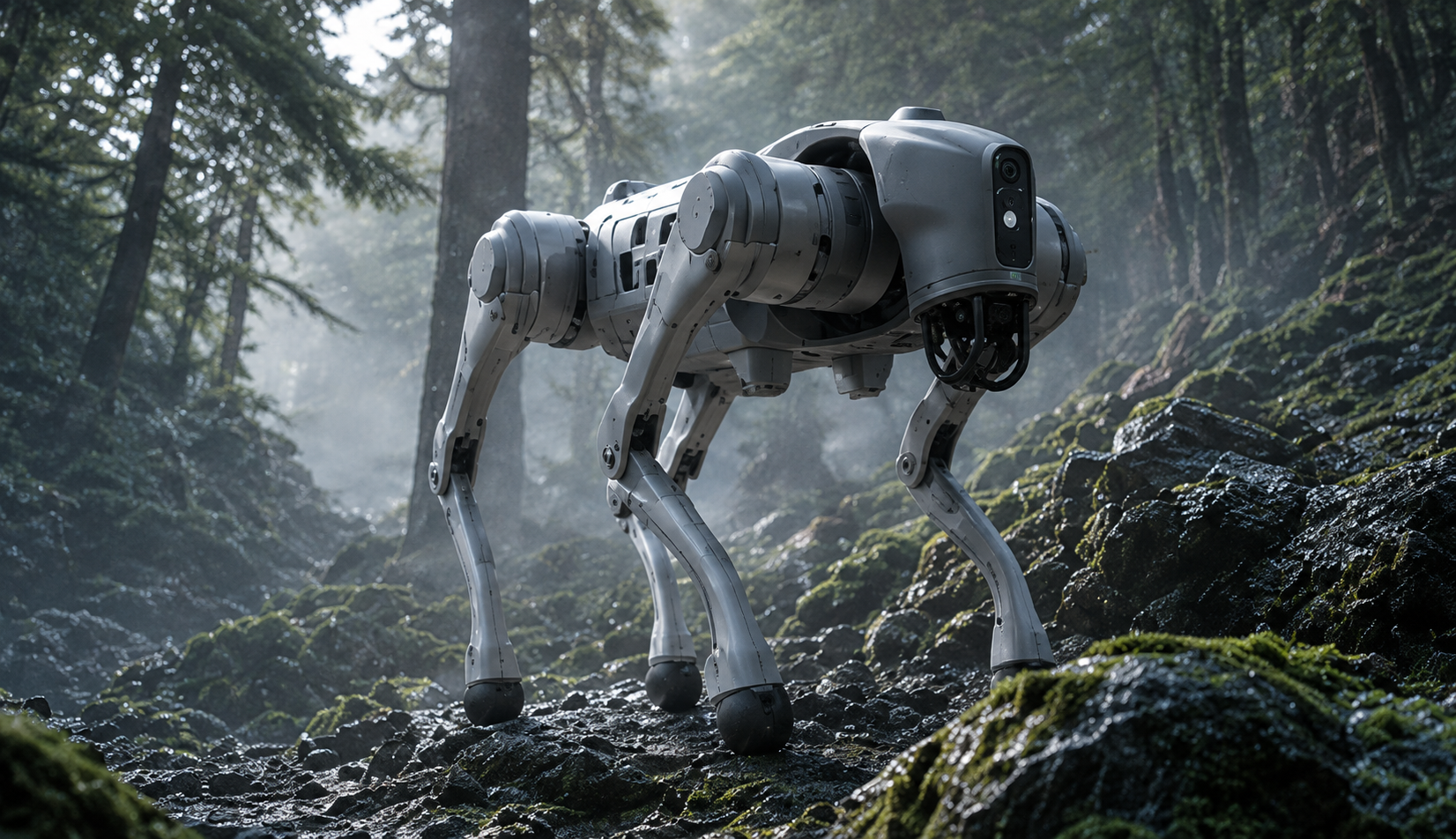
From an industrial design perspective, the quadruped robot adopts a design language that combines futuristic technology with engineering reliability. The fuselage is characterized by a low center of gravity and a large-span structure, presenting a stable and agile visual experience in its overall outline. The design team has enhanced the product's attributes and technological recognition by reducing redundant exposed structures, resulting in a highly integrated appearance of the robot.
The robot body adopts a streamlined shell covering design, and the top body is treated with curved transitions, making the device visually more compact and reducing the collision crisis during complex environmental movements. The surface of the shell adopts a matte gray white color scheme with dark functional areas, reflecting the precision of industrial equipment and enhancing the durability of the product in outdoor environments. The front-end integrates a visual perception module, which forms a visual focus through a black panel, giving the robot recognition features similar to a "head", further enhancing the biomimetic interaction experience.
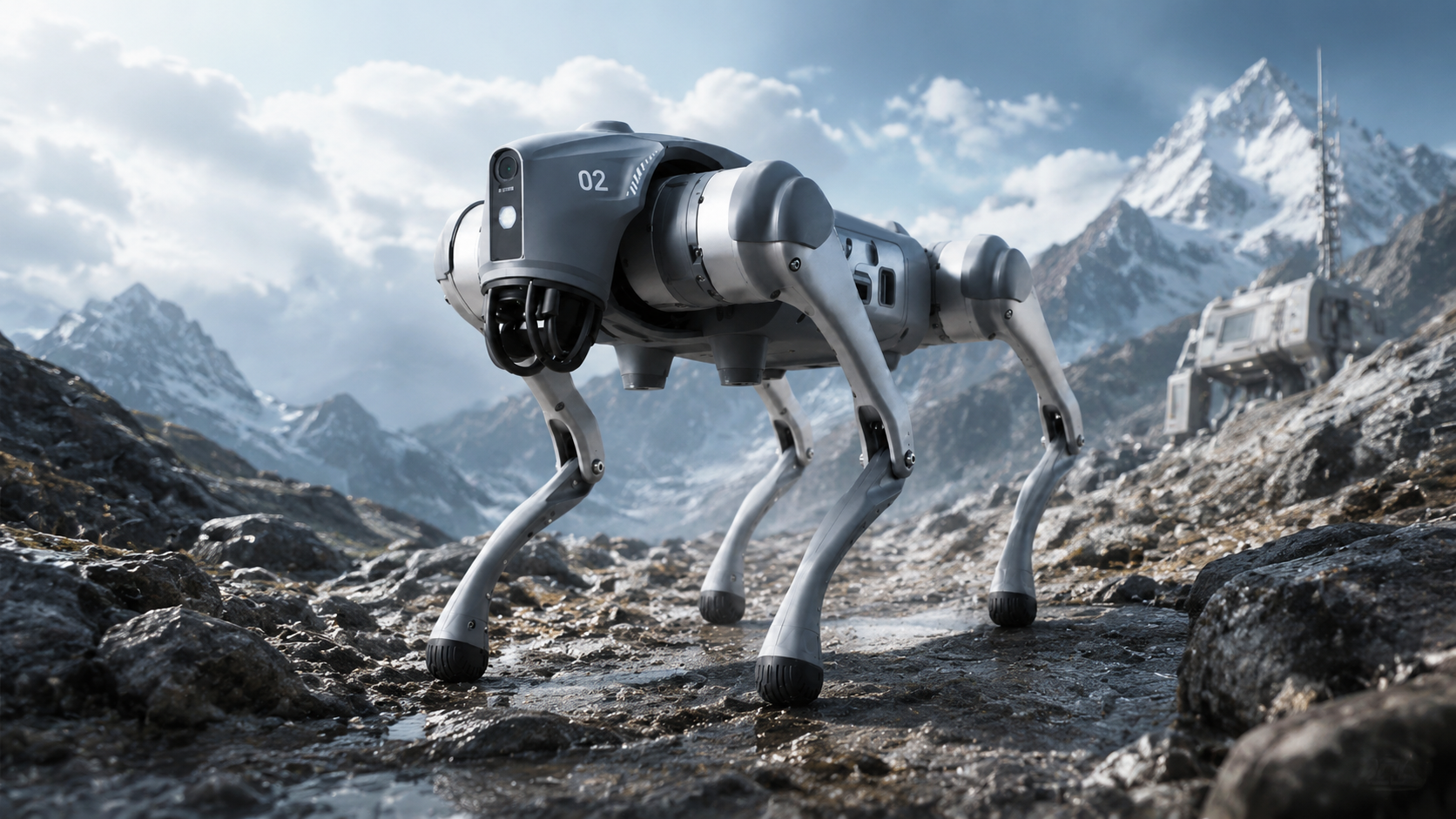
In terms of detail design, the robot joint area adopts a combination of exposed mechanical structures and hidden connections. The silver gray metal joint components and engineering plastic shell form a material contrast, reflecting the sense of power of precision mechanical equipment. At the same time, the leg structure adopts a gradient curve design, gradually narrowing from the body connection and extending to the foot end, making the overall shape more in line with sports aesthetics. This design optimizes visual proportions and also helps to enhance the flexibility of the robot during motion.
In terms of structural design, the quadruped robot adopts a biomimetic legged motion structure, achieving dynamic balance in complex terrain through four mechanical legs. Each mechanical leg is composed of multiple rotating joints, driven by high-performance servo motors to achieve multi degree of freedom movements similar to animal legs. Compared to traditional wheeled robots, quadruped structures can adapt to stairs, gravel, grass, and unstructured environments, greatly improving the robot's ability to navigate through environments.
The main framework of the robot adopts a modular design concept, which divides the power system, battery module, unit, and sensing equipment into zones for layout. The load-bearing structure is located in the middle area of the fuselage and is made of lightweight materials to reduce the overall weight of the machine while ensuring overall rigidity. Reasonable weight distribution can reduce energy consumption during movement and improve the endurance of robots.
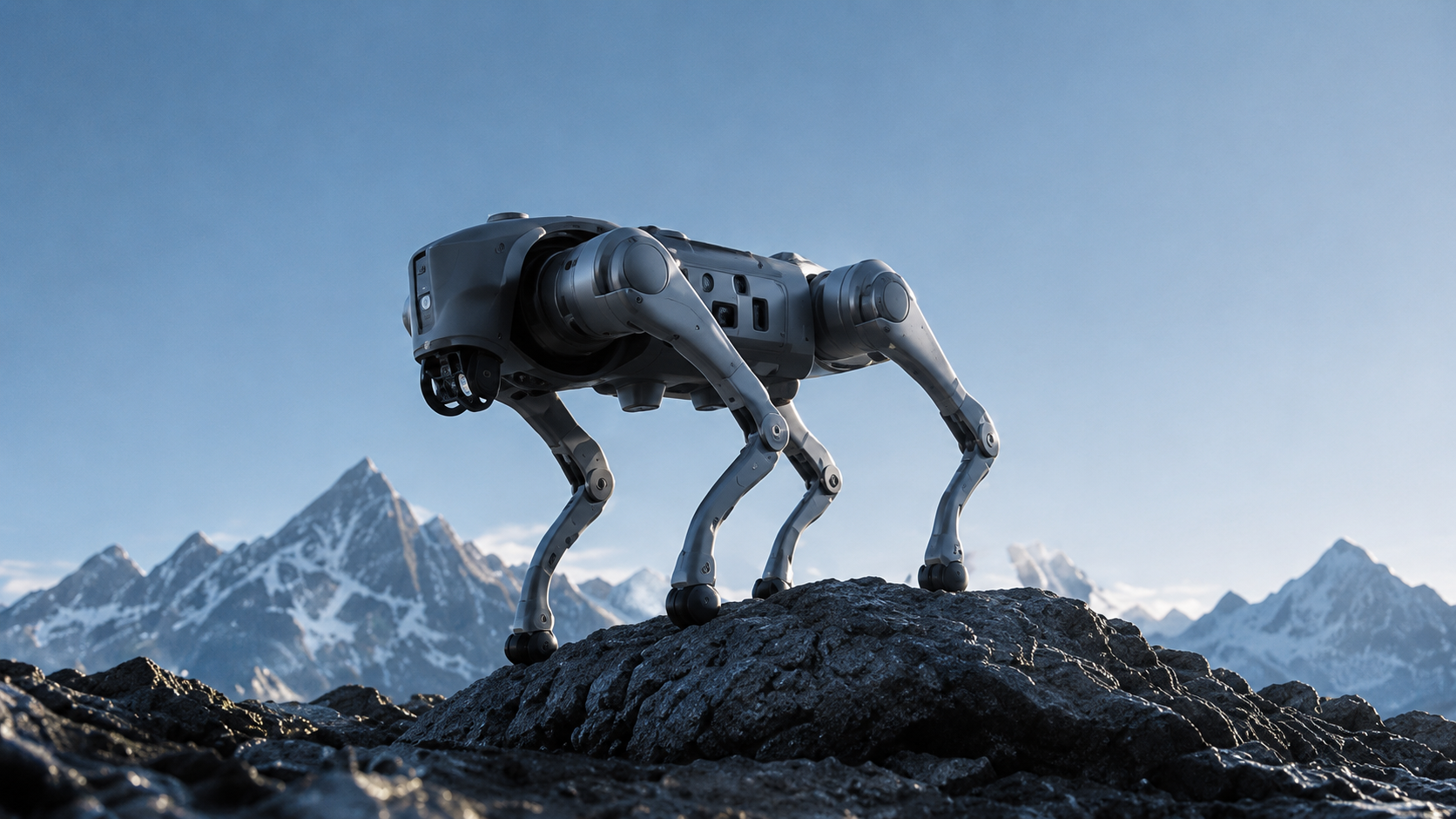
The leg structure is a key component in the design of this robot. The design team applied the elastic structure of animal legs to mechanical systems through biomimetic research. The thighs, calves, and foot tips have all undergone kinematic optimization to maintain a stable posture for the robot during walking, running, and jumping. The foot end adopts a flexible cushioning design, which increases ground friction through rubber anti slip structure and reduces the impact of motion on internal precision components.
In addition, the robot also has a highly integrated intelligent perception system. Multiple sensing devices are configured on the top and front of the body, which can achieve environmental scanning, obstacle recognition, and autonomous navigation. Combined with artificial intelligence algorithms, robots can automatically adjust their gait according to different terrains, achieving more natural and efficient motion patterns. The design concept of combining software and hardware makes it not only a mechanical device, but also an intelligent mobile platform with self-learning ability.
From an application perspective, these quadruped robots will play an important role in industrial inspection, fire rescue, energy detection, smart logistics, and special environmental operations in the future. For example, in environments with high temperatures, danger, or difficulty for personnel to enter, robots can replace manual labor to complete data collection and equipment inspection, improve work efficiency, and reduce safety risks.
Overall, this quadruped robot is the development trend of future robot product design. It achieves the integration of technology, functionality, and aesthetic value in industrial design, while enhancing practical application capabilities through structural innovation. In the future, with the continuous maturity of artificial intelligence technology and robot manufacturing processes, quadruped robots will further break through performance limitations and become an important carrier connecting intelligent technology with practical applications, promoting the mobile robot industry to move towards a more intelligent development stage.