How to Choose a Reliable Injection Molding Factory OEM for Your Brand
Jan 30, 2026
In modern manufacturing, the choice between CNC precision machining and traditional machining can determine not only product quality, but also production speed, consistency, and long-term competitiveness. Industries such as electronics, automotive, medical devices, telecommunications, and AI hardware increasingly demand tighter tolerances, complex geometries, and shorter development cycles. As a result, CNC precision machining has become the preferred solution for many manufacturers.
This article compares CNC precision machining with traditional machining from the perspectives of performance, efficiency, cost, flexibility, and application suitability.
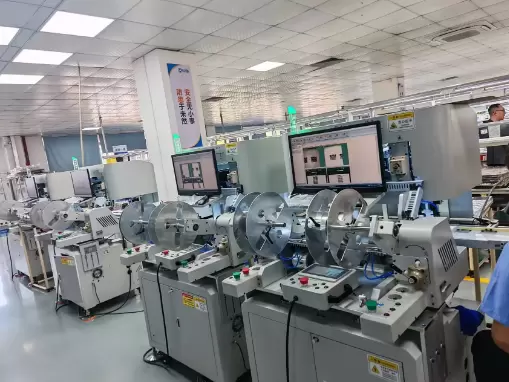
Traditional machining refers to manual or semi-manual machining methods where operators control cutting tools directly. Common examples include manual lathes, milling machines, drilling machines, and grinding equipment.
Key characteristics
Operator-dependent precision: machining quality relies heavily on the skill and experience of the machinist.
Lower automation: tool movement, speed, and feed are often adjusted manually.
Suitable for simple parts: best for straightforward geometries, repairs, prototypes, or very small batches.
Lower upfront investment: manual machines are generally less expensive than CNC systems.
Traditional machining remains valuable in workshops that require craftsmanship, quick one-off modifications, or low-volume production with minimal programming overhead.
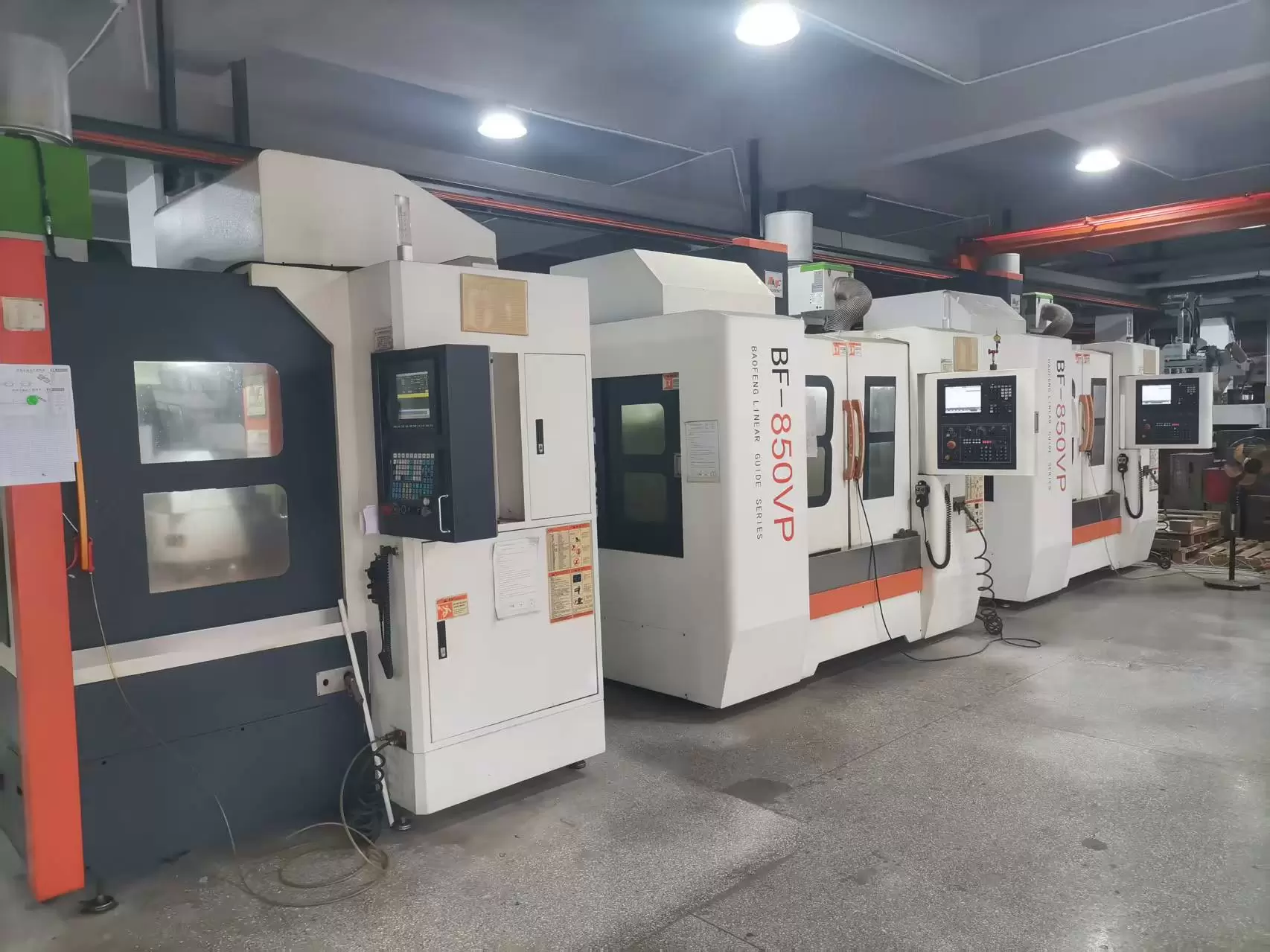
CNC (Computer Numerical Control) precision machining uses computer-programmed instructions to control machine tools automatically. The process can include milling, turning, drilling, tapping, and multi-axis operations with extremely high accuracy.
Key characteristics
Computer-controlled accuracy: movements are guided by digital programs, reducing human error.
High repeatability: identical parts can be produced consistently across large batches.
Complex geometry capability: multi-axis machining enables intricate shapes and tight tolerances.
Greater automation: machines can operate continuously with minimal manual intervention.
CNC machining is widely used for precision components in aerospace, medical implants, automotive systems, electronics housings, and advanced cooling solutions.
Traditional machining: Accuracy depends on operator skill, machine condition, and manual measurement. Typical tolerances are generally wider, making it harder to maintain consistency across batches.
CNC precision machining: Modern CNC machines can achieve tolerances in the micron range with excellent repeatability. Digital control minimizes variation between parts.
Winner: CNC Precision Machining
CNC offers significantly higher precision and consistency, especially for critical components.
Traditional machining: Surface quality can vary depending on tool handling and operator technique. Additional finishing processes are often required.
CNC precision machining: Controlled cutting parameters and stable tool paths produce smoother, more uniform finishes directly from the machine.
Winner: CNC Precision Machining
CNC delivers better surface quality with less need for secondary finishing.
Traditional machining: Limited by manual tool movement and machine configuration. Complex 3D contours are time-consuming and difficult to achieve accurately.
CNC precision machining: Multi-axis CNC systems can machine intricate geometries, deep cavities, and compound angles efficiently.
Winner: CNC Precision Machining
CNC excels at producing complex, high-precision components that are difficult or impossible to make manually.
Traditional machining: Setup is relatively simple, but actual machining is slower because operations are performed manually. Productivity declines for repetitive tasks.
CNC precision machining: Initial programming takes time, but once the program is created, machining runs automatically at optimized speeds and feeds.
Winner: CNC Precision Machining
CNC is far more efficient for medium to large production runs and repetitive manufacturing.
Traditional machining: Requires continuous operator involvement, including tool adjustments, measurements, and machine control.
CNC precision machining: One operator can supervise multiple machines. Automation reduces manual labor and operator fatigue.
Winner: CNC Precision Machining
CNC improves labor utilization and reduces dependence on manual intervention.
Traditional machining: Manual errors and inconsistent cutting can lead to higher scrap rates and material waste.
CNC precision machining: Optimized tool paths and precise control improve material utilization and reduce defective parts.
Winner: CNC Precision Machining
CNC reduces waste and improves overall manufacturing efficiency.
Traditional machining: lower equipment cost and simpler maintenance.
CNC precision machining: higher upfront investment for machines, software, and training.
Traditional machining: labor-intensive, slower throughput, and higher variability can increase long-term costs.
CNC precision machining: higher machine costs are often offset by faster production, lower scrap, reduced labor, and consistent quality.
Production Type | More Cost-Effective Option |
|---|---|
One-off repairs or very small batches | Traditional machining |
Medium to large production runs | CNC precision machining |
High-precision critical components | CNC precision machining |
Quick for simple, custom, or emergency jobs.
No programming required.
Limited scalability for repeated production.
Requires CAD/CAM programming and setup.
Excellent for rapid scaling once the program is finalized.
Easy to reproduce parts months or years later using saved digital programs.
For product development cycles that involve repeated iterations and eventual mass production, CNC machining provides a clear long-term advantage.
Consistency is one of the most important differences between the two methods.
Traditional machining: part quality can vary between operators and shifts.
CNC precision machining: digital programs ensure uniform dimensions and repeatable results across entire production batches.
This consistency is essential in industries with strict regulatory or performance requirements, such as medical devices and automotive systems.
The part is simple and low-volume.
Quick manual modifications are needed.
Budget constraints make high automation unnecessary.
Skilled machinists are available for specialized manual work.
High accuracy and repeatability are required.
Parts have complex geometries.
Production volumes are medium or large.
Lead time, consistency, and scalability are critical.
Industries demand certified quality standards and traceability.
SOGOOD combines advanced CNC precision machining with metal nano molding technology to deliver high-performance manufacturing solutions for electronics, communication, automotive, medical, and AI industries.
Founded in Shenzhen, China’s “Design Capital,” SOGOOD provides one-stop manufacturing services covering product design, thermal simulation, precision hardware, and heat dissipation solutions. The company’s engineering team includes experienced industrial designers, structural engineers, and mold specialists with deep expertise in precision manufacturing.
Key strengths include:
Over 20 years of combined experience in CNC machining and metal nano molding.
ISO9001-certified quality management.
OEM and ODM customization capabilities.
Proven collaboration with global brands such as Qualcomm, Lenovo, Panasonic, Philips, TCL, and others.
For manufacturers seeking reliable precision parts, scalable production, and integrated engineering support, SOGOOD offers a comprehensive solution from R&D to market delivery.
Explore CNC machining, metal nano molding, and integrated manufacturing solutions:
SOGOOD Precision Manufacturing Services
Comprehensive CNC machining, metal nano molding, thermal simulation, and precision hardware solutions.
Embedded anchor text link (code format)
<a href="https://www.sogoodprecision.com/service/" target="_blank">SOGOOD Precision Manufacturing Services</a>
CNC precision machining and traditional machining each have their place in manufacturing, but their strengths are fundamentally different. Traditional machining remains practical for simple, low-volume, or highly customized manual work. CNC precision machining, however, delivers superior accuracy, repeatability, efficiency, and scalability, making it the preferred choice for modern high-performance manufacturing.
As industries continue to demand tighter tolerances, faster development cycles, and consistent quality, CNC precision machining is no longer just an upgrade—it is becoming the standard for competitive manufacturing.