How Chinese Plastic Mold Manufacturers Support Cost-Effective Production
May 20, 2026
Launching a fascia gun product is not simply a matter of finding a factory that can assemble a motor, battery, housing, and control board. The right OEM manufacturer needs to understand product structure, user experience, material selection, thermal management, precision machining, tooling, and quality control.
For brands entering the personal care and wellness market, choosing the right manufacturing partner early in the development process can have a major impact on product reliability and time to market. A manufacturer with strong engineering capabilities can help identify structural problems before tooling, improve component integration, and make the final product easier to manufacture consistently.
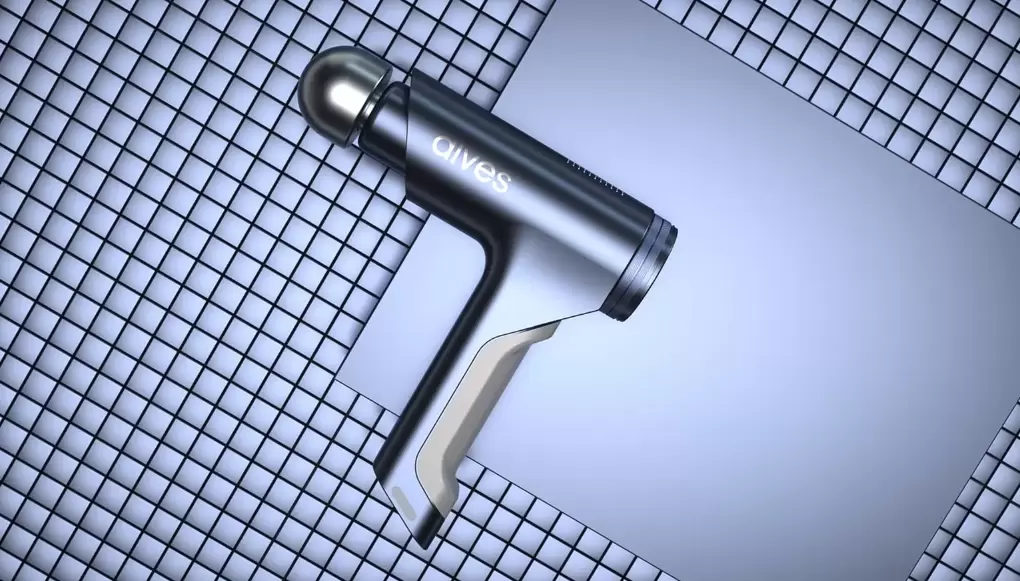
So, how should you evaluate an OEM manufacturer for a fascia gun product?
A manufacturer may have modern production equipment and still be a poor fit for a technically demanding fascia gun project.
A typical fascia gun contains multiple interconnected components, including the outer housing, internal brackets, motor assembly, battery, PCB, buttons, display or indicators, charging interface, massage heads, and heat-dissipation components. These parts need to work together within a compact enclosure.
Before selecting an OEM partner, ask whether the manufacturer has in-house industrial design, structural engineering, mold engineering, and manufacturing engineering capabilities.
This matters because problems often appear at the interfaces between components. For example, a housing may look attractive in a 3D model but leave insufficient space for the motor or battery. A plastic structure may also require reinforcement around screw bosses or mounting points to withstand repeated vibration.
An experienced engineering team can identify these issues before they become expensive tooling or production problems.
Experience with similar products is useful because fascia guns have several manufacturing challenges that are easy to overlook.
The motor generates continuous vibration, which means the housing and internal supports need to maintain structural stability during repeated use. Buttons must remain responsive, while the enclosure needs to control noise, vibration, and heat.
The massage head connection also deserves attention. It needs to be secure during operation but practical for users to remove and replace.
When reviewing an OEM manufacturer, ask for examples of related products or engineering capabilities. You can also provide your preliminary product drawings and ask the manufacturer to identify potential design-for-manufacturing issues.
A capable supplier should be able to discuss details such as wall thickness, draft angles, assembly tolerances, fastening methods, material selection, and component positioning rather than simply confirming that the drawing can be manufactured.
For brands exploring custom fascia gun solutions, you can also review custom fascia gun manufacturing solutions to understand how product structure and manufacturing capabilities can be integrated into the development process.
The housing is one of the most visible parts of a fascia gun, but it also has a functional role.
Common housing materials include engineering plastics, aluminum alloys, and combinations of metal and plastic. The right choice depends on the product's design, weight requirements, strength requirements, surface finish, heat dissipation needs, and target application.
For a lightweight consumer product, an engineered plastic housing may provide an efficient combination of strength and weight. For a premium product, aluminum components can provide a different tactile experience while also helping with thermal management.
However, material selection should not be made based solely on appearance.
The manufacturer should consider how the material behaves during molding or machining, how it interacts with internal components, and how the finished surface will hold up during repeated handling.
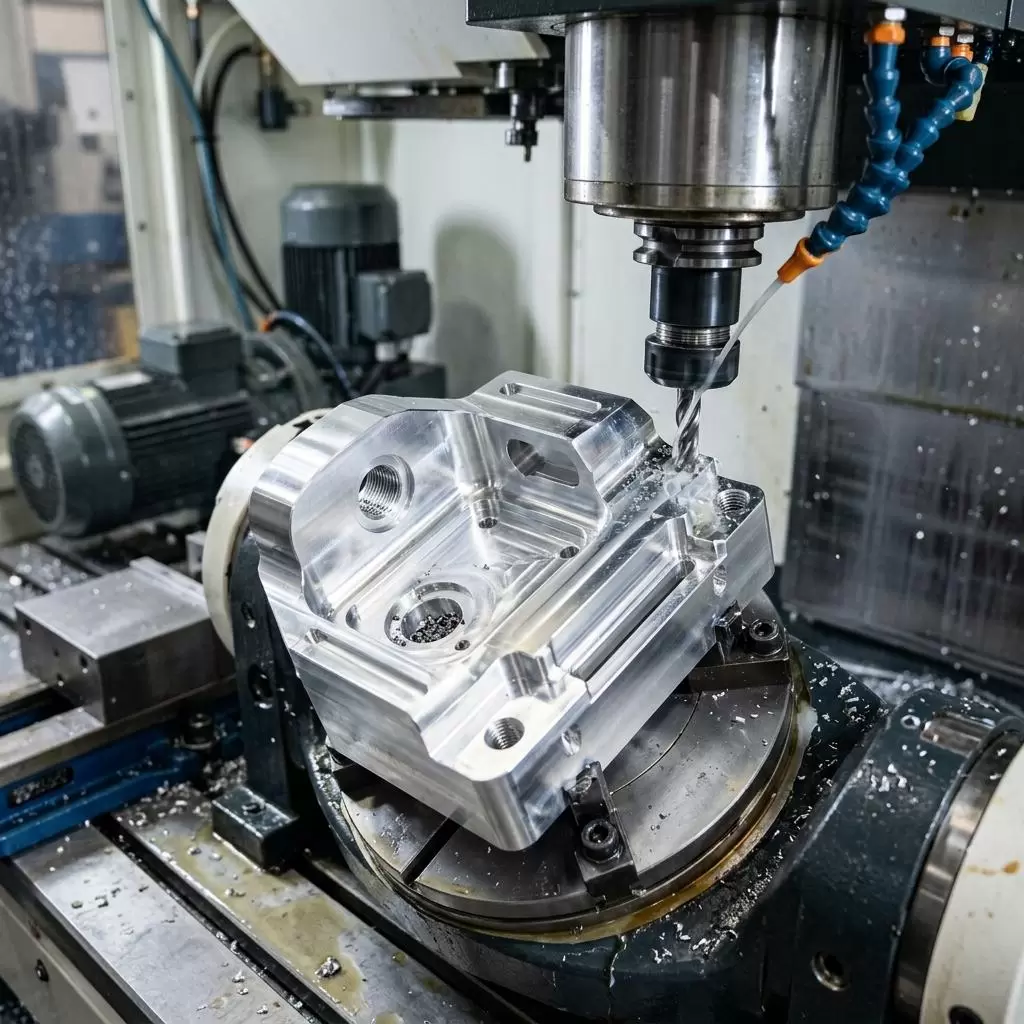
SOGOOD, for example, focuses on precision manufacturing technologies including CNC machining and metal nano molding. These capabilities can be useful when a fascia gun requires precise metal components, integrated decorative structures, or a more sophisticated metal-and-plastic product design.
A good OEM relationship should begin before mass production.
Prototype development allows both sides to verify the product's dimensions, assembly method, appearance, button position, grip, component layout, and overall usability.
Ask the manufacturer what prototype methods they can provide. CNC machining, rapid prototyping, soft tooling, and other approaches may be appropriate at different stages of development.
The key question is not simply whether a supplier can produce a prototype. It is whether the prototype can provide useful information for the next engineering decision.
For example, if a prototype shows that the motor produces excessive vibration against the housing, the manufacturer should be able to help determine whether the problem is related to internal support, material selection, clearance, fastening, or component positioning.
This kind of engineering feedback is much more valuable than simply producing a sample that looks like the CAD model.
Thermal management is another area that should be considered during fascia gun development.
The motor, battery, PCB, and other electronic components generate heat during operation. In a compact handheld device, there is limited internal space for natural heat dissipation.
Poor thermal design can affect user comfort, component reliability, and long-term product performance.
This is where thermal simulation and structural design can work together. Before finalizing the enclosure, an engineering team can evaluate heat sources, airflow paths, contact areas, and heat-conductive components.
SOGOOD provides thermal simulation design and thermal management solutions alongside precision manufacturing. This integrated approach can help manufacturers and brands consider heat management at the product-design stage instead of trying to solve thermal issues after mass production has already started.
Precision manufacturing becomes particularly important when a fascia gun has tight assembly requirements or metal components.
CNC machining can be used for prototypes, precision parts, structural components, and certain finished metal elements. Injection molding is typically important for producing plastic housings at scale.
The manufacturer should understand the relationship between these processes.
For example, if a plastic enclosure requires several internal mounting points, the mold design needs to account for draft, shrinkage, parting lines, ejector positions, and potential deformation. If metal components are CNC machined, dimensional tolerances and surface treatment need to be considered together.
SOGOOD's engineering team includes experienced industrial designers, structural engineers, and mold engineers. The company also specializes in CNC precision machining, metal nano molding, and mold flow analysis, providing a manufacturing workflow that connects product development with production engineering.
Quality control should not begin when the finished fascia guns are packed.
A reliable OEM manufacturer should have quality checkpoints throughout the production process.
Depending on the product structure, these may include:
For a fascia gun, functional consistency is particularly important. Two units may look identical while performing differently if motor installation, internal clearances, PCB connections, or assembly tolerances vary.
A formal quality management system helps establish repeatable inspection procedures. SOGOOD has implemented a modern quality management system aligned with international standards and is ISO 9001 certified.
When evaluating a potential supplier, do not only ask whether they have a quality certificate. Ask how quality requirements are translated into inspection standards on the production line.
OEM development involves many decisions that cannot be solved through a single purchase order.
Drawings change. Materials may need to be adjusted. Components can become unavailable. Prototype testing may reveal structural problems. Production teams may recommend a different manufacturing process.
Therefore, communication is a practical part of supplier selection.
Pay attention to how quickly and specifically the manufacturer responds to technical questions. Does the engineering team understand your drawings? Do they identify risks proactively? Can they explain why a particular structure may be difficult to manufacture?
A manufacturer that communicates clearly during the development stage is generally easier to work with during mass production.
The right OEM partner should be able to support more than the first prototype.
Once a fascia gun enters production, the priorities shift toward process stability, component consistency, assembly efficiency, quality control, and delivery coordination.
It is therefore useful to understand the manufacturer's complete capabilities before starting the project.
SOGOOD has been involved in industrial product innovation and precision manufacturing for applications across electronics, communications, automotive, medical, and artificial intelligence industries. Its engineering team includes professionals with extensive experience in industrial design, structural engineering, and mold development.
This cross-industry experience can be valuable when a wellness product includes sophisticated electronic, mechanical, and thermal requirements.
OEM and ODM projects have different starting points.
With an OEM project, the brand may already have detailed product drawings and specifications. The manufacturer needs to translate those requirements into stable production processes.
With ODM cooperation, the manufacturer may become more involved in product design, structure, materials, prototyping, and manufacturing optimization.
A flexible partner should be able to support both models.
SOGOOD welcomes both OEM and ODM cooperation. Its one-stop manufacturing services cover product design, thermal simulation, precision hardware, CNC machining, mold-related engineering, and thermal management solutions.
This integrated model can reduce the number of separate suppliers involved in product development and make communication between design and manufacturing teams more direct.
Before making a final decision, prepare a practical supplier evaluation checklist:
The answers will tell you much more about a manufacturer's actual capabilities than a simple production-capacity statement.
Finding the right OEM manufacturer for a fascia gun requires looking beyond assembly capacity. Product structure, material selection, thermal management, precision machining, mold engineering, prototyping, quality control, and communication all influence the success of the final product.
The ideal partner should be capable of participating in the product-development process rather than simply manufacturing finished parts according to drawings.
With expertise in industrial product design, CNC precision machining, metal nano molding, mold flow analysis, thermal simulation, and one-stop manufacturing services, SOGOOD provides an integrated approach for brands developing custom products.
For companies looking to move from concept and engineering development to reliable production, choosing an OEM partner with strong technical capabilities can make the entire development process more efficient and predictable.