Why CNC Machining Is Essential for Optical Medical Device Enclosures
May 13, 2026
As industries continue to pursue lighter, smaller, and more complex metal components, manufacturers are increasingly evaluating advanced production technologies that can deliver higher precision and better consistency. Among these technologies, Metal Nano Molding (MNM) has emerged as a powerful alternative to traditional metal forming processes.
While conventional methods such as stamping, forging, die casting, and machining remain widely used across industrial applications, Metal Nano Molding offers unique advantages for products requiring exceptional dimensional accuracy, surface quality, and micro-structural complexity.
This article compares Metal Nano Molding and traditional metal forming methods from multiple performance perspectives, helping engineers, designers, and procurement teams determine the most suitable manufacturing solution for their projects.
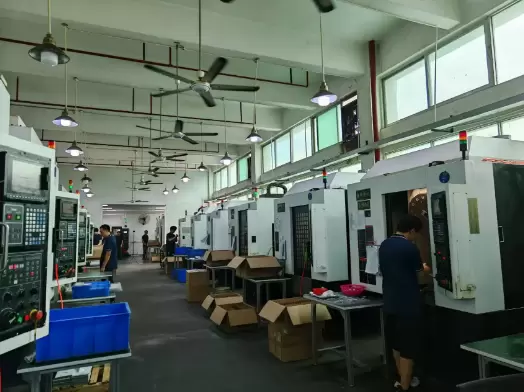
Traditional metal forming refers to manufacturing processes that shape metal through mechanical force, thermal energy, or material removal. Common examples include:
These technologies have been proven over decades and are capable of producing large quantities of metal components across automotive, consumer electronics, industrial equipment, and household appliance industries.
Traditional forming methods are particularly effective when producing medium-to-large components with relatively simple geometries and well-established production requirements.
However, as modern products become increasingly compact and sophisticated, certain limitations begin to appear, especially regarding precision, surface quality, and miniaturization.
Metal Nano Molding is an advanced manufacturing technology that combines nano-scale surface engineering with precision metal injection and forming techniques. By utilizing specially engineered nano-structured molds, manufacturers can achieve extremely precise replication of complex geometries and microscopic surface features.
The technology enables metal components to be manufactured with:
Metal Nano Molding is particularly suitable for industries where precision and reliability are critical, including electronics, telecommunications, medical devices, automotive systems, and artificial intelligence hardware.
One of the most significant differences between the two technologies lies in manufacturing precision.
Traditional forming methods often experience variations caused by:
As component sizes become smaller, controlling these variables becomes increasingly challenging.
Metal Nano Molding significantly reduces these issues through highly controlled mold structures and advanced process parameters. The result is greater dimensional consistency across production batches.
For manufacturers producing precision housings, connectors, heat dissipation components, or structural parts used in high-performance electronic devices, tighter tolerances directly contribute to improved assembly quality and product reliability.
Surface quality has become a critical factor in many modern applications.
Traditional metal forming often requires additional operations such as:
These secondary processes increase manufacturing complexity and production time.
Metal Nano Molding can replicate fine surface textures directly from nano-engineered molds, producing superior surface finishes immediately after molding. This reduces the need for post-processing while maintaining consistent appearance and functionality.
For consumer electronics and premium industrial products, enhanced surface quality can improve both product aesthetics and performance.
Traditional forming technologies perform well when manufacturing straightforward geometries. However, producing intricate internal structures, thin walls, micro-features, or highly integrated components can be difficult and expensive.
Metal Nano Molding allows engineers to integrate multiple features into a single component, reducing assembly requirements and simplifying product architecture.
Benefits include:
This capability is especially valuable for modern electronic devices, communication equipment, and medical instruments where space optimization is essential.
Mechanical performance remains an area where traditional forming technologies maintain strong advantages in certain applications.
Forging, for example, can produce highly dense grain structures with excellent mechanical properties, making it suitable for heavy-duty structural components.
Metal Nano Molding components can achieve excellent strength characteristics as well, particularly when optimized materials and process controls are applied. However, for extremely high-load industrial applications, forged components may still offer advantages.
The final choice depends heavily on the specific performance requirements of the product.
Traditional stamping operations can achieve extremely high production speeds once tooling is established.
However, when manufacturing complex components that require multiple secondary processes, overall production efficiency may decrease.
Metal Nano Molding reduces several downstream operations by creating near-net-shape components directly from the molding process.
Advantages include:
For complex precision components, this often results in improved manufacturing efficiency despite the sophisticated molding technology involved.
Material waste is a major consideration in modern manufacturing.
Processes such as CNC machining remove material from a larger workpiece, generating significant scrap.
Metal Nano Molding offers better material utilization because the process forms components close to their final geometry.
Benefits include:
As environmental requirements become increasingly important, efficient material utilization provides both operational and sustainability advantages.
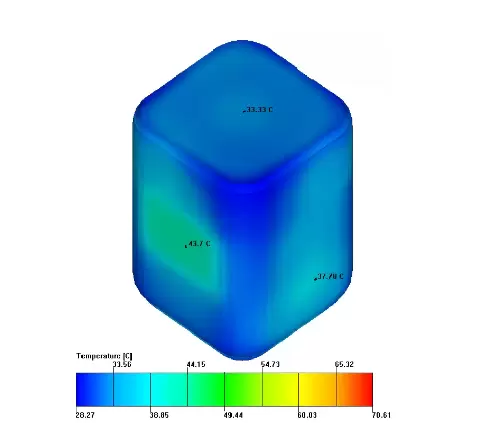
Thermal performance has become a critical challenge in industries such as AI computing, telecommunications infrastructure, and advanced electronics.
Many thermal management components require:
Metal Nano Molding enables the production of intricate heat dissipation geometries that may be difficult or costly to achieve through traditional methods.
This capability supports the growing demand for compact and high-efficiency cooling solutions.
Best suited for:
Best suited for:
Selecting the appropriate manufacturing technology is only part of the equation. The expertise of the manufacturing partner is equally important.
SOGOOD provides comprehensive one-stop manufacturing services covering product design, thermal simulation engineering, precision hardware production, and thermal management solutions. The company serves industries including electronics, telecommunications, automotive, medical devices, and artificial intelligence.
Founded in Shenzhen, China's renowned design capital, SOGOOD combines innovative industrial design capabilities with advanced manufacturing expertise. Its core technologies focus on Metal Nano Molding and CNC precision machining.
With engineering teams that possess more than 20 years of industry experience, SOGOOD supports customers throughout the entire product development cycle—from concept validation and mold development to mass production and quality assurance.
For companies seeking integrated manufacturing solutions, SOGOOD offers OEM and ODM services supported by an ISO9001-certified quality management system.
To learn more about SOGOOD's manufacturing capabilities and engineering services, visit:<a href="https://www.sogoodprecision.com/service/">One-Stop Manufacturing Services by SOGOOD</a>
Both Metal Nano Molding and traditional metal forming technologies play important roles in modern manufacturing. Traditional methods continue to provide reliable solutions for large-scale structural applications, while Metal Nano Molding delivers significant advantages in precision, surface quality, design complexity, and material efficiency.
As products become increasingly compact, intelligent, and performance-driven, the demand for advanced manufacturing technologies will continue to grow. Companies that leverage Metal Nano Molding alongside experienced engineering support can gain substantial advantages in product quality, production efficiency, and innovation speed.
For manufacturers developing next-generation electronic devices, communication systems, medical equipment, and AI hardware, Metal Nano Molding represents a forward-looking solution capable of meeting the evolving demands of modern industrial design.