The Role of Advanced Equipment in CNC Precision Machining Manufacturing
Jun 22, 2026
The global demand for folding bikes has grown steadily over the past decade. Urban commuting, sustainable transportation, limited storage space, and multimodal travel have all contributed to the popularity of compact bicycles. As demand continues to rise, more international brands are choosing to work with folding bike manufacturers in Asia rather than building their own production capabilities.
This trend is not simply about reducing manufacturing costs. Today's brands are looking for partners that can help them accelerate product development, improve quality, shorten lead times, and support continuous innovation.
Whether launching a new mobility brand or expanding an existing bicycle portfolio, partnering with an experienced Asian manufacturer offers significant competitive advantages.
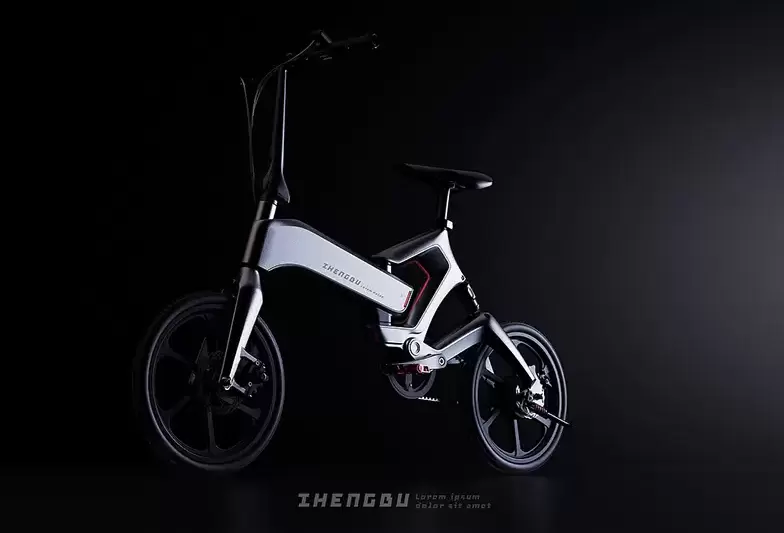
Consumers today expect transportation to be flexible and environmentally friendly. Folding bikes perfectly match these expectations by offering:
At the same time, electric folding bikes are creating additional growth opportunities, combining compact design with powerful electric assistance.
As product expectations become more sophisticated, brands increasingly require manufacturing partners capable of delivering precision engineering rather than simple assembly.
Asia, especially China, has developed one of the world's most mature manufacturing ecosystems.
Instead of sourcing components from multiple countries, manufacturers can access complete supply chains within a relatively small geographic area, including:
This integrated ecosystem significantly shortens production cycles while maintaining consistent quality.
For brands entering competitive markets, faster product launches often become as valuable as product innovation itself.
Modern folding bikes are far more complex than traditional bicycles.
Today's premium products require:
Manufacturing these products demands advanced engineering experience.
Companies with strong design and precision manufacturing capabilities help brands avoid common development issues before mass production begins.
Instead of simply following drawings, experienced manufacturers participate throughout product development, identifying manufacturability improvements that reduce production risks.
Consumers notice quality immediately.
A folding bike with poor alignment, unstable joints, or inconsistent finishes quickly damages brand reputation.
Modern manufacturing technologies have therefore become essential.
Advanced capabilities include:
Critical components such as:
require micron-level machining accuracy to ensure smooth operation and long service life.
Metal nano molding enables manufacturers to produce highly complex structural parts while improving:
These technologies are increasingly used in premium mobility products where appearance and structural reliability are equally important.
Not every company has an in-house engineering team capable of developing a folding bike from scratch.
This is why OEM and ODM partnerships have become increasingly attractive.
OEM manufacturing allows brands to provide their own designs while outsourcing production.
ODM manufacturing offers complete product development support, including:
For startups, ODM significantly reduces development time.
For established brands, OEM enables scalable manufacturing without expanding internal production facilities.
Consumers purchase folding bikes not only for performance but also for design.
Compact dimensions, clean lines, lightweight construction, and premium finishes all influence buying decisions.
Manufacturers with industrial design expertise help brands create products that stand out in crowded markets.
This includes optimizing:
Excellent design improves both product functionality and brand value.
International buyers increasingly evaluate manufacturers based on quality management systems rather than production capacity alone.
Reliable manufacturers typically implement:
ISO-certified quality systems provide consistency throughout production and reduce the likelihood of product recalls or warranty issues.
Quality management also helps manufacturers maintain stable production even when order volumes increase.
The folding bike industry continues evolving.
Manufacturers now contribute ideas for:
Brands increasingly expect manufacturing partners to participate in innovation instead of acting only as production suppliers.
Collaborative development often leads to shorter product cycles and stronger market differentiation.
Choosing the right manufacturing partner involves much more than comparing production capacity.
Companies increasingly seek partners capable of supporting the entire product lifecycle.
SOGOOD is a one-stop manufacturing service provider specializing in product design, thermal simulation engineering, precision hardware manufacturing, and thermal management solutions. Since its establishment in Shenzhen, China's renowned design hub, the company has combined industrial design excellence with advanced manufacturing technologies to support customers across electronics, telecommunications, automotive, medical devices, artificial intelligence, and other high-tech industries.
Its engineering capabilities include:
The company's engineering team includes experienced industrial designers, structural engineers, and mold specialists. Several core team members previously participated in the design of Motorola's A1200 and A1600 devices, while its industrial designers have received internationally recognized Red Dot Design Awards.
With more than two decades of engineering experience in metal nano molding and CNC machining, SOGOOD supports customers from concept development through prototype validation and volume production.
The company also maintains an ISO9001-certified quality management system to ensure manufacturing consistency across every production stage.
For brands developing mobility products, precision components, or customized hardware solutions, working with an experienced engineering partner can significantly reduce development risks while accelerating commercialization.
Learn more about SOGOOD's manufacturing capabilities for folding bike components here:
<a href="https://www.sogoodprecision.com/three-proof-electronic-products/folding-bike.html">Folding Bike Manufacturing Solutions</a>
Global supply chains have experienced significant disruption in recent years.
Manufacturers with mature supplier networks are better positioned to maintain stable production schedules, source alternative materials when necessary, and respond quickly to changing customer requirements.
Asian manufacturers with long-established supplier relationships often provide greater flexibility during unexpected market fluctuations.
This resilience has become an important reason why international brands continue expanding manufacturing partnerships across Asia.
Selecting the right folding bike manufacturing partner requires evaluating more than factory size.
Important considerations include:
A manufacturer capable of contributing engineering expertise throughout development often delivers greater long-term value than one focused solely on production volume.
The increasing number of brands partnering with folding bike manufacturers in Asia reflects the changing priorities of today's mobility industry. Companies are no longer looking only for production capacity—they seek innovation, engineering expertise, quality assurance, and flexible development support.
Manufacturers with advanced capabilities in precision machining, industrial design, nano molding technology, and integrated OEM/ODM services help brands shorten development cycles while delivering products that meet growing consumer expectations.
As folding bikes continue gaining popularity worldwide, strategic manufacturing partnerships will remain a key factor behind successful product launches and sustainable business growth.