How to Choose a Reliable Neck Massager Manufacturer
Feb 23, 2026
As thermal imaging technology becomes more accessible across industrial, medical, automotive, security, and research applications, buyers face an important decision before placing an order: should you purchase from a manufacturer or a distributor?
At first glance, both can provide thermal imaging instruments, but the differences in engineering capabilities, customization options, technical support, quality control, and long-term value are significant. Understanding these differences helps companies avoid supply chain issues, reduce development risks, and build products that better match market demands.
For businesses planning OEM or ODM projects, selecting the right partner often matters just as much as selecting the right thermal imaging technology itself.
If you're evaluating professional OEM solutions, SOGOOD's <a href="https://www.sogoodprecision.com/three-proof-electronic-products/thermal-imaging-instrument.html">thermal imaging instrument manufacturing solutions</a> demonstrate how integrated product development can accelerate commercialization while maintaining manufacturing quality.
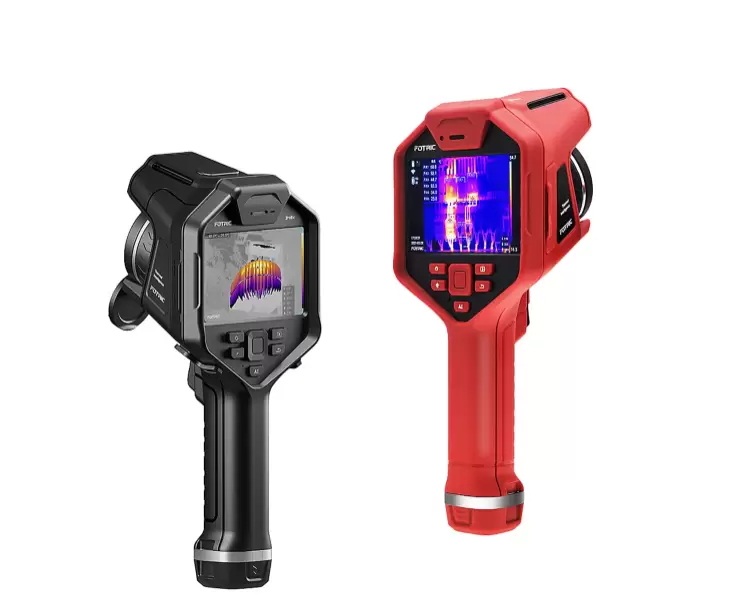
Although both manufacturers and distributors operate within the same supply chain, their responsibilities are fundamentally different.
A manufacturer designs, engineers, develops, and produces thermal imaging equipment or critical components.
Depending on the company's capabilities, manufacturers may provide:
Many manufacturers own production facilities and control every stage from prototype to mass production.
A distributor purchases finished thermal imaging products from one or multiple manufacturers and resells them.
Their primary functions include:
Most distributors do not manufacture products themselves.
Instead, they help customers source existing models already available in the market.
| Factor | Manufacturer | Distributor |
|---|---|---|
| Product Development | Yes | No |
| OEM Services | Yes | Rare |
| ODM Services | Yes | Usually No |
| Custom Hardware | Yes | Limited |
| Custom Software | Often Available | Limited |
| Engineering Support | Strong | Basic |
| Factory Quality Control | Direct | Indirect |
| Production Flexibility | High | Low |
| Existing Inventory | Sometimes | Usually Yes |
| Product Branding | Customizable | Usually Existing Brands |
For businesses requiring unique products, manufacturers generally provide greater flexibility.
Distributors offer advantages under specific circumstances.
When projects require rapid deployment, distributors often maintain inventory that can be shipped immediately.
There is no need to wait for production schedules.
Many manufacturers focus on OEM production and may have minimum order quantities.
Distributors often support:
Regional distributors frequently provide:
This benefits companies without internal technical teams.
If the application requires no modifications, purchasing an established product through a distributor can reduce procurement complexity.
Examples include:
Manufacturers become the better option when projects require more than simply purchasing a standard camera.
Many industrial applications require specialized designs, such as:
Only manufacturers typically possess the engineering resources necessary for these developments.
Many companies want products carrying their own brand rather than the manufacturer's logo.
OEM manufacturing commonly includes:
Distributors usually cannot offer these services at scale.
ODM projects involve creating entirely new products.
Typical ODM services include:
This approach allows businesses to introduce differentiated products instead of competing with identical market offerings.
Complex products require engineering collaboration throughout development.
Manufacturers can assist with:
These capabilities reduce redesign costs later.
Thermal imaging instruments are more than infrared sensors.
Their long-term reliability depends heavily on mechanical engineering and thermal management.
Important factors include:
Poor heat management can affect:
Professional manufacturers optimize thermal paths through:
The enclosure influences:
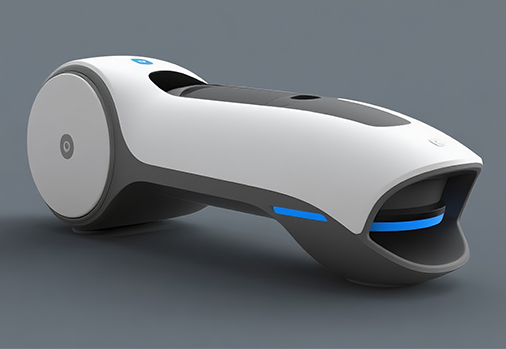
Industrial design therefore directly impacts field reliability.
Thermal cameras require extremely accurate component positioning.
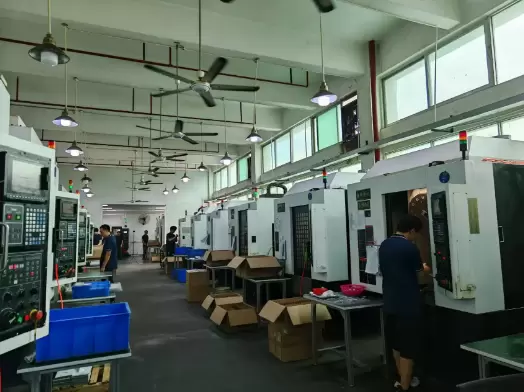
High-precision CNC machining helps maintain:
One challenge many companies encounter is coordinating multiple suppliers.
For example:
Supplier A produces the enclosure.
Supplier B manufactures heat sinks.
Supplier C assembles electronics.
Supplier D performs testing.
Each handoff increases:
Integrated manufacturers simplify the process by managing everything within one engineering workflow.
For companies requiring customized thermal imaging equipment, SOGOOD offers a comprehensive one-stop manufacturing model that combines product innovation with precision manufacturing.
Established in Shenzhen, China's renowned "City of Design," SOGOOD specializes in:
Rather than focusing solely on component production, SOGOOD integrates engineering, manufacturing, and quality management throughout the product lifecycle.
Its multidisciplinary engineering team includes experienced industrial designers, structural engineers, and mold specialists. Several core members previously participated in the development of Motorola's iconic A1200 and A1600 devices, while the company's industrial designers have received the prestigious Red Dot Design Award.
SOGOOD has also provided manufacturing solutions for internationally recognized companies including Qualcomm, ZTE, Lenovo, NEC, Han's Laser, Philips, Panasonic, Haier, Midea, ASUS, and TCL, reflecting extensive experience across diverse industries.
One area that differentiates experienced manufacturers is their ability to solve engineering challenges before mass production begins.
SOGOOD's capabilities include:
Metal nano molding enables:
This technology is particularly valuable for compact electronic devices.
Engineers with more than twenty years of CNC machining and nano molding experience ensure consistent production quality for precision components.
Applications include:
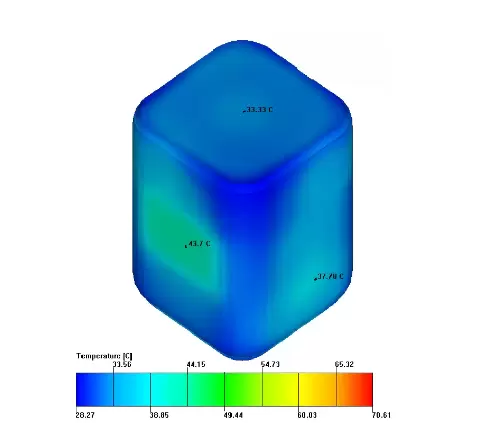
Thermal imaging devices generate heat that influences sensor performance.
Thermal simulation allows engineers to:
Design optimization occurs before tooling investment, reducing development risks.
Reliable production requires standardized processes.
SOGOOD implements a modern quality management system certified to ISO9001 standards.
Comprehensive inspection throughout production helps ensure:
There is no universal answer.
The right choice depends on your project goals.
A distributor is generally suitable if you:
A manufacturer is often the better choice if you:
For technology companies developing new thermal imaging products, direct collaboration with an experienced manufacturer typically delivers greater flexibility and stronger long-term competitiveness.
Thermal imaging instruments continue to expand into industrial automation, intelligent inspection, medical equipment, energy management, security systems, and AI-powered applications. As product requirements become increasingly specialized, the difference between purchasing a ready-made device and developing a customized solution becomes more important.
Distributors remain an excellent choice for organizations seeking proven, off-the-shelf products with fast delivery and localized service. However, companies pursuing innovation, product differentiation, or proprietary branding often benefit more from working directly with a manufacturer that can participate throughout the entire product development process.
With strengths in industrial design, thermal simulation, precision CNC machining, metal nano molding technology, and integrated OEM/ODM manufacturing, SOGOOD provides the engineering expertise and manufacturing resources needed to transform thermal imaging concepts into reliable commercial products. By combining design excellence, advanced manufacturing technologies, and rigorous quality management, the company helps customers shorten development cycles while delivering products built for long-term performance and market success.